
How to read this: Komodo Wellness Retreat is an independent curation guide for wellness travel in the Komodo & Flores region — we compare retreat styles (yoga, meditation, detox, dive-wellness, liveaboard, spa) and then route your enquiry to a vetted partner who handles the booking. We are not a resort, operator, studio or booking platform, and any property or place names are neutral examples only, not claims of affiliation or endorsement. Wellness content here is general information, not medical, health or fitness advice — consult a qualified professional before any detox, fasting, diving or new practice. Park permits, fees, schedules and the ~1,000/day Komodo National Park visitor cap change — confirm current details before you travel. Prices are by quote and vary by retreat, season and group; figures here are indicative ranges only.
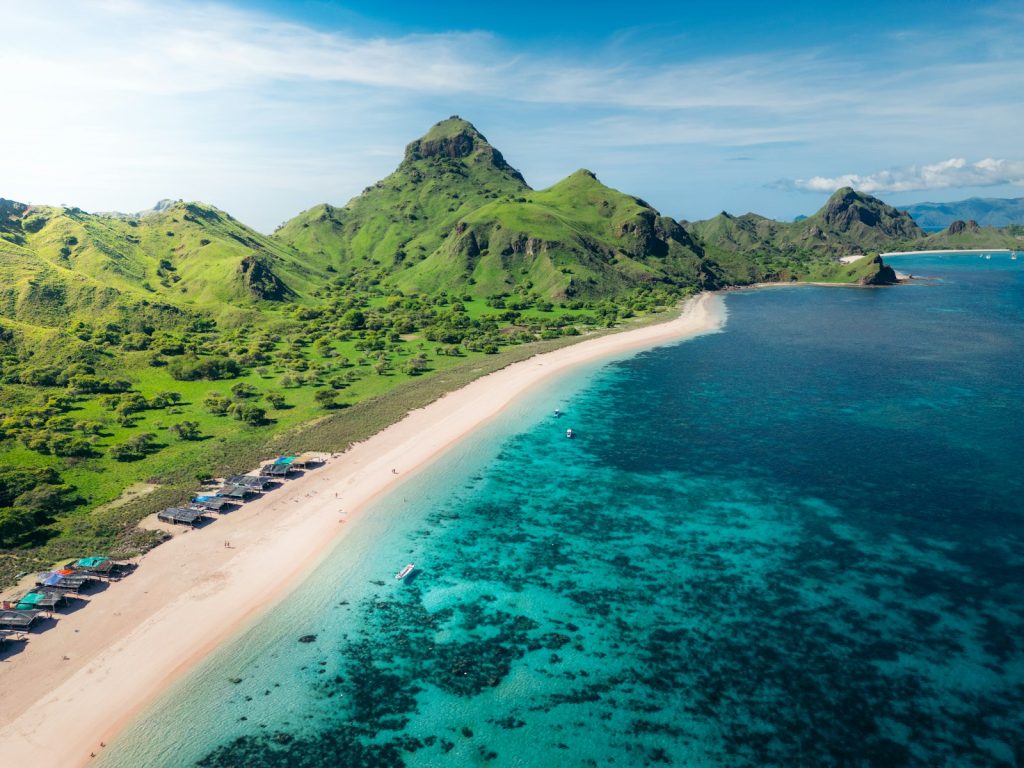
A pink beach komodo slow travel day is one of the most under-used wellness formats in the park: a full half-day or longer at Pantai Merah, moving gently between the water and the shore, with no fixed programme and no next site to rush toward. The beach does not belong to any retreat operator. It does not require a yoga mat or a spa booking. What it requires is the willingness to stay longer than the selfie crowd, and to treat the shallow reef just offshore as something worth paying attention to.
This guide is not about the best angle for a photograph. It is about what a genuinely unhurried day at Pink Beach can look and feel like — and what you need to know before you go, including the honest parts about access, sun, crowds, and reef conduct that most coverage skips.
Why the Sand Is Actually Pink
The colour comes from Foraminifera — microscopic single-celled organisms with red or orange shells. When they die, their crushed remains mix into the white coral sand, shifting the overall tone toward a dusty rose or salmon pink depending on the light and the wetness of the sand. The effect is most visible when the sand is damp and the sun is at a low angle — early morning or the hour or two before sunset — rather than at the flat noon glare when everything bleaches out to pale beige.
There are only a handful of pink beaches in the world. Komodo’s sits on the east coast of Komodo Island, inside the national park. There is a second, smaller pink-sand stretch on the southeast coast — some itineraries visit both; most focus on the more accessible northern site. Neither beach is a secret. Both appear on standard 3-day Komodo itineraries. The difference between a wellness day and a selfie stop is almost entirely how you use the time.
Getting There: Access, Fees, and the SiOra Reality
Pink Beach is inside Komodo National Park, which means every visitor pays the standard entry fees and, from 2026, must book through the SiOra app (Sistem Informasi Online Reservasi Wisata Alam) before arrival. Walk-up harbour tickets are no longer the standard route.
- Park entry fee (foreign nationals)
- IDR 250,000 per person per day — consistent across operator and travel sources, though these are not drawn from official government documentation. Verify before travel.
- Harbour fee
- IDR 25,000 per person per day
- Diver surcharge
- IDR 25,000 per diver per day, on top of park entry
- Ranger trekking fee
- Approximately IDR 200,000 per group of up to five, for island trekking. Pink Beach itself is a beach stop rather than a ranger-escorted trek, so this fee applies if you plan to walk inland on Komodo Island, not for a standard shoreline visit.
- Daily visitor cap
- 1,000 visitors per day across all park zones, implemented as a pilot from February–April 2026 and described by at least one operator as not yet a finalised permanent policy. Three time-slots: 06:00–11:00, 11:00–15:00, 15:00–18:00. This is the current best information — verify with your operator or the SiOra platform close to travel.
- Booking lead time
- 2–4 months ahead in peak season (June–September); 4–8 weeks in shoulder periods. Permits are tied to your passport number and date — non-transferable.
Almost everyone arrives at Pink Beach by boat, either on a day trip from Labuan Bajo or as part of a multi-day liveaboard itinerary. The crossing from Labuan Bajo takes roughly 1.5–2.5 hours depending on vessel and sea state. A slow day at the beach works better on a liveaboard, where the boat anchors and you have no hard departure pressure, than on a day trip where the guide often has two or three more stops scheduled. If your goal is genuine unhurried time, choose your boat format accordingly — and tell the operator what you actually want before you depart.
What a Mindful Beach Day Komodo Can Look Like
There is no single blueprint for a slow-travel wellness day at Pink Beach. What follows is a framework based on what the location offers and what low-stimulation, present-focused time there can involve. You will not find a yoga instructor waiting on shore. What you will find is warm water, a shallow reef, a strip of gently coloured sand, and relative quiet at the margins of the day.
The Early Morning Advantage
The first SiOra time-slot opens at 06:00. An early start from a liveaboard anchored near Komodo Island means you can reach Pink Beach before most day-trip boats from Labuan Bajo arrive. In practice, this means arriving on or around 07:00–08:00, when the light is low and golden, the sand reads most vividly pink, and the snorkelling reef is in direct morning sun — good for visibility and for seeing coral colours clearly.
Spend the first 30 to 45 minutes simply sitting at the water’s edge. The urge to immediately enter the water or reach for a camera is real. Resisting it, even briefly, and letting the place register through senses rather than a lens changes how the rest of the time feels. The sound of small waves on coarse-grain sand, the smell of the sea at low tide, the weight of warm humidity — these are the actual sensory inputs that slow travel makes room for.
Gentle Snorkelling as Presence Practice
The reef at Pink Beach is the central wellness attraction, even if it is never described that way. It sits just off the shore in shallow water — 1 to 5 metres in most places — and does not require advanced swimming ability or diving certification to access. A mask, snorkel, and fins are sufficient. Most liveaboards and many day-trip operators provide basic snorkel gear; check before you board.
The marine life here is not as dramatic as Batu Bolong or Crystal Rock, but that is precisely the point. There are reef fish in the coral heads, occasional turtles, and the steady visual complexity of a healthy shallow reef. Snorkelling slowly — hovering rather than covering distance, watching one patch of reef for five minutes rather than sweeping across the bay — is a different practice to checking off sightings. It is closer to directed attention than to sightseeing, and for many people it functions as a form of moving mindfulness without the branding.
A few important points about snorkelling safety at Pink Beach — presented as information, not as personal advice:
- Komodo is famous for strong currents. Pink Beach is generally calmer than the open-channel dive sites, but currents can pick up at certain tidal stages. Ask your boat crew about the tide before entering the water and stay aware of your position relative to the boat and the shore.
- Waves and surge on the beach can move snorkellers unexpectedly near coral. Neutral buoyancy — floating high enough that you do not contact the reef — is both an environmental responsibility and a personal safety baseline.
- Sun exposure in shallow, clear water is significant. The combination of direct sunlight and reflection from a white sand bottom means UV exposure escalates quickly. A rash guard or UV shirt reduces this without requiring chemical sunscreen in the water.
- Reef-safe conduct means no touching coral, no standing on the reef, and using mineral-based sunscreen rather than chemical formulas. Coral polyps are living tissue and physical contact causes damage even when no visible breakage occurs.
The reef at Pink Beach is under the same IUCN “significant concern” pressure as the wider park’s marine systems. The IUCN World Heritage Outlook notes this park-level concern — we do not have a current quantitative reef-health figure to cite, and we will not invent one. What is certain is that responsible conduct in the water is not optional courtesy; it is a direct input to whether these reefs remain viable for the next traveller.
Unhurried Shoreline Time
Between snorkel sessions or instead of them, the beach itself rewards attention. The sand at Pink Beach is coarser than fine-grained tropical beaches — more like crushed shell and coral fragment than powder. The texture underfoot is distinctive, and the colour shifts visibly as you move between wet and dry zones, from darker rose where the waves reach to a softer blush further up the shore.
Sitting quietly and watching the water, reading in the shade of the boat’s canopy, practising a short breathing exercise, or simply walking the length of the beach slowly — these are the actual activities of a slow-travel wellness day. They sound passive. In the context of an Indonesian trip that typically moves between five sites in a single day, they are deliberately counter-cultural.
Shade is limited on the beach itself, particularly at midday. Most of it comes from your boat. Plan your time on shore around the early morning and late afternoon; retreat to the boat or its shade canopy during peak sun hours (roughly 10:00–14:00). Hydration matters seriously here — Komodo’s dry climate and strong sun create a higher-than-expected fluid demand, and the relative humidity in the park averages around 36%, which is low enough that you may not notice how much you are sweating until you already need water.
The Slow Travel Komodo Island Frame: Less Stops, More Time
The phrase “slow travel” has been adopted by so many operators that it risks meaning nothing. In the Komodo context it has a specific practical meaning: fewer sites per day, longer time at each one, and the willingness to repeat an experience rather than moving to the next. A slow travel komodo island day is not a different set of destinations. It is a different relationship to the one you are already in.
Pink Beach is well-suited to this because it has natural layers. The first hour is the arrival experience. The second and third hours are when the place settles — when you have dried off, watched the light shift, spotted the same parrotfish three times in the coral below the boat, and stopped waiting for something more impressive to happen. That third hour is where the actual rest occurs. Most itineraries are structured so that the third hour never arrives.
One practical marker for operators: if a guide is nudging you back to the boat after 90 minutes at Pink Beach to “make time for the next stop,” you are on a sightseeing trip, not a slow-travel day. This is not a criticism of guides — they are managing group expectations and schedules. It is information for planning. If you want three hours at Pink Beach rather than 90 minutes, that conversation needs to happen before departure, not as the anchor is being raised.
Peak Season Honesty: Crowds and How to Work Around Them
In July and August — peak season — Pink Beach sees consistent heavy traffic. Multiple boats anchor in the bay simultaneously, and the shore fills with visitors from mid-morning onward. The daily cap of 1,000 visitors across all park zones is a mitigating factor, but the cap distributes across the whole park, not per site. Headline locations like Pink Beach, Padar Island, and the Komodo Island dragon-trekking route absorb a disproportionate share of that allocation.
Strategies that genuinely help:
- Shoulder month timing: April through early June and September through October bring the same marine and beach conditions with meaningfully fewer boats. These are the windows recommended across our guides for travellers who value quiet. See the best time for a Komodo wellness retreat for month-by-month detail.
- Early-morning slot: The 06:00–11:00 SiOra window catches the beach before the day-trip surge from Labuan Bajo, which typically arrives from 09:00 onward. A liveaboard anchored nearby has a structural time advantage.
- Private charter format: A private phinisi or speedboat sets its own schedule independently of group departures. For a pink beach wellness day that is genuinely unhurried, a private vessel is the clearest route to control over your timeline. Costs for private charters are quoted on request rather than from a fixed menu — rates vary by vessel, duration, and season. For help navigating options for your specific dates, plan your trip with our concierge.
Pairing Pink Beach with What Comes Before and After
A slow-travel wellness day at Pink Beach works best when the surrounding itinerary is also unhurried. Common pairing options:
The night before: Anchor near the south coast of Komodo Island at dusk. Watch the light change over the hillsides — the landscape here is dry savannah and deciduous forest, not the lush green of Bali, and the golden-hour tones are different and striking in their own way. Dinner on the boat, an early sleep. This framing turns the Pink Beach visit into a morning event rather than a midday dash.
Combined with Siaba Besar or Siaba Kecil: Both sites sit in the same general area and are known for sea turtles in calm, relatively shallow water. They are gentler snorkel environments than the high-current pinnacle sites, which makes them a natural complement to Pink Beach’s pace. A morning at Pink Beach followed by a midday rest and an afternoon turtle snorkel is a complete slow-travel day without being passive.
What not to pair it with: Padar Island trekking and Pink Beach in the same half-day is the standard fast itinerary. Padar in the early morning plus Pink Beach mid-morning means you arrive at the beach with the main boat rush. If both Padar and Pink Beach matter to you, either start Padar before sunrise (which is genuinely worthwhile — the Padar sunrise mindful hike guide covers this in detail), or schedule them on separate days.
For packing specifics — what to bring for extended time on a boat versus a quick shore excursion, including reef shoes, sun protection layering, and hydration — see the packing guide.
Reef-Safe Sunscreen: The Practical Briefing
Most commercial sunscreens contain oxybenzone and octinoxate, chemical UV filters that research has linked to coral bleaching and disruption of marine larvae. Indonesia has not legislated a reef-sunscreen ban as of our research date, but Komodo National Park’s coral reef values are a core reason the park holds UNESCO World Heritage status — and those values are under documented pressure. The practical recommendation: use a mineral sunscreen (zinc oxide or titanium dioxide base), apply it 20 minutes before entering the water so the product has set rather than washing off immediately, and rinse off on deck before snorkelling if you are using a boat-side entry.
A long-sleeve UV rashguard covers most of the body without any sunscreen required and is arguably the most practical solution for extended snorkelling sessions. The reef-conduct rules stand on their own regardless of sunscreen: no touching coral, no standing on reef, no feeding fish, no taking shells or fragments. These are within your direct control and they have direct consequences for the system you came to experience.
Manta Rays and Pink Beach: Setting Expectations
Pink Beach is not a manta site. Manta rays at Komodo concentrate at Manta Point (Makassar Reef) in the north and Manta Alley in the south — both separate locations. The peak manta window runs November through April, with December through February typically the strongest period for large aggregations. If a manta encounter is part of your programme, it needs its own planning. The manta snorkel guide covers what that experience realistically involves.
What Pink Beach shares with manta sites is the access framework: same park fees, same SiOra booking system, same daily cap. If you are combining both in a multi-day itinerary, both need to be factored into your booking timeline and your SiOra slot allocation.
Frequently Asked Questions
Why is Pink Beach sand pink, and is the colour always visible?
The pink colour comes from crushed Foraminifera shells — microscopic organisms with red-orange casings — mixed into the white coral sand. The colour is most visible when the sand is damp and the light is at a low angle: early morning or late afternoon. At midday under flat sun the beach looks pale beige. Arriving in the first morning hours when the sand has been wetted by the tide gives you the most visible tone. Arriving at noon expecting vivid pink is the most common source of disappointment at this beach.
Is Pink Beach crowded? When is the quietest time for a mindful beach day?
In July and August, Pink Beach is consistently busy — multiple boats in the bay, the shore filling from mid-morning onward. The quietest reliable windows are April to early June and September to October. Within any given day, the 06:00–11:00 SiOra time slot gives you the beach before the day-trip surge from Labuan Bajo arrives. A liveaboard that anchors nearby overnight has a structural time advantage over a day trip. Private charter format gives the most schedule independence.
Can I snorkel at Pink Beach without a dive guide?
Independent snorkelling in the shallows at Pink Beach does not require a dive guide. The reef is generally calm close to shore. That said, currents in Komodo can be unpredictable at different tidal stages, so always check with your boat crew before entering and stay aware of your position relative to the vessel. Snorkelling with a companion rather than alone is sensible practice. Assess your own swimming ability honestly before entering the water — this is general information, not personal advice.
What sunscreen should I use at Komodo’s reefs?
Mineral sunscreens — zinc oxide or titanium dioxide — are the reef-compatible option. Apply at least 20 minutes before entering the water so the product sets rather than washing straight off. A long-sleeve UV rashguard solves most of the problem without any sunscreen in the water at all and is the practical first choice for extended snorkelling sessions. Avoid formulas listing oxybenzone, octinoxate, or benzophenone if you intend to snorkel over coral reef.
How does the SiOra booking system affect my Pink Beach visit?
From 2026, Komodo National Park requires advance digital booking through the SiOra app. Permits are tied to your specific passport number and calendar date — non-transferable. In practice, most boat operators and tour companies manage SiOra booking on behalf of their guests. Confirm this with your operator when arranging the trip. In peak season (July–September), booking 2–4 months ahead is what operators recommend; shoulder season, 4–8 weeks. The daily-cap and SiOra system were described as a 2026 pilot by at least one operator [VERIFY] — treat this as current best information and confirm the status before travel.