
Skip to content

Silo 1 · Retreat formats

Wellness at Sea, Minus the Brochure

A phinisi wellness cruise builds yoga, meditation or mindful dining into the itinerary rather than bolting one session onto a standard tour. Telling those two apart before you pay is most of the job.

  • Independent, not an operator
  • Trade-offs named, not hidden
  • Free, no obligation
A traditional phinisi with red sails under way past a rocky island in Komodo
  • 2–5 Nights, typical wellness sailing
  • Deck Where the practice actually happens
  • Dec–Feb Roughest seas, peak mantas
  • USD 40 Park entry, once per trip

The short answer

What makes it a wellness cruise

The test is structural: are the sessions part of the itinerary, with space and time protected for them, or are they something the crew will run if enough guests ask? Both get called a wellness cruise.

  • A published daily schedule with sessions in it, not "yoga available on request".
  • A named instructor on that departure, rather than whoever happens to be aboard.
  • Deck space that is actually usable at anchor, with mats and props supplied.
  • And the question that settles it: is this a standing product or a one-off hosted departure? Both are fine — but only one will be there next season.

How you book it

Shared departure or private charter?

The same vessel, two completely different weeks. This choice changes the schedule, the cost and who you spend four days with.

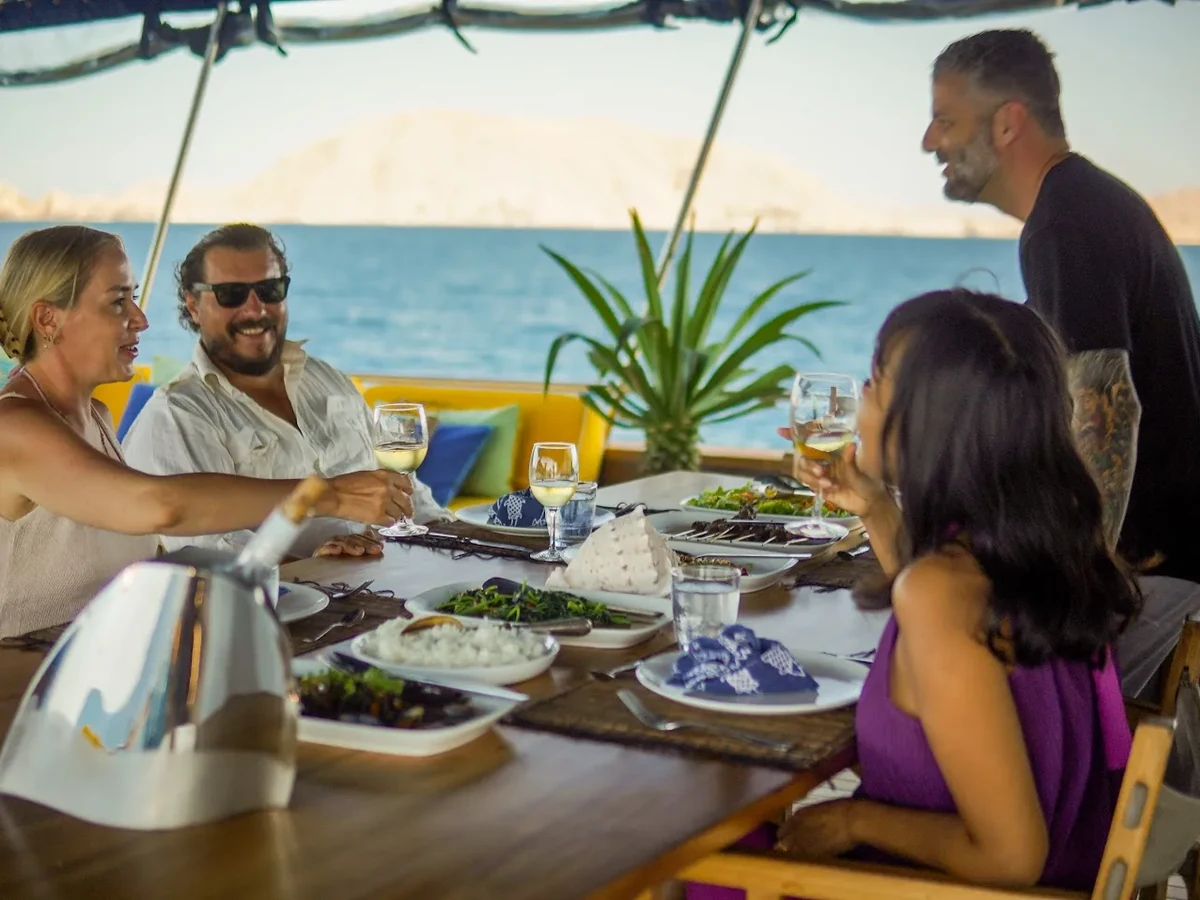
Guests sharing a plated meal at a table on the open deck of a phinisi

Shared departure

You join a fixed itinerary with other guests. Cheaper per person, sociable, and the schedule is set before you board.

Best for
Solo travellers and couples happy to fit around a group, and anyone wanting the format without charter money.
The trade-off
No control over pace, cabin allocation or who else is aboard. Wellness sessions run when the itinerary says, not when you want them.

Guests on the open deck of a phinisi as the light turns gold

Private charter

The whole vessel, your itinerary, and your own instructor if you want one. The format at its best, and the honest reason it costs what it does.

Best for
Couples, families and small groups who want the quiet, the schedule and the privacy to be theirs.
The trade-off
Significantly more per night, and you are responsible for building a schedule that actually works — which is where we help.

The honest test

Genuinely meaningful, or marketing language?

These phrases appear on almost every wellness sailing listing. Here is what each one is worth.

  • Sessions

    Often marketing language
    "Yoga available" — meaning a mat exists and somebody might lead something.
    Genuinely meaningful
    A published schedule naming sessions, times and the instructor for your departure.
  • The space

    Often marketing language
    "Spacious sun deck" — true of every phinisi, and often full of dive gear by 9am.
    Genuinely meaningful
    Deck space reserved for practice at anchor, with mats and props carried as standard.
  • Food

    Often marketing language
    "Healthy cuisine" — usually the standard menu with fruit.
    Genuinely meaningful
    A stated approach with dietary requirements confirmed in writing before departure.
  • The product

    Often marketing language
    Photos from a hosted retreat that ran once, used to sell every sailing since.
    Genuinely meaningful
    A standing departure that runs on a schedule you can book a year out.
  • Detox claims

    Often marketing language
    "Detox cruise" implying a cleanse protocol.
    Genuinely meaningful
    Honest framing: this is a digital disconnect, and the food is good.

None of this means a boat using the first column is a bad boat. It means the wellness element may not be what you are paying for — so ask, and get the answer in writing.

The part nobody advertises

Sea state, cabins and sleep

The single most common reason this format disappoints is not the programme. It is four nights of poor sleep on a moving boat.

Seasickness

Worst December to February; real for some guests year-round.

  • Start medication before you board, not when you feel it
  • Ask for a midships cabin, lower deck, if you are prone
  • Eat something before sailing; an empty stomach makes it worse
  • Horizon and fresh air beat lying below in a cabin

Cabin reality

Honest expectations by tier.

  • Budget and mid-range: compact cabins, often shared bathrooms
  • Air conditioning is not universal and may run only at night
  • Fresh water is rationed on most vessels
  • Engine and generator noise at night when repositioning

Park access

Handled by the operator, but worth understanding.

  • Access runs through the SiOra booking system, tied to your passport
  • Park entry is USD 40 per person, once for the whole trip
  • Book 2–4 months ahead in peak season
  • A daily visitor cap applies across the park zones

What it costs

What a sailing actually costs

This is the one format where our partner publishes real starting prices across the whole range, from a shared sailing to a private wellness charter.

Starting prices published by Komodo Luxury, our vetted operating partner, checked 23 September 2026. Land-based resort and spa retreats are not publicly rated — we get you a real figure before you commit to anything.
What you are booking Starting price
Shared phinisi sailing trip From USD 300 per person / voyage
Shared luxury phinisi From USD 330 per person
Private phinisi day trip From USD 5,400 per boat
Luxury yacht charter, 3D2N From USD 6,000 per boat
Wellness yacht charter From USD 5,900 per yacht / night
Komodo National Park entry USD 40 per person, once per trip
Private instructor on a charter Ask for price quoted per departure

Where these come from

Starting prices published by Komodo Luxury, our vetted operating partner, checked 23 September 2026. Land-based resort and spa retreats are not publicly rated — we get you a real figure before you commit to anything.

Starting prices, not quotations. What you pay moves with season, party size, vessel and how long you stay.

Read the full cost guide

When to go

When to sail

Sea state is the deciding factor for this format, not visibility. April to June and September to November are the comfortable windows.

Best time to visit, in full
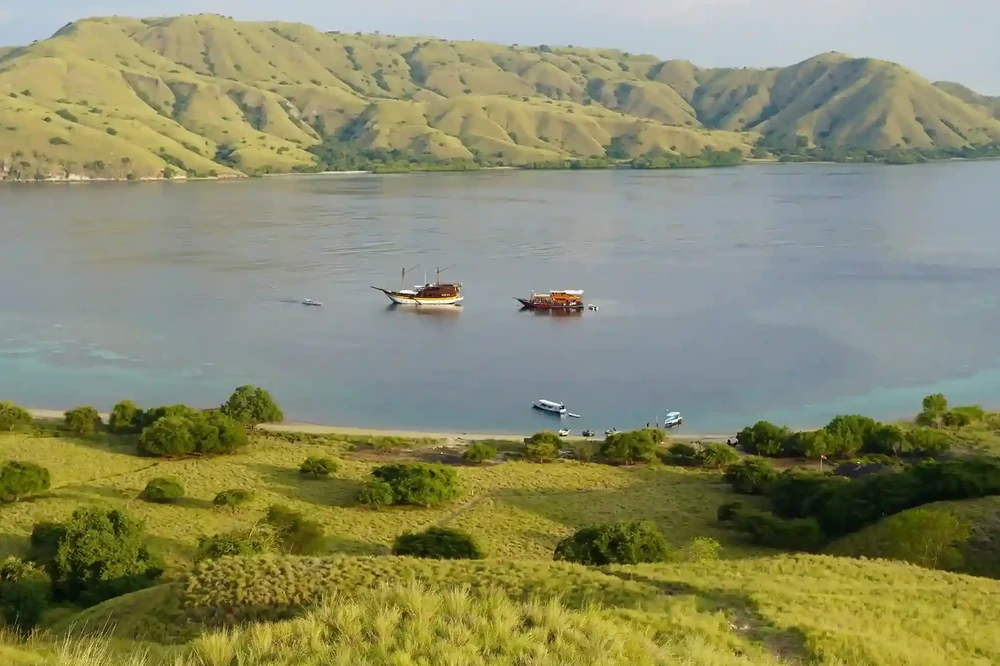
Green hills above a sheltered bay at Gili Lawa with boats at anchor Apr – Jun

The quiet window

Seas calming after the wet season, landscapes still green, crowds below peak, nights around 21–22 °C in June.

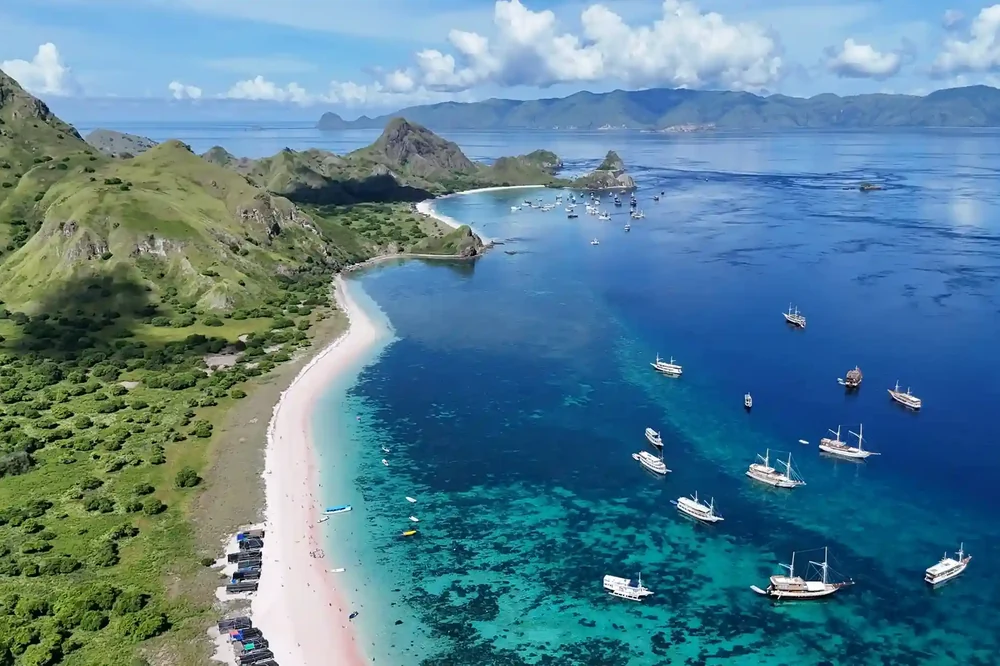
Aerial view of Pink Beach and turquoise shallows with boats moored offshore Jul – Aug

Driest, busiest, priciest

The best underwater visibility of the year, and the highest prices, the most boat traffic and the strongest south-east winds.

A calm anchorage at Manjarite with a boat on flat turquoise water Sep – Nov

The second prime window

Excellent conditions with far fewer boats than peak, and the southern manta aggregations building toward December.

A phinisi silhouetted against a deep red monsoon sunset Dec – Mar

Rough seas, peak mantas

The roughest water and the highest seasickness risk on smaller vessels — and exactly when manta encounters peak.

Before you book

Frequently asked questions

Get My Shortlist

Is a liveaboard yoga retreat suitable for beginners in both yoga and diving?

Yoga, yes — deck sessions on these sailings are pitched at mixed ability and nobody is watching. Diving is different: Komodo has genuinely demanding drift sites, and a liveaboard itinerary assumes a level of recent experience. If you are newly certified, say so before booking so the operator can match sites, or choose a snorkelling-focused departure instead.

How do I know if a wellness departure is real or a one-off?

Ask directly: "Is this a standing departure or a hosted retreat?" A standing product has published dates across the season and a schedule you can see. A hosted retreat ran once, was photographed well, and those photographs now sell every sailing. Both can be excellent — but only one is bookable for the dates you actually want.

What is the practice space really like on a phinisi?

At anchor, good: a teak deck, open sky, and the boat almost still. Under way, not really — a phinisi moves enough that balance work is unrealistic, which is why sessions are scheduled at anchor before the day starts or after it ends. Ask whether mats and props are carried, and whether the deck is clear of dive gear at those times.

How does the park quota affect an itinerary?

Access runs through the SiOra digital booking system with permits tied to your passport and travel date, and a daily visitor cap applies across the park zones. In practice your operator handles it, but it means dates are not infinitely flexible in peak season — book 2–4 months ahead for July and August, 4–8 weeks in the shoulder months.

What if an operator lists wellness features I cannot verify?

Ask for the daily schedule for your specific departure, in writing, with the instructor named. A serious operator sends it without hesitation. If what comes back is the same brochure language with no dates or names in it, treat the wellness element as optional rather than as something you are buying — and price the trip accordingly.

A phinisi under full sail passing the hills of Komodo National Park at golden hour

No obligation

Shall we check the schedule for you?

Give us your dates and we will come back with which sailings genuinely run a wellness programme then, who is leading it, and what it costs.