How to read this: Komodo Wellness Retreat is an independent curation guide for wellness travel in the Komodo & Flores region — we compare retreat styles (yoga, meditation, detox, dive-wellness, liveaboard, spa) and then route your enquiry to a vetted partner who handles the booking. We are not a resort, operator, studio or booking platform, and any property or place names are neutral examples only, not claims of affiliation or endorsement. Wellness content here is general information, not medical, health or fitness advice — consult a qualified professional before any detox, fasting, diving or new practice. Park permits, fees, schedules and the ~1,000/day Komodo National Park visitor cap change — confirm current details before you travel. Prices are by quote and vary by retreat, season and group; figures here are indicative ranges only.
Manta snorkel wellness Komodo practitioners describe as one of the most honest forms of moving meditation available to a traveller: you enter the water at sites like Manta Point or Manta Alley not as a tick-box activity, but breath-paced, presence-first, anchored in the physical reality of drifting alongside some of the ocean’s largest and most serene animals. Done with attention, it is one of the few experiences in Komodo National Park where the environment itself enforces slowness: you cannot chase a manta ray, you cannot grab one, and the current that carries you through the channel does not negotiate. What remains is breath, buoyancy, and the slow wingbeat of an animal that has existed for roughly five million years.
This is not a marketing pitch for a specific operator. It is an honest editorial guide to swimming with mantas Komodo-style — the seasonality, the site conditions, the ethical rules, and the particular quality of attention the experience asks of you. We have flagged anything that should be verified with your operator directly.
When Mantas Are Actually There: Season and Site Facts
The single most important piece of planning information for anyone targeting this experience: manta ray peak season at Manta Point (Makassar Reef) and Manta Alley runs from November through April, with December through February generally considered the most reliable window. This is the wet season, which means rougher seas on some days, but it is also when manta aggregations — sometimes 10 to 30 or more animals on a productive morning — are most likely to appear. Outside this window, solitary or small-group manta encounters are possible but cannot be expected.
The two primary sites sit in different parts of the park and behave differently:
- Manta Point (Makassar Reef)
- Located in central-north Komodo, relatively accessible from Labuan Bajo. A shallow cleaning station where mantas arrive to have parasites removed by smaller reef fish. The typical depth here makes it genuinely snorkeller-friendly — you do not need scuba to be in the water with the mantas. Peak window: December–February. The site can be reached on a day trip from Labuan Bajo, though liveaboard positioning at anchor overnight puts you there in better light and before day-trip crowds arrive.
- Manta Alley
- South Komodo. More exposed, further from the main harbour, and subject to rougher conditions in certain months. The aggregations here in the November–April window can be substantial — this is a feeding and cleaning corridor, not just a cleaning station. Visibility and current conditions at Manta Alley require an operator who knows it well; it is less forgiving of a poorly timed entry than Manta Point.
Visibility at both sites ranges from roughly 7 to 20 metres on the south side and higher — up to 25 metres or more — at the central-north sites during peak conditions. Water temperature in the wet season (November–March) sits around 29–29.5°C at the surface, occasionally cooler in thermoclines closer to upwelling zones. These are comfortable snorkelling temperatures. For reference, the park’s southern waters average 23–24°C, which can feel noticeably colder.
Sightings are never guaranteed. This is a wild population in open water. A productive day might bring you beneath a loose V-formation of eight or ten animals gliding silently overhead. Another morning at the same site might yield a single manta at distance, or nothing. Any operator who promises you a sighting is overstating what they can deliver. The most honest framing is probability: the November–April window, at the right site, with a knowledgeable guide, gives you the best realistic odds in the region.
The Moving Meditation Frame: What Actually Happens in the Water
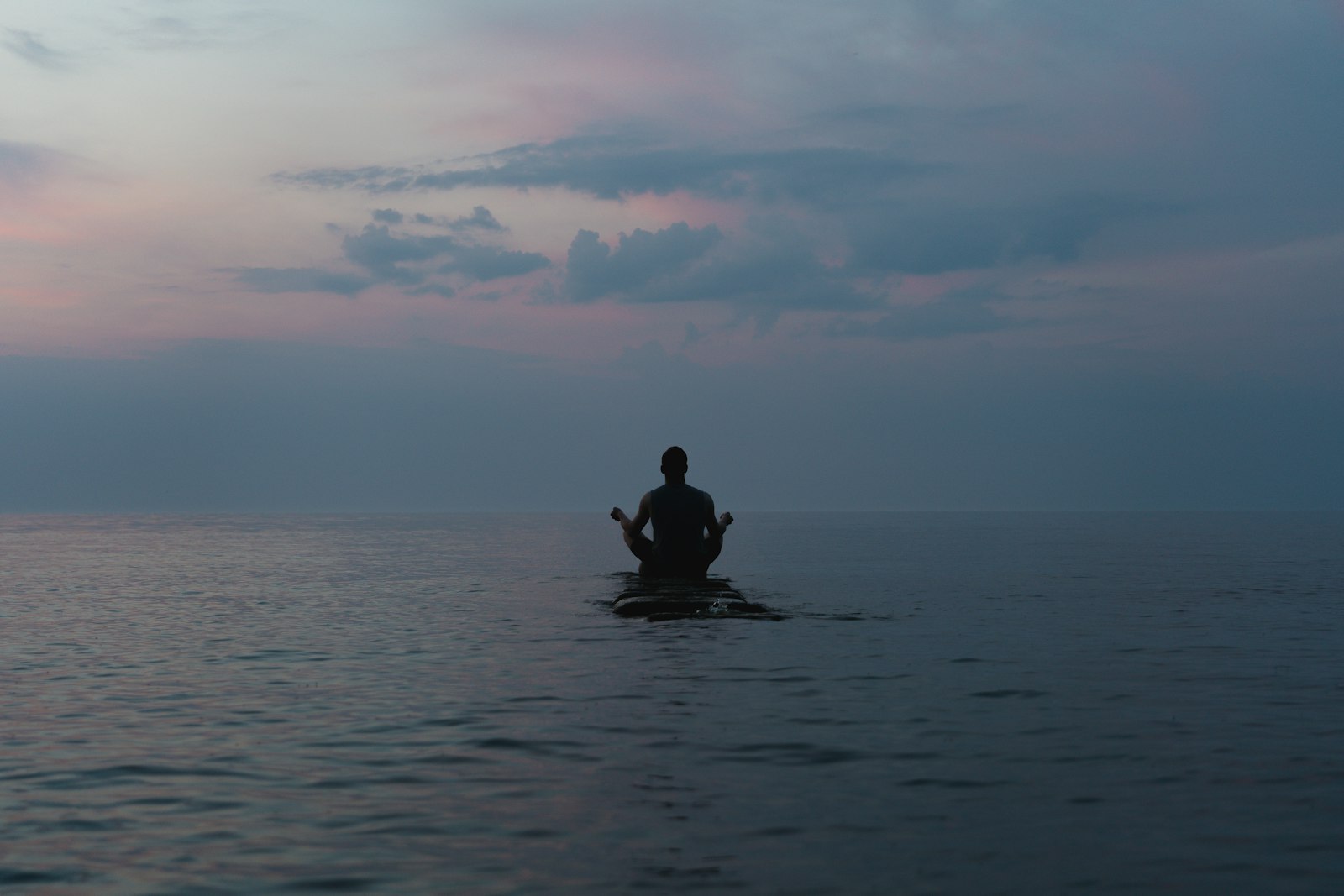
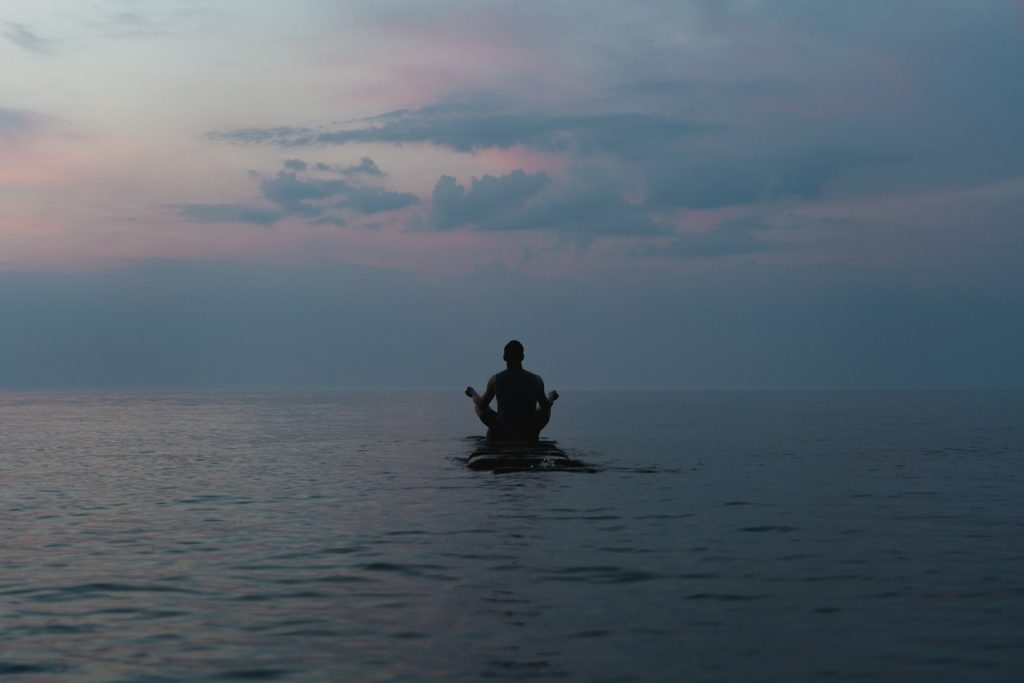
The phrase “moving meditation” gets used loosely in wellness travel. Applied to Manta Point snorkel mindful practice in Komodo, it earns its meaning in specific ways.
Entry at a site like Manta Point is usually a shallow drift. You enter the water from a tender or the boat’s stern, adjust your mask, and let the current do the work. There is very little swimming required to position yourself over the cleaning station — the current brings you there. This is the first enforced act of presence: you cannot kick your way upstream. You work with what is moving.
Breath becomes functional in a new way. If you breathe calmly and stay relaxed, you float higher and see more. Anxiety — fast, shallow breathing — drops you lower in the water and narrows your vision. The ocean gives you immediate feedback on your nervous system state. Freediving practitioners recognise this dynamic immediately; for those new to it, it can be quietly revelatory. You learn something about your own breath in about four minutes that an hour of guided breathwork on a studio mat might not deliver.
Then a manta appears. The wingspan of a reef manta (Mobula alfredi) can reach up to four metres; the oceanic manta (Mobula birostris) larger still. At the cleaning stations in Komodo, you are most likely to encounter reef mantas. When one rises from below toward the station, the scale of the animal recalibrates your sense of your own body in space. It is not frightening. Mantas are filter feeders — their mouths face forward to collect plankton, they have no sting, and they are broadly unbothered by stationary human observers at respectful distance. What they respond to is movement and pressure. A still snorkeller floating at the surface is, from the manta’s perspective, low-interest. A snorkeller kicking toward it is an interruption.
The mindful practice, then, is simple in instruction and demanding in execution: stop. Breathe. Let the animal approach or pass on its own terms. If you do this consistently over fifteen or twenty minutes, you will have experienced something genuinely different from the usual tourist-activity template. You will have been present, in a specific body of water, with an animal that does not need you there, and you will have chosen not to intrude. That restraint is the meditative act.
Current Safety and Realistic Fitness Requirements
Komodo’s currents are famously strong. The park sits in a channel connecting the Flores Sea to the Sape Strait, and tidal flows through the system reach speeds that have been compared — only half-jokingly — to whitewater rafting. Manta Point is relatively sheltered compared to sites like The Cauldron or Batu Bolong, but “relatively sheltered” in Komodo still means meaningful water movement. This is drift snorkelling, not a calm lagoon float.
The following information is factual context, not personal advice. Your operator is the authority on conditions on the day you are there, and their guidance takes precedence over anything written here.
- Drift snorkelling requires the ability to float comfortably without fighting the water. Strong, confident swimmers handle it naturally. Weak swimmers or those uncomfortable in open ocean conditions should discuss this honestly with the operator before committing to the site.
- Currents at Komodo’s manta sites are highly tide- and moon-phase-dependent. The same site can be gentle at one tidal stage and genuinely challenging two hours later. Operators schedule entries around this; a good one will hold or abort if conditions shift.
- A surface marker buoy (SMB) or guide line may be provided or required by some operators. Ask in advance.
- If you are not a confident open-water swimmer, begin with calmer central Komodo sites on your first day to assess your comfort level before committing to a manta-site drift.
- Fins are standard equipment. If you are renting, confirm fit before you enter — ill-fitting fins cause cramp at the least useful moment.
Park entry fees apply to all visitors including snorkellers. As of 2025–2026, the standard rate for foreign nationals is IDR 250,000 per person per day, with an additional diver/snorkeller surcharge of IDR 25,000 per day and a harbour fee of IDR 25,000 per day — roughly IDR 300,000 total per person, per day [these figures are consistent across multiple operator sources as of the research date; verify directly as fees are subject to change]. Access to the park is now managed through the SiOra digital booking system, with daily visitor caps and time-slot allocations. Your operator handles this booking; confirm it is included in your arrangement.
Ready to plan your manta snorkel session as part of a broader Komodo wellness trip? Use our enquiry form or reach us on WhatsApp to talk through timing, site selection, and operator options.
Ethical Conduct: The Rules and Why They Matter
Manta rays at cleaning stations are not performing for visitors. They are there because the site offers a biological service they need — reef fish removing parasites from their skin and gill plates. Any human behaviour that disrupts that process drives the mantas away from the station, sometimes for the rest of the day.
The ethical rules for manta snorkelling are consistent across responsible operators in Komodo and grounded in marine biology, not just politeness:
| Rule | Reason |
|---|---|
| Do not touch mantas | Human touch removes the protective mucus coating on their skin, creating pathways for infection. A single touch has lasting consequences for the individual animal. |
| Maintain at least 3 metres distance (ideally more) | Mantas at cleaning stations are in a relaxed, semi-stationary state. Close approach triggers a startle response that ends the cleaning session. |
| No flash photography | Flash startles mantas and disrupts their behaviour. Natural-light underwater photography is fine at respectful distance. |
| No chasing or diving below to intercept | Approaching from below mimics predator behaviour. Mantas respond by ascending and leaving the station. |
| Use reef-safe sunscreen only | Oxybenzone, octinoxate, and other chemical UV filters are toxic to coral and marine invertebrates at very low concentrations. Mineral-based SPF (zinc oxide, titanium dioxide) in reef-safe formulations is the standard. In the water over a cleaning station, you will be directly above coral habitat. |
| No standing on coral or reef substrate | Even brief contact crushes coral polyps that may have taken decades to grow. |
| Group size limits | Many responsible operators limit the number of snorkellers in the water simultaneously at the cleaning station. Larger groups increase disturbance. Ask about your operator’s policy. |
Komodo National Park is a UNESCO World Heritage Site, inscribed in 1991. The marine ecosystem here is one of the most biodiverse in the world, and the IUCN has flagged the park’s conservation status as a matter of significant concern. The manta rays you will see at Manta Point belong to a population that has no other home. The reef-safe sunscreen, the three-metre rule, and the no-touch policy are not inconveniences. They are the terms on which this experience remains possible.
Integrating Manta Snorkelling into a Wellness Itinerary
The manta snorkel session itself lasts between twenty minutes and an hour in the water, depending on site conditions and how long the mantas remain at the station. Most operators build it into a morning slot — early entry, before the day-trip boats arrive from Labuan Bajo, gives you quieter conditions and better light for underwater visibility.
What comes before and after matters as much as the session itself, if you are approaching this as genuine wellness rather than a bucket-list tick.
Before: A light breakfast, not a heavy one. Boat transit to the site — anywhere from forty minutes to several hours depending on your anchorage — is best spent horizontal if you are susceptible to seasickness, or seated midship facing forward. Save the breathwork or meditation practice for the water, not the transit. Hydrate. If you have a yoga or breathwork practice, a fifteen-minute session on deck before entry genuinely changes the quality of your presence in the water — this is reported consistently by instructors running liveaboard wellness programmes in the region.
After: The stillness that follows a good manta encounter is worth protecting. Resist the impulse to immediately review footage or post. Sit with it. On a phinisi liveaboard, the mid-morning period after a manta session — anchored in a protected bay, no other activity scheduled — is often described by participants as the quietest, most present part of a trip. Allow for that. If your programme includes journalling, this is the moment for it.
For divers, the post-dive nitrogen interval before any further diving applies as standard. Snorkelling does not carry the same nitrogen loading concern, but the physical exertion and sun exposure of a drift session still call for water, shade, and rest before the next activity.
Ocean meditation Komodo mantas at their best happens before the day-trip boats arrive, when the water is undisturbed and the cleaning station is active. On the wider trip structure: the manta snorkel pairs naturally with a slow afternoon at a site like Pink Beach — unhurried shoreline time as a deliberate counterpoint to the morning’s drift. For those combining diving and wellness, our dive wellness guide covers post-dive recovery, breathwork for dive preparation, and how to structure a day that serves both activities. And if you are still deciding when to travel, the best-time guide maps manta seasonality against broader sea state and resort availability across the year.
On Operators and Liveaboards: What to Look For
We do not name a single operator as the definitive choice. The market in Komodo includes a wide range of phinisi liveaboards and day-trip boats, from stripped-down local vessels to high-specification luxury charters with onboard wellness programming. What matters for a manta-focused wellness session is not the thread count of the cabin linens but the quality of the briefing, the guide’s knowledge of the site, and the operator’s actual enforcement of ethical-conduct rules in the water.
Questions worth asking any operator before booking a manta snorkel session:
- How many snorkellers do you allow in the water at the cleaning station simultaneously?
- Do your guides enter the water with the group, or observe from the boat?
- What is your briefing process for manta conduct rules?
- How do you handle conditions if the current is stronger than expected on the day?
- Is SiOra park-entry booking included, and how far in advance do you secure slots?
Some liveaboard programmes explicitly combine manta snorkelling with onboard yoga and meditation instruction, structuring the session as part of a broader daily wellness rhythm rather than a standalone activity. These programmes [verify availability and departure dates with operators directly] offer a more integrated experience than a day-trip visit, partly because the early-morning anchor positioning gives access before the day-trip rush, and partly because the phinisi context — no road noise, no crowds, meals timed around the tides — naturally reinforces presence.
No one can pay to change what we publish here. If you use our free planning help and proceed with a partner operator, they may pay us a referral fee at no extra cost to you.
To plan your manta snorkel wellness session in Komodo with help from our concierge team, fill in our enquiry form or message us directly on WhatsApp at +62 811 3823875. We will help you match timing, site access, and operator style to your travel dates.
Frequently Asked Questions
When is the best time to snorkel with manta rays at Komodo?
The peak window for manta ray aggregations is November through April, with December to February the most reliable months at Manta Point (Makassar Reef) and Manta Alley. Outside this period, individual mantas may be seen but large groups are less predictable. This overlaps with the wet season, so factor in the possibility of rougher seas and plan with your operator accordingly.
Do I need to be a scuba diver to swim with mantas at Manta Point?
No. Manta Point is a shallow cleaning station, and the mantas typically patrol well within snorkelling depth. You do not need scuba certification for this site specifically. You do need to be a confident open-water swimmer, comfortable with drift conditions and moderate current. Discuss your swimming ability honestly with any operator before booking.
How much does it cost to enter Komodo National Park for a manta snorkel day?
As of 2025–2026 reporting, foreign nationals pay approximately IDR 250,000 per person in park entry fees, IDR 25,000 as a diver/snorkeller surcharge, and IDR 25,000 as a harbour fee — roughly IDR 300,000 total per day. These figures are drawn from multiple operator and travel sources and should be verified directly, as fees are subject to change. Park entry is now managed through the SiOra digital booking system; your operator should handle the reservation, but confirm this is included in your arrangement.
Is reef-safe sunscreen actually necessary, or is it just marketing?
It is necessary. Chemical UV filters including oxybenzone and octinoxate are documented to cause coral bleaching and developmental disruption in marine invertebrates at concentrations well below what a single swimmer introduces. Over a popular cleaning station visited by hundreds of people weekly, the cumulative effect is real. Use a mineral-based SPF (zinc oxide or titanium dioxide) in a reef-safe formulation. Several operators and dive shops in Labuan Bajo stock these; bringing your own from home gives you more choice.
What if the mantas do not appear on the day I visit?
Sightings are never guaranteed at any wild manta site in the world, including Komodo. On any given day, water conditions, tidal timing, and plankton availability influence whether mantas are present at the cleaning station. A reputable operator will tell you this upfront and may offer an alternative site or a return visit if conditions allow. Approaching the session with the expectation of presence rather than a guaranteed encounter — the meditative frame described in this guide — genuinely changes how you experience both a productive session and a quiet one.