
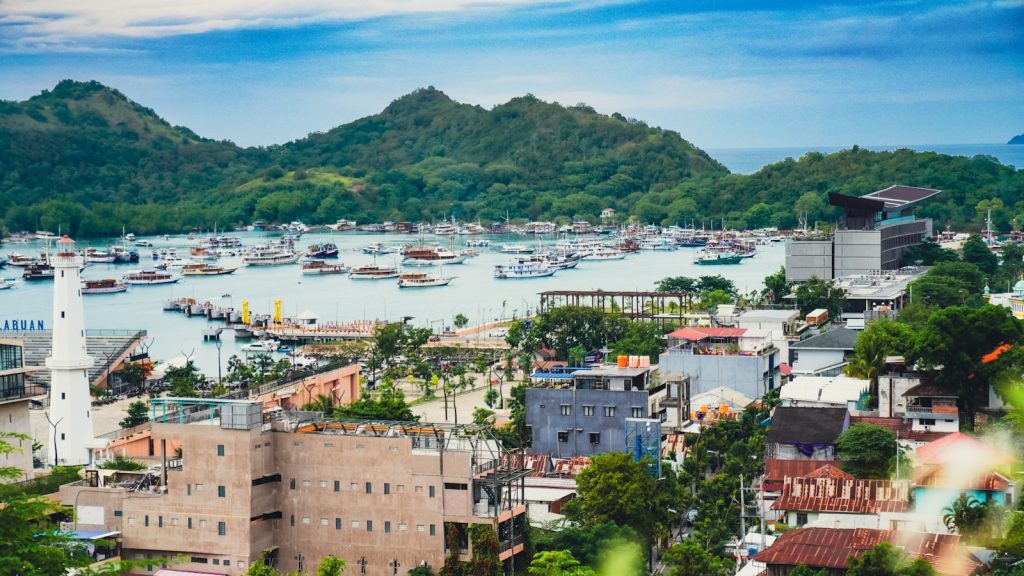
Komodo Wellness Retreat is an independent curation and intelligence guide for wellness travel in the Komodo National Park region and broader Flores island. We do not operate retreats, sell stays, or represent any property. What we do is read everything — operator pages, aggregator listings, TripAdvisor reviews, dive-boat forums, and primary sources — then report what we can verify, flag what we cannot, and be candid about the gap between marketing language and the experience waiting on the ground.
That is the complete answer to the primary question this page exists to answer: who runs this site, what is it for, and why should you trust it. The detail is below.
Why This Guide Exists
Search for a wellness retreat in Komodo or Labuan Bajo and you will find two kinds of results: hotel spa pages written to sell rooms, and booking aggregators that show zero actual packages when you click through. We ran those searches ourselves before building this site. BookYogaRetreats returns zero results for Komodo Island. BookRetreats claims thirty Flores retreats; when you read the listings, most are Bali operators using the word “Flores” loosely. Tripaneer includes the region but without editorial curation.
The gap is real. Komodo National Park is a UNESCO World Heritage Site, one of Indonesia’s most biodiverse marine zones, and a destination with a small but genuine cluster of spa resorts, yoga instructors, and liveaboard vessels running structured wellness programs. None of that is well documented for a traveler making a serious planning decision. This site is our attempt to fix that.
Our funding model is transparent: no one can pay to change what we publish. If you find a retreat through our free research assistance and proceed to book with an operator or partner, that operator may pay us a referral fee at no extra cost to you. That arrangement does not affect editorial judgment — properties we flag with concerns keep those flags regardless of commercial relationships.
The Editorial Team
Three editors cover the region. Their beats are distinct because the region demands it — a spa resort in Labuan Bajo is a genuinely different subject from a phinisi liveaboard running sunrise yoga in the Komodo Strait, and both are different from the couples market looking for a luxury Eastern Indonesia honeymoon add-on.
Dian Hartono — Wellness, Jamu and Traditional Healing
I lead the site and focus on Indonesian traditional healing, jamu culture, and yoga retreat research across Flores and NTT. My background is in wellness journalism in Jakarta, and I have spent time tracing how Indonesia’s jamu tradition — UNESCO-recognized as an Intangible Cultural Heritage, practiced in documented form since at least the eighth century — translates into the treatment menus at coastal Labuan Bajo resorts. The honest answer is: imperfectly, with a lot of Bali-derived programming transplanted rather than locally rooted content. Where that gap matters, I say so.
I also cover the practical wellness context that travelers overlook: the health infrastructure realities of a remote destination (RSUD Komodo district hospital handles emergencies; serious medical evacuations go to Bali or Jakarta), the vaccine picture for Flores including malaria risk in parts of the island, and the seasonal rhythms that genuinely affect whether a spa stay feels restorative or merely survived. A seven-night retreat is not the same experience in February westerly swells as it is in May when the seas calm and the landscapes are still green from the end of wet season.
Sari Pertiwi — Marine Wellness and Liveaboards
Sari covers the liveaboard side of our flores wellness research: phinisi vessels that have structured yoga and meditation programs, the intersection between freediving and breathwork, and what she calls the “marine wellness” experience — the documented effect of extended time on calm water, morning swims at current-sheltered bays, and encounters with manta rays that operators increasingly frame as mindful exploration rather than sport diving.
She is methodical about sourcing. The liveaboard wellness market in Komodo is small and date-sensitive. Confirmed programs for 2024–2025 include the Aliikai phinisi’s Wander Women departure (dive plus yoga, May 2025), the SeaTrek Sailing Adventures eight-day Life Force Wellness Cruise, and Samara Liveaboard’s customizable wellness charter model. Several vessels we researched — Wunderpus, Bulan Purnama — had documented yoga programs in earlier years; Sari marks those as unconfirmed for 2024–2025 and recommends direct verification before booking. That discipline is non-negotiable on this site.
She also covers the sea conditions context that shapes the liveaboard wellness experience: Komodo’s currents are famously strong (some sites described by operators as “whitewater rafting” strength), water temperatures range from a comfortable 29°C in the warmer north to roughly 24°C upwelling pockets in south Komodo, and the season shapes everything from manta ray sightings (peak November to April at Manta Point and Manta Alley) to the comfort of morning yoga on an open deck.
James Thornton — Luxury and Couples Coverage
James handles the luxury and couples segment across Eastern Indonesia. His beat includes the properties that anchor the high end of the Labuan Bajo market: Ta’aktana (the first Marriott Luxury Collection property in Labuan Bajo, opened 2024, with its Di’a Spa drawing on Flores-cave-inspired architecture and a two-storey wellness centre), AYANA Komodo Waecicu Beach, Plataran Komodo Resort and Spa, and Sudamala Resort. He also covers the broader couples itinerary pattern that this region sees most commonly — a Bali retreat anchored in a place like Ubud or Canggu, followed by a three-to-four night Komodo add-on — and the cost logic behind that combination.
James is blunt about price where we have data and candid about gaps where we do not. Ta’aktana has been cited at from USD 490 per night in travel media (Travel and Leisure Asia); he flags that as a reference point requiring direct verification, not a current guaranteed rate. Plataran’s accommodation types — Hanging Pool Residence, Founder’s Home, Presidential Pool Residence among others — have no publicly visible pricing in aggregator data we reviewed, so he reports by-quote rather than inventing figures.
Our Methodology: The Built-vs-Drawn Line
Every claim on this site sits in one of three states. Verified means we have it from at least one primary source or multiple consistent secondary sources and we name the source. Drawn from marketing language means an operator states it but we have not independently confirmed it — we report it but flag it. Unconfirmed means we found a reference but it is outdated or thin enough that we recommend direct verification before you rely on it for booking.
A few examples of how this works in practice:
- Park entry fees
- IDR 250,000 per person per day (foreign nationals), plus IDR 25,000 diver surcharge and IDR 25,000 harbour fee — approximately IDR 300,000 total per day for a foreign diver. This is consistent across DiveBooker, ZuBlu Diving, Karang Travel and Matador Network for 2025–2026. We flag, however, that none of these are official TNKK/KLHK primary documents. The daily visitor cap of 1,000 people across all zones was implemented as a pilot from February–April 2026 and described as “not yet final” by at least one operator. We report it as current best information, not settled policy.
- Sudamala Resort wellness packages
- Verified via SpaDreams aggregator listing: “Relaxation by the Sea” from USD 75 per night (one-night, suite plus breakfast); “Culture and Mindfulness” from USD 325 for two nights (yoga, Melukat ceremony, hot stone therapy); “Lako Lako Retreat” from USD 375 for two nights (yoga, Melukat, weaving tour, Boreh paste workshop). These are aggregator prices at time of research — we mark them [VERIFY] because rates change and the aggregator may not reflect the current direct price.
- Flores traditional healing
- Indonesia has hundreds of distinct ethnic groups with documented ethnobotanical traditions; Flores and NTT are no exception. We state that regional herbal and ritual healing practices exist here as part of that heritage. We do not name a specific Flores healing system because we have not found ethnographic sourcing to back one — and inventing a tradition is exactly the kind of thing we will not do.
- Luxury liveaboard wellness costs
- We estimate USD 350–800-plus per person per night for yoga-and-wellness or private charter phinisi vessels. That range is inferred from Indonesian luxury liveaboard comparable pricing, not directly quoted by operators in our sources. We say so.
If you want to plan a trip and would like help working through the options, our enquiry form connects you to our concierge desk. You can also reach us via WhatsApp at +62 811 382 3875 or by email at sales@komodoluxury.com. We offer comparison assistance — helping you understand which type of experience fits your priorities and which operators have confirmed programs for your dates. We do not take payments for stays and we do not represent any property.
Our Candor Rules
These are the editorial commitments that govern every page on this site.
No endorsements
When a property appears on this site — Sudamala, Ta’aktana, AYANA Komodo, Plataran, Katamaran, Komodo Resort and Diving Club, or any other — it appears as a subject of independent coverage, not as a recommended or endorsed product. We describe, compare, and flag; readers decide.
No fabricated prices
We publish ranges and brackets, or we mark prices as by-quote. We never invent a specific nightly rate for a property that publishes by inquiry only and present it as if confirmed. The luxury and boutique end of this market changes rates frequently; the honest answer is a bracket, not a false certainty.
Health, safety and visa content is information, not advice
This matters especially in a remote destination with meaningful health considerations. Flores has documented malaria risk in parts of the island. The nearest recompression chamber for diving accidents may be outside Flores — divers must verify this with their operator and confirm their dive insurance covers evacuation. The RSUD Komodo district hospital handles basic emergencies; complex trauma or cardiac events require medical evacuation to Bali or Jakarta. Travel insurance including evacuation cover is not optional here.
On visas: the Indonesian Tourist Visa on Arrival (VOA) costs IDR 500,000 (approximately USD 35) and allows 30 days extendable once to 60 days. The e-VOA applied online carries the same terms but may not be usable for direct entry at Labuan Bajo’s LBJ airport — most travelers enter via Bali or Jakarta and take a domestic connection. These are the rules as of our research date (June 2026); Indonesian visa policy has changed without broad notice in the past and we say so explicitly. Always verify at the official Indonesian immigration website before you travel.
We report this context because it shapes the wellness experience directly. A retreat that ends in a medical evacuation due to inadequate trip planning is not a wellness outcome. We include the difficult practical information because leaving it out would be a disservice.
Uncertainty is flagged, not papered over
If something is uncertain, we say it is uncertain. We do not write confident sentences about things we cannot verify to give the page a smoother read. Readers making real booking decisions deserve to know what is solid ground and what is our best current understanding.
The Region We Cover
Komodo National Park sits at the eastern end of the Sunda Arc, between Sumbawa to the west and Flores proper to the east. The park was established in 1980 and received UNESCO World Heritage status in 1991; its current IUCN World Heritage Outlook conservation status is “significant concern,” which we take seriously as context for any wellness tourism discussion in the area. The Komodo dragon population was assessed at approximately 3,270 individuals in 2024 (official Indonesian government monitoring document) — upgraded to IUCN Endangered status in 2021 from Vulnerable, primarily because of habitat vulnerability to climate-driven sea-level rise.
The gateway town is Labuan Bajo on the western tip of Flores, served by Komodo International Airport (IATA: LBJ). Direct flights connect from Jakarta (approximately two hours thirty minutes to three hours) on Garuda Indonesia, Batik Air, Lion Air, Super Air Jet and Citilink. From Bali the flight is approximately one hour to one hour fifteen minutes on Indonesia AirAsia, Wings Air, Lion Air, Batik Air and Citilink. The airport handled just over one million passengers in 2024 — growing fast for its size but still a regional airport where schedules should be confirmed close to travel.
The climate is one of the driest in Indonesia: roughly 800 to 1,000 millimetres of rainfall per year, average humidity around 36% within the park. For wellness travel, the April-to-June window is our most frequently recommended: seas are calming after wet season, landscapes still hold green from recent rains, temperatures are comfortable (daily highs typically in the high twenties to low thirties Celsius), and visitor numbers have not yet peaked to the July–August crush. September and October offer a second good window: marine conditions are excellent, crowds thin from peak, and the dry season is still holding. July and August have the best visibility for diving and snorkeling but bring the highest prices and the busiest boats.
What We Do Not Cover
We focus on Komodo National Park, Labuan Bajo, and the adjacent waters of western Flores. We do not cover Ubud Bali retreat packages in depth — there are better resources for that. We do note, where it is relevant, that many travelers combine a five-to-seven night Bali wellness retreat with a three-to-four night Komodo add-on; the one-hour Bali-to-LBJ flight makes the combination straightforward and the experiences are genuinely complementary rather than competing.
We also do not cover retreat aggregator listings uncritically. If a platform claims to show Flores retreat results and the actual packages are Bali operators using the word “Flores” as a destination tag, we say so. Our readers should not waste booking hours on platforms that do not have real Komodo-region inventory.
Ready to plan? Use our enquiry form or reach us on WhatsApp at +62 811 382 3875 and we will help you match what is actually available with what you are looking for — type of experience, timing, budget bracket, and the honest tradeoffs between options.
Frequently Asked Questions
Is Komodo Wellness Retreat a retreat operator or a booking agency?
Neither. We are an independent editorial guide. We do not operate retreats, own accommodation, or process bookings. Our concierge service offers comparison assistance — helping you understand the options and identify operators with confirmed programs for your dates. If you proceed to book with an operator or partner after using our free help, that operator may pay us a referral fee at no extra cost to you. That commercial arrangement does not change what we publish editorially.
How current is the information on this site?
We research actively and mark our sources with dates, but conditions in a remote destination change faster than any guide can track. Park fees and the daily visitor cap (1,000 people per day, implemented as a pilot from early 2026) are consistent across multiple operator sources but not yet confirmed in official TNKK documents. Visa rules have changed without broad notice in the past. Liveaboard wellness departure schedules are seasonal. For anything time-sensitive — park permits, visa requirements, specific departure dates — verify directly with the official source or operator close to your travel date.
What is the typical cost of a wellness stay in Labuan Bajo?
It ranges widely. Budget wellness-oriented accommodation runs approximately USD 20–60 per room per night without structured retreat programming. Mid-range resort stays with spa access sit around USD 80–180 per night. Luxury land-based resorts such as Ta’aktana have been cited from USD 490 per night in travel media (we mark this as a reference point to verify directly). Curated yoga-and-nature multi-day programs — once accommodation, meals, yoga, and park fees are included — typically run USD 200–350-plus per person per day. Private luxury phinisi charters with wellness programming are estimated at USD 400–1,000-plus per person per night; we mark that as inferred from comparable Indonesian luxury liveaboard pricing rather than directly quoted. For honest current ranges, we recommend contacting operators directly and using our comparison assistance.
Is there a yoga studio in Labuan Bajo outside the resort hotels?
Yes, though the scene is small. Bajo Yoga has been operating as a community yoga service in Labuan Bajo since 2017 and describes itself as the first in the town. There is also at least one RYT200-certified local instructor offering private and group sessions (find via Instagram). Sten Lodge Eco Retreat in Melo, Manggarai Barat — a short distance from Labuan Bajo town — is listed on at least one yoga finder directory offering Pranayama, Yoga Nidra, and meditation in an eco homestay format. Non-resort travelers are not limited to paying hotel rates for access to yoga. That said, structured multi-day retreat programming with a consistent schedule and curriculum remains thin in the region compared to Bali, and we report that honestly.
What should I know about health and safety before booking a Komodo wellness retreat?
Several things that wellness-focused travelers sometimes overlook. Labuan Bajo’s main hospital (RSUD Komodo) handles routine emergencies and common conditions; serious cases require evacuation to Bali or Denpasar, so comprehensive travel insurance including medical evacuation cover is essential, not optional. Flores has documented malaria risk in parts of the island — discuss prophylaxis with a travel medicine clinic at least six to eight weeks before departure. Dengue is common across Indonesia; mosquito precautions matter even at resort level. For divers, verify the location of the nearest functioning recompression chamber with your operator before booking, and confirm your dive insurance covers decompression illness evacuation. Day-trip and liveaboard boats can pitch and roll significantly in wet-season seas (January–February carries peak seasickness risk); choose the season and vessel type deliberately. None of this makes Komodo an unsafe destination — it makes it a destination that rewards careful preparation.