How to read this: Komodo Wellness Retreat is an independent curation guide for wellness travel in the Komodo & Flores region — we compare retreat styles (yoga, meditation, detox, dive-wellness, liveaboard, spa) and then route your enquiry to a vetted partner who handles the booking. We are not a resort, operator, studio or booking platform, and any property or place names are neutral examples only, not claims of affiliation or endorsement. Wellness content here is general information, not medical, health or fitness advice — consult a qualified professional before any detox, fasting, diving or new practice. Park permits, fees, schedules and the ~1,000/day Komodo National Park visitor cap change — confirm current details before you travel. Prices are by quote and vary by retreat, season and group; figures here are indicative ranges only.
A komodo vs bali wellness retreat comparison comes down to a single, clarifying trade: Bali gives you far more wellness programming per dollar, a mature retreat school ecosystem, and choice at every budget level; Komodo and Flores give you dramatic marine nature, genuine remoteness, and far fewer people — at a cost premium driven by logistics rather than wellness content. Both can form part of the same trip. For most travellers, the sensible answer is not Bali or Komodo but Bali then Komodo — a 5–7 night retreat base in Ubud or Canggu followed by a 3–4 night Komodo sailing or resort add-on. That pattern solves the comparison rather than forcing a choice between them.
This guide lays out the actual tradeoffs without boosterism. If Bali fits your brief better, we will say so plainly. If Komodo is a stronger match — perhaps you have already done Bali multiple times, or the combination of strong diving and spa recovery is exactly what you want — that case is here too. Properties are cited as neutral examples to ground the comparison, never as endorsements; all prices are ranges and should be verified directly with each property before you commit.
The Fundamental Difference: Programming Density vs Nature Access
Ubud alone has well over a hundred dedicated retreat centres, yoga shalas, and wellness schools. Canggu adds a second concentration. These two areas together represent decades of investment in retreat infrastructure — teacher-training programmes, Ayurveda clinics, breathwork and sound healing studios, raw food kitchens, meditation centres with rolling weekly schedules. The market is competitive, which keeps prices honest and programming rigorous.
Labuan Bajo, the access hub for Komodo National Park, has a yoga scene that consists of one studio operating since 2017 (Bajo Yoga, a community-oriented, low-cost service) and a local RYT200-certified instructor offering private sessions via Instagram. Five land-based resort properties have confirmed spa and wellness facilities. There is no confirmed standalone retreat centre anywhere in wider Flores. No dedicated yoga school. No week-long immersion programme with structured curriculum outside of the occasional hosted liveaboard departure.
This is not a criticism of the region — it is an honest description of where it is in its development. Komodo National Park is a UNESCO World Heritage Site and one of the planet's most biodiverse marine environments. It was not built for wellness tourism; it happens to be stunning enough that resort spas and the occasional phinisi yoga cruise have grown around its edges. The wellness offer is real but nascent. The nature offer is exceptional and mature.
Cost Comparison: What Your Money Actually Buys
This table shows verified or well-sourced price ranges. Komodo figures are sourced from FACTS.md research and operator/booking-platform data cross-checked across multiple sources; all figures should be verified directly before booking.
| Category | Bali (Ubud / Canggu) | Komodo / Labuan Bajo |
|---|---|---|
| Budget wellness stay (room + yoga + meals) | USD 30–70/person/night; from USD 150–350/week | USD 20–60/room/night — no structured wellness at this tier |
| Mid-range all-inclusive retreat | USD 70–150/person/night; USD 300–800/week with meals and daily yoga | USD 80–180/room/night; Sudamala packages from approx. USD 325 for 2 nights [VERIFY] |
| Luxury structured programme (7 nights) | USD 200–400+/night; approx. USD 2,300–2,900/person all-inclusive | USD 490+/night at Ta'aktana [VERIFY]; no 7-night structured wellness package confirmed |
| Park entry fee (foreign national) | None | IDR 250,000/person/day (~USD 16) |
| Diver surcharge | None | IDR 25,000/diver/day (~USD 1.50) |
| Harbour fee | None | IDR 25,000/person/day (~USD 1.50) |
| Yoga / wellness liveaboard | USD 150–350/person/night on comparable vessels | Est. USD 350–800+/person/night [inferred; not directly quoted by operators] |
| Standard shared phinisi tour (non-wellness) | N/A — not relevant | Approx. IDR 4–7 million total for 3D2N (~USD 130–230/person/night) |
The pattern is unambiguous. At every tier from budget to luxury, Bali returns more wellness content per dollar. In Komodo, the cost premium above Bali is paid for remoteness, park access friction, and the uniqueness of the physical environment — not for a superior yoga curriculum or deeper spa menu. If your primary goal is maximum wellness programming at the best value, Bali wins outright. If you want the kind of place where you might encounter a Komodo dragon on a morning hike before a massage, the calculus changes.
Park Access Costs and Planning Friction
Bali has no national park access fee for its retreat areas. Ubud is a 45-minute drive from Ngurah Rai airport. Most retreat centres handle airport pickups as a matter of course. You arrive, settle in, attend your first session, and the logistics largely disappear.
Komodo requires more planning and more money before you reach your first yoga mat or treatment table. Park entry runs IDR 250,000 per person per day for foreign nationals (approximately USD 16) — confirmed across multiple 2025–2026 sources including DiveBooker, ZuBlu Diving and Matador Network, though as of our research date there is no official primary government document directly cited in the sources we reviewed. Add a harbour fee of IDR 25,000 per day, a diver surcharge of IDR 25,000 per day if you are diving, and a ranger fee of approximately IDR 200,000 per group of up to five for the Komodo Island trekking experience. Over a 3-day visit, a foreign national who dives and treks accumulates roughly IDR 900,000–1,500,000 in access fees alone before accommodation.
Then there is the SiOra booking system. From 2026, all park visits require advance digital booking through the Sistem Informasi Online Reservasi Wisata Alam app, replacing walk-up harbour tickets. A daily visitor cap of 1,000 across all park zones — implemented as a pilot from February to April 2026 and described by at least one operator as "not yet final" — divides the day into three time slots of roughly 333 people each. Permits are tied to your specific passport number and calendar date; they are non-transferable. Operators recommend booking 2–4 months ahead during peak season (June–September) and 4–8 weeks in shoulder season.
This is not a reason to avoid Komodo. It is a reason to know it is not a spontaneous destination. Bali is. If your travel window is short or uncertain, that asymmetry matters.
Komodo vs Bali Yoga Retreat: A Direct Comparison
For a traveller whose primary purpose is yoga — a structured morning practice, afternoon workshops, evening meditation, teacher-guided curriculum — Bali is the stronger destination by a wide margin. A serious Ubud yoga retreat offers daily multi-style classes, optional anatomy workshops, philosophy discussions, teacher feedback, and a community of practitioners around you. Programs run continuously year-round. The infrastructure for this exists at the USD 50/night level and scales gracefully through to USD 400/night without losing the substance of the offering.
The komodo vs bali yoga retreat comparison gets more interesting when you qualify what kind of yoga experience you actually want. Three liveaboard operators confirmed yoga programming in the Komodo region for 2024–2025:
- Aliikai (phinisi liveaboard) — hosted the Wander Women Komodo Dive + Yoga Liveaboard in May 2025, combining multiple yoga styles with opt-in diving. Note that not all Aliikai departures include yoga; this is a specific hosted departure, not a standing fleet-wide programme.
- SeaTrek Sailing Adventures — markets an 8-day Life Force Wellness Cruise and Yoga Retreat as a core product, with daily sessions, meditation instruction, snorkelling and park fees included [VERIFY specific 2025–2026 departure dates directly with the operator].
- Samara Liveaboard — confirmed wellness and yoga charters available on request, customisable with onboard instructors and meditation leaders, on a private charter model rather than fixed group departures.
What these three offer is yoga practice in a spectacular natural setting — deck sessions at sunrise before a Padar island visit, evening stretches as the boat anchors near Pink Beach. That is a genuinely different experience from a studio floor in Ubud. It is not a substitute for structured curriculum-based training. If the yoga is the point of the trip, Bali; if yoga is the complement to an extraordinary marine environment, Komodo via liveaboard is worth considering seriously.
On the land-based side, Katamaran Resort Komodo offers Yoga by the Beach, and Meruorah Komodo Labuan Bajo has a Sunset Yoga activity page. Both are hotel amenities rather than dedicated retreat programmes. Sudamala Resort includes yoga and meditation in several of its multi-day packages [VERIFY current schedule].
Bali vs Komodo for Diving and Yoga
This pairing is where Komodo wins decisively. For the traveller who wants both serious diving and a yoga or wellness practice, the Bali diving options are adequate but not comparable to what Komodo offers. Bali has good dive sites — Tulamben, Menjangan, Amed — and excellent access. Komodo has exceptional dive sites with conditions that serious divers plan trips around specifically.
The Komodo diving context, briefly: year-round diving with the strongest overall window from May through October. Water temperatures average 27–28°C in the north and central zones, dropping to 23–24°C in the south where thermoclines from upwellings create nutrient-rich conditions that attract manta rays in large numbers (10–30+ mantas per dive at Manta Point and Manta Alley, peaking December through February). Visibility in the north runs 15–40 metres in dry season. Currents are famously strong — some sites are described by operators as "whitewater rafting" strength, and drift diving is standard. Advanced Open Water certification is the recommended minimum for the signature sites; newer divers can access sheltered central sites with conservative operators.
Named sites verified by multiple 2024–2025 operator itineraries include Batu Bolong (pinnacle, intense fish life, strong current), Castle Rock and Crystal Rock (north seamounts, schooling fish and sharks), The Cauldron (very strong channel current), Tatawa Besar and Kecil (colorful drift, turtles, soft corals), and the Manta Point and Manta Alley aggregation sites. This is the world-class marine offering that no amount of content from Bali can replicate.
Komodo Resort on Sebayur Besar Island — the only resort sitting physically inside the park boundary — has a Diver's Massage specifically on its spa menu, designed for post-dive muscle recovery. That combination of PADI 5-star dive centre and on-site spa treatment within the UNESCO World Heritage Site is genuinely distinct. No Bali property offers that.
For anyone weighing bali vs komodo for diving and yoga: if the diving is a priority equal to or greater than the yoga, Komodo is where you need to be. If yoga is primary and you want some recreational diving as a diversion, Bali may serve you better on both counts.
The Quiet Alternative to Bali Wellness
There is a real and growing cohort of travellers for whom the established Bali wellness scene has become its own obstacle. Not bad — just busy. The curated serenity of an Ubud retreat can feel undermined when you are one of many thousands pursuing it simultaneously, when the roads to class are clogged, when Instagram aesthetics have colonised the ceremony spaces. The search for a quiet alternative to bali wellness is not irrational.
Komodo and Flores offer genuine quietness, but with caveats. The daily visitor cap of 1,000 people across the park — a pilot measure as of early 2026 — is partly a response to the fact that even this remote destination was getting crowded in peak season. The solution to crowding in Ubud is not necessarily Labuan Bajo in July; it may be Komodo in May or October, or a liveaboard itinerary that takes you to less-visited park zones.
The land-based resort scene in Labuan Bajo is small enough that you will almost certainly not encounter the retreat-group-saturation that Ubud can produce. Sudamala, AYANA, Ta'aktana and Katamaran are distinct properties serving different market segments, and none of them is operating at the volume of a large Ubud retreat centre. The quietness is real — so is the remoteness, which means the support infrastructure that Bali's mature wellness market takes for granted (abundance of practitioners, drop-in classes, medical facilities, easy communication) is simply thinner on the ground.
If what you want is solitude, undisturbed nature, and a wellness practice that happens to exist within an extraordinary landscape rather than the other way around, Komodo and Flores deliver that. If you want a structured programme with consistent practitioner quality and backup options if one retreat is not to your taste, Bali remains the stronger environment to be in.
The Sensible Combined Itinerary
The traveller who tries to choose between Bali and Komodo for a wellness trip is often solving the wrong problem. The distance between them is 1–1.25 hours by air (multiple daily direct services from Bali's Ngurah Rai airport to Komodo International, LBJ, via Indonesia AirAsia, Wings Air, Lion Air, Batik Air and Citilink). The combination is not only sensible — it is genuinely the most common pattern among experienced wellness travellers who visit the region.
A workable template:
- Nights 1–7: Bali retreat base (Ubud or Canggu) — structured yoga programme, daily classes, spa, Jamu herbal treatments, proper curriculum. Budget USD 150–350/week at mid-range through USD 2,300–2,900 at a luxury all-inclusive. This is where the dedicated wellness work happens.
- Nights 8–11: Komodo sailing or resort stay — a 3–4 night phinisi charter or land-based resort stay in Labuan Bajo for the nature experience: Komodo Island trek, Padar sunrise hike, snorkelling or diving, Pink Beach. Whatever spa access the property offers becomes a pleasant addition rather than the justification for the trip.
This sequencing has two practical advantages. First, it lets each destination serve its genuine strength rather than asking Komodo to be Ubud or Ubud to be a marine national park. Second, it means the park access logistics (SiOra booking, entry fees, advance reservations) are a 3-night planning exercise rather than the central architecture of the whole wellness trip. A good operator — whether a liveaboard company or a resort — can handle most of the Komodo logistics once you arrive in Labuan Bajo.
If you want help putting that combined itinerary together, we offer a free concierge service — no booking pressure, just a considered recommendation matched to your travel dates, group size and priorities. Use our enquiry form or reach us on WhatsApp at +62 811 3823 875 or by email at sales@komodoluxury.com. If you go ahead with any operator you find through us, they may pay us a referral fee at no extra cost to you — but no one can pay to change what we publish.
What Bali Has That Komodo Does Not
This list is worth stating plainly, because the gap matters for certain types of traveller:
- Teacher training and retreat schools — 200-hour and 300-hour yoga teacher training programmes are abundant in Ubud. There is no equivalent in Labuan Bajo or wider Flores.
- Ayurvedic and specialist clinical wellness — a handful of Bali retreats offer genuine Ayurvedic consultation and treatment programmes. Nothing comparable exists in Flores.
- Budget-tier structured wellness — from USD 30–70 per night including yoga, meals and community, Bali's budget retreat tier has no Flores equivalent. Labuan Bajo at budget price points offers accommodation; wellness is the missing element.
- Programme continuity — in Ubud you can attend a different studio every day if you want, pick up a breathwork workshop, a sound bath, an Ecstatic Dance, a cacao ceremony, and Jamu cooking class all within walking distance. Programming density is simply incomparable.
- Medical infrastructure — Bali's private hospital network is robust. Labuan Bajo's public hospital (RSUD Komodo) handles basic emergencies; serious conditions require evacuation to Bali or Jakarta. For wellness travellers with any underlying health consideration, this matters.
What Komodo Has That Bali Does Not
The other side of the ledger is equally clear:
- World-class diving — Komodo National Park is one of the few places on earth where a single trip can produce encounters with Komodo dragons (IUCN Endangered, park population approximately 3,270 individuals as of 2024 government monitoring data), manta rays, sharks, turtles, and some of the most biodiverse coral ecosystems in the Indo-Pacific. Bali diving is genuinely good; it is not this.
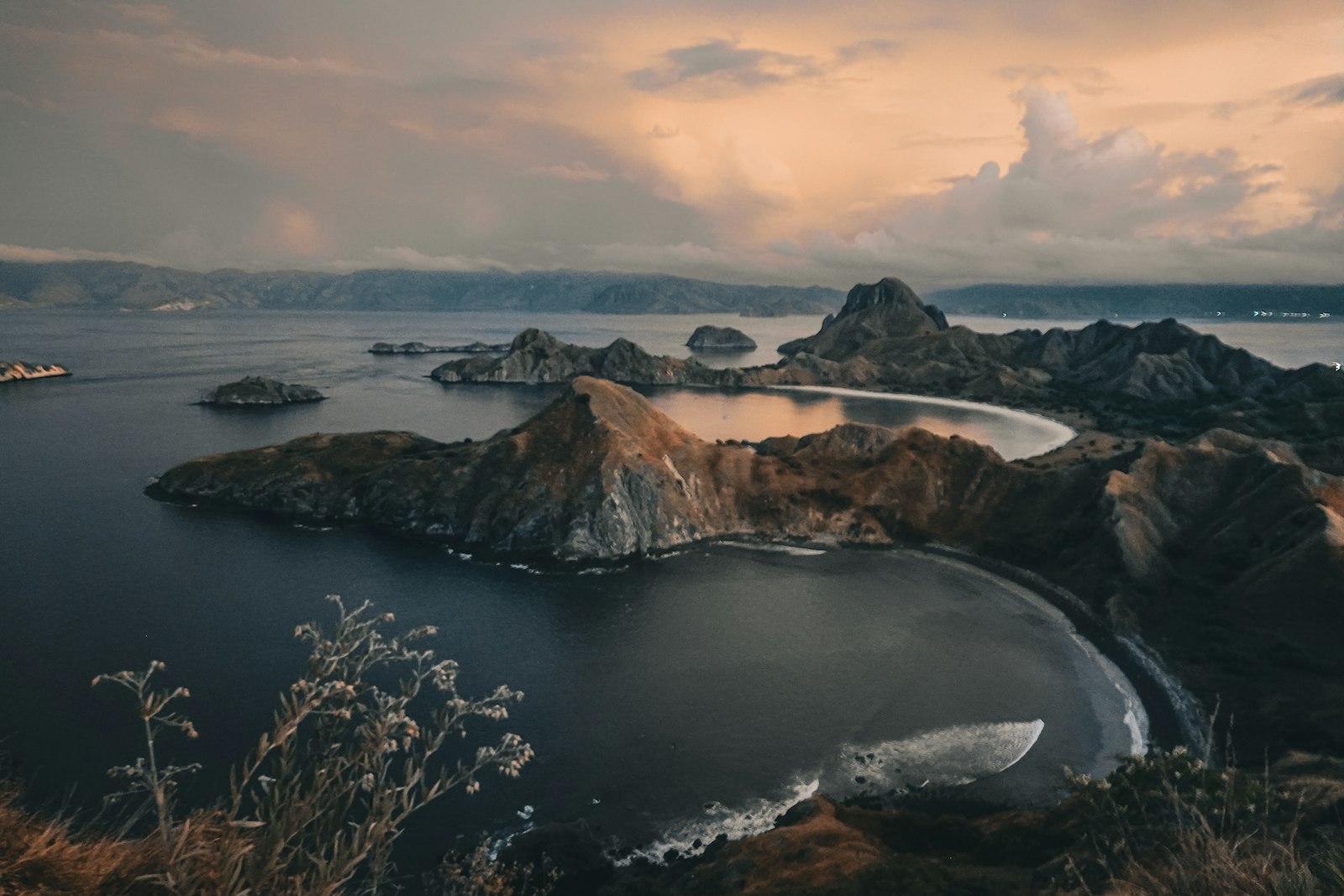
- Marine park immersion — the experience of anchoring a liveaboard in the park, hiking Padar at sunrise with fewer than a hundred other people visible, and sitting on a deck as the Komodo landscape changes colour at dusk is qualitatively different from any retreat environment Bali offers.
- Genuine remoteness — Labuan Bajo has grown rapidly as a tourist hub, but it remains a small town with real frontier edges. Flores interior is largely undeveloped for tourism. That remoteness costs in logistics; it pays back in the sense of being somewhere that has not yet been fully curated for the wellness market.
- Phinisi sailing culture — the traditional Bugis sailing vessel as a wellness delivery vehicle is something you cannot replicate on Bali's land mass. Waking up at anchor inside the park, doing your morning practice on deck, watching manta rays feed from the stern — this is a format that exists only here.
Verified Wellness Properties in the Region: A Quick Reference
Five land-based properties in the Komodo and Labuan Bajo area are confirmed operating with spa or wellness facilities as of 2024–2025. For detail on each, see our retreat types hub. Briefly:
- Ta'aktana, a Luxury Collection Resort & Spa (Labuan Bajo)
- First Marriott property in Labuan Bajo, opened 2024. Di'a Spa: two-storey, cave-inspired design, hot and cold plunge pools, lulur scrub, warm oil massage, anti-aging facial. Travel & Leisure Asia cited rates from USD 490/night [VERIFY]. Top of the local market.
- AYANA Komodo Waecicu Beach (Labuan Bajo)
- Full-service beach resort, 250-metre private jetty, spa confirmed active. Specific treatment menus and yoga schedule not independently verified beyond marketing language [VERIFY]. Also operates the Lako Di'a luxury phinisi with 9 air-conditioned suites.
- Plataran Komodo Resort & Spa (private island)
- Private island resort marketed as ecotourism-meets-luxury. Wellness section and spa confirmed; structured retreat programme details not verified beyond marketing language [VERIFY]. No published room rates — direct enquiry required.
- Sudamala Resort, Komodo (Labuan Bajo)
- Best-documented for structured wellness pricing. Sudajiva Spa: 563 sq m, three treatment rooms, open daily 09:00–21:00. Multi-day packages from approximately USD 325 for 2 nights with yoga, Melukat ceremony, spa treatments [VERIFY current availability].
- Katamaran Hotel & Resort Komodo (Labuan Bajo)
- TripAdvisor's top-ranked Labuan Bajo yoga hotel. Soul Bliss Spa, fitness centre, Yoga by the Beach programme. No publicly listed room rates [VERIFY directly].
- Komodo Resort & Diving Club (Sebayur Besar Island, inside Komodo National Park)
- 16 seafront bungalows; the only resort physically within the UNESCO World Heritage Site boundary. Sebayur Spa with Diver's Massage on the menu. PADI 5-star dive centre. TripAdvisor price context approx. USD 296–428 for multi-night stays [VERIFY current rates].
The Best Wellness Destination in Indonesia: A Broader Frame
The question of the best wellness destination indonesia has no clean answer independent of what the traveller is actually trying to do. Bali is the default, and for structured programming, value at scale, and infrastructure, that default is correct. Lombok and the Gili Islands offer a quieter middle ground. Sumba is emerging as a nature-and-culture wellness destination for adventurous travellers willing to accept even thinner infrastructure in exchange for extraordinary scenery and genuine remoteness.
Komodo and Flores occupy a specific niche: they are extraordinary for nature-based wellness travel, meaning the kind of trip where the healing comes primarily from the environment — clear water, volcanic landscapes, dramatic skies, physical activity in a protected natural setting — rather than from formal retreat programming. If your definition of wellness includes "my nervous system genuinely decompressed in a place that felt nothing like ordinary life," Komodo delivers that at a level Bali's more crowded wellness districts increasingly struggle to match.
The honest recommendation is to treat Bali and Komodo as complementary nodes in the same trip rather than alternatives in a competitive ranking. Use each for what it does best. Your body will not complain about seven days of Ubud yoga followed by four days of Komodo manta dives and a post-dive massage at Sebayur Spa. That combination, frankly, is one of the stronger arguments for Indonesia as the world's most interesting wellness travel destination — not because it competes with a Maldivian spa resort or a Swiss thermal clinic on narrowly-defined wellness metrics, but because nothing else in the world puts those two experiences so close together.
Ready to plan the combined itinerary? Our team can match you with the right Bali retreat base and the right Komodo operator for your travel window, group size and budget — whether you want a liveaboard yoga cruise, a private resort stay inside the park, or something between. Send us your brief via our enquiry form, or message us on WhatsApp at +62 811 3823 875 or email sales@komodoluxury.com. No booking pressure; if you go ahead with any operator or property you find through us, they may pay us a referral fee at no extra cost to you.
Frequently Asked Questions
Is Komodo better than Bali for a wellness retreat?
Neither is simply 'better' — they serve different purposes. Bali (Ubud, Canggu) offers far greater wellness programming density, more yoga teachers and retreat schools, and better value per dollar at every price tier from USD 30/night budget to USD 400/night luxury. Komodo offers dramatic marine nature, world-class diving, and genuine remoteness that Bali's busier retreat districts can no longer provide. The most common and sensible answer is a combined itinerary: 5–7 nights at a Bali retreat base, then a 3–4 night Komodo sailing or resort add-on. That combination costs more than Bali alone, but it treats each destination honestly.
How much more expensive is a Komodo wellness retreat than Bali?
Meaningfully more expensive, and the premium is driven by logistics rather than wellness quality. Bali luxury retreats run approximately USD 200–400+/night, with full 7-night packages around USD 2,300–2,900/person all-inclusive. Komodo's top property, Ta'aktana (Marriott Luxury Collection), has been cited at rates from USD 490/night [VERIFY]. Add park entry fees of IDR 250,000/person/day (roughly USD 16), harbour fees, a possible diver surcharge, and ranger fees for trekking. Over a 3-night park visit, these fees can add USD 50–80+ per person depending on activities. Budget tiers also diverge: Bali has wellness stays from USD 30–70/night; Labuan Bajo at that price point offers a room, not a wellness programme.
Can I do a yoga retreat in Komodo without staying at an expensive resort?
Options are limited but exist. Bajo Yoga (bajoyoga.weebly.com), operating since 2017, offers community classes in Labuan Bajo town — the most affordable yoga access in the area [VERIFY current schedule and rates]. Niang Yoga Bajo (@niang_yogabajo on Instagram), a local RYT200-certified instructor, offers private and group classes [VERIFY via DM]. Sten Lodge Eco Retreat in Melo, Manggarai Barat, offers Pranayama, Yoga Nidra and meditation in an eco homestay format [VERIFY at +62 813 3722 9724]. Some hotel yoga programmes such as Katamaran's Yoga by the Beach may be accessible to non-residents — worth enquiring directly. A dedicated yoga curriculum of the kind available in Ubud is not available in Labuan Bajo at any price point.
What is the best time to visit Komodo for a combined wellness and diving trip?
April to June is the consensus pick for a first visit combining wellness and diving: seas are calming, landscapes still carry some greenery from the wet season, temperatures sit comfortably in the mid-20s Celsius, and tourist volumes have not yet hit the July–August peak. Diving visibility in the north of the park improves steadily through May and June toward 25–40 metres. September to October is the second prime window — excellent diving conditions, crowds below peak, and the start of the manta season building in the south. July–August offers the best visibility and most reliable weather but comes with peak prices, more boats at dive sites, and the SiOra booking quota system's full pressure. Pair this with a Bali retreat in any month (Bali's retreat centres run year-round) and plan the Komodo leg around April–June or September–October.
Does visiting Komodo National Park affect how I plan a wellness retreat?
Yes, more than most travellers expect. Park permits through the SiOra app are mandatory from 2026, tied to your specific passport number and calendar date, and must be booked in advance — operators recommend 2–4 months ahead in peak season (June–September). A daily visitor cap of 1,000 across all zones is currently operating as a pilot (as of early 2026, described as "not yet final" by operators). Entry fees add IDR 250,000 per person per day for foreign nationals (~USD 16), plus harbour and diver fees. None of this applies to your Bali retreat base, which requires no park booking at all. The practical implication: treat the Komodo leg as a mini-expedition that needs its own planning layer, ideally coordinated through a Labuan Bajo operator familiar with the current SiOra system. The planning investment is worth it; the park is extraordinary. Just build the lead time in.