
How to read this: Komodo Wellness Retreat is an independent curation guide for wellness travel in the Komodo & Flores region — we compare retreat styles (yoga, meditation, detox, dive-wellness, liveaboard, spa) and then route your enquiry to a vetted partner who handles the booking. We are not a resort, operator, studio or booking platform, and any property or place names are neutral examples only, not claims of affiliation or endorsement. Wellness content here is general information, not medical, health or fitness advice — consult a qualified professional before any detox, fasting, diving or new practice. Park permits, fees, schedules and the ~1,000/day Komodo National Park visitor cap change — confirm current details before you travel. Prices are by quote and vary by retreat, season and group; figures here are indicative ranges only.
The best time to visit Labuan Bajo for wellness travel is the shoulder of the dry season — specifically April to June or September to November. Both windows give you calm enough seas for comfortable sailing, clear water for diving or snorkelling, and the breathing room that July and August simply do not offer. If you are prone to seasickness, planning around these months is not optional; it is the single most important logistics decision you will make for a Komodo trip.
What follows is a month-by-month guide to Komodo’s seasons, their implications for every major wellness activity — sailing, yoga on deck, diving, trekking, post-dive recovery — and the practical details that most booking sites skim over entirely.
How Komodo’s Climate Works: A Quick Orientation
Komodo and the wider Flores archipelago sit in one of the driest parts of Indonesia. Annual rainfall across the park hovers around 800–1,000 mm — a fraction of what Ubud or Manado receive. Humidity in the park itself averages roughly 36%, which feels genuinely arid by Indonesian standards. Temperatures range from 17°C on cool nights to 34°C in the heat of the day, occasionally peaking at 35–37°C in September and October.
There are two seasons. The dry season runs approximately April through October or November, driven by the southeast trade winds. The wet season runs from roughly November or December through to March, when the northwest monsoon brings periodic storms, rougher swells on all coasts, and — between the squalls — noticeably greener landscapes and warmer ocean water.
Neither season is off-limits for wellness travel. Each has a different character and a different set of tradeoffs. The question is which tradeoffs fit your programme.
The Two Prime Windows for Wellness Travel
April to June: The Best Overall Window
Multiple Komodo operators and travel researchers consistently name April through June as one of the two prime planning windows, and the reasons hold up to scrutiny. By April the northwest monsoon has retreated. Seas along the north and central Komodo coasts are settling into their calm-season pattern. Crowds have not yet arrived in force — July and August bring the annual surge — so you can actually book a phinisi without competing against a dozen other departures on the same morning.
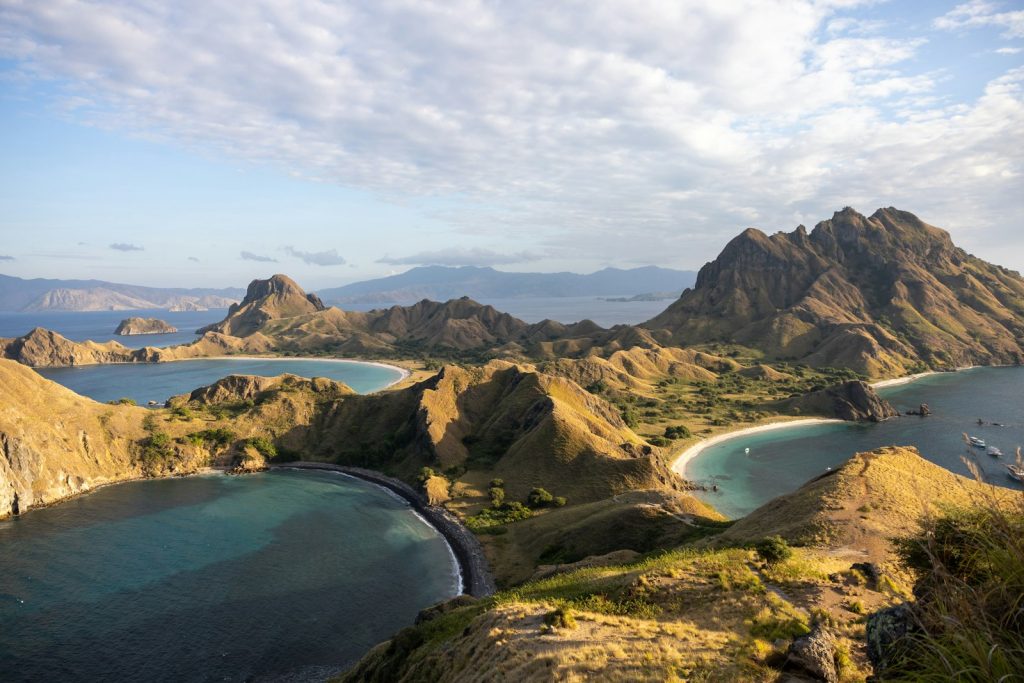
Landscapes are still green from the wet season rains. Padar Island’s famous ridgeline, which turns copper-brown by August, retains colour into May or June. For retreat programmes that include dawn trekking or sunrise photography sessions, this matters. The light is golden, the air is cooler in the mornings, and the hilltops are not yet crowded with competing groups.
Water temperatures in this window sit around 28.5–29°C in April, dropping gently toward 27–28°C by June as the southeast monsoon builds. For yoga practitioners doing morning dips or snorkellers wanting the water to feel welcoming rather than bracing, this range is comfortable. The southern dive sites — Manta Alley and the deeper south Komodo channels — run cooler at 23–24°C year-round, so a 3mm wetsuit is always advisable there regardless of month.
One note on the southeast monsoon: it intensifies through June. By mid-June, south-facing coasts begin to see larger swells, and conditions at south Komodo sites (Manta Alley, south-coast beaches) can be choppy on exposed days. North and central sites remain calmer. A well-planned itinerary in late May or June keeps south-coast activities for calmer days and clusters exposed passages in the early morning before afternoon winds build.
September to November: The Second Prime Window
After the peak-crowd months of July and August, September through November offers a quieter, often more relaxed version of the dry season. Seas are generally excellent across both north and central Komodo zones. Marine visibility in the north stays in the 15–40 metre range, and the central sites — Tatawa Besar, Siaba Besar, the Crystal Rock area — regularly see 20–35 metres of clear water.
For diving specifically, October is frequently cited as one of the best overall months: the southeast monsoon has eased, currents are more predictable, and tourist numbers have dropped enough that sites like Batu Bolong — normally crowded at peak — can be dived in something resembling peace. For a retreat programme that combines daily yoga with two or three dives, September to November is arguably the best-rounded window of the year.
Temperatures peak in this period. Days in September and October can reach 35–37°C, which means shade, hydration, and the timing of outdoor yoga sessions matter. A programme that places active practice in the early morning — sunrise flow on the upper deck or in a shaded beach pavilion — and keeps midday hours for in-water activities is the right call. Most experienced liveaboard captains and resort wellness directors in the region work this way naturally.
Water temperature rebounds to 27–28.5°C in September and October, then warms further toward 29°C in November as the wet season approaches. Manta ray season begins its annual build from November onward, with Manta Point (Makassar Reef) and Manta Alley both becoming increasingly active through December and January. Booking a late-October or November departure positions you to catch the start of that manta pulse.
July and August: Peak Season — What You Gain and What You Give Up
July and August are the driest, sunniest months in Komodo. Visibility is at its annual maximum in the north — up to 40 metres at the best sites. The southeast monsoon is at full strength, which means south-facing coasts see their largest swells of the year, but north and central sites benefit from the flushing action: clean, clear water pushed through the channels creates the rich feeding conditions that bring in pelagic life.
For diving programmes, July and August deliver the best macro visibility. For a wellness liveaboard, though, the tradeoffs are real. Every boat is running. SiOra booking slots fill weeks in advance. The daily visitor cap of 1,000 people across all zones means that time-slot competition at popular sites — Pink Beach, Padar Island, Komodo Island trekking — is intense. Operators recommend booking 2–4 months ahead for peak-season departures, and availability at smaller, curated liveaboards with yoga programmes can disappear earlier than that.
Prices follow demand. Accommodation rates at land-based properties trend upward in July and August relative to shoulder periods. If budget flexibility exists, the quality-to-cost ratio is simply better in April–June or September–October.
That said, if July or August is the only practical window — school holidays, work schedules — it remains an excellent time to visit. The marine conditions are genuinely exceptional. Just book early, accept the crowd reality at headline sites, and lean into early-morning departures to beat the rush.
The Wet Season: November to March
The wet season is not a monolith. It has three distinct phases with meaningfully different implications for wellness planning.
November and Early December: Transitional, Often Underrated
The shift from dry to wet is gradual. November often delivers reasonable diving conditions, reduced crowds, and the beginning of manta season — with 10–30+ mantas per dive reported at Manta Point and Manta Alley during the November–April peak period. Water temperatures are warm at 29–29.5°C. For a wellness traveller whose primary interest is manta encounters and marine connection, late November to early December is a genuinely compelling niche window.
December to January: Peak Manta Season, But Seas Tighten
December and January bring the northwest monsoon in earnest. Seas on north and central coasts begin to pick up. Some days are perfectly manageable; others are not. December–February is widely considered the peak manta window, particularly for Manta Point, which sits in a more sheltered position than Manta Alley and remains accessible more days of the month. If a manta encounter is the centrepiece of your wellness programme — and for many visitors it functions as a deeply moving ocean experience — this is worth considering despite the added logistical complexity.
Some operators reduce their Komodo schedules in the depths of the wet season, and a small number close entirely for maintenance between January and March. This is worth checking directly when planning: availability genuinely varies, and the window may narrow more than a booking platform’s calendar suggests.
January and February: The Rough Months
January and February are the most challenging months for seagoing wellness programmes. Westerly swells can make crossings uncomfortable even on larger phinisi vessels. Some sites become inaccessible during extended bad-weather periods. The risk of seasickness is at its annual high. None of this makes January or February impossible, but they require a more flexible itinerary — one that accepts weather-driven substitutions and can shift to sheltered sites at short notice.
The positive side is genuine: wet-season scenery is the lushest of the year. The hills are green, freshwater streams run on the islands, and the relative absence of boats gives the park a wilder quality that some travellers find more resonant than the dry-season crowds. Land-based wellness programmes in Labuan Bajo are not significantly affected by sea conditions. A stay at one of the established Labuan Bajo resort spas, combined with a conservative half-day boat trip to a sheltered site, is a workable wet-season approach.
March: Starting to Clear
By March, conditions begin stabilising. The transition back toward dry season is underway. Some years clear faster than others. Water temperature stays warm at 29°C. Visibility in the north and central zones improves as plankton blooms thin. March is worth considering as an early-access month before April’s prime window opens: a little unpredictable, but increasingly functional, and genuinely quiet.
Water Temperature Month by Month
Water temperature is a direct input to wellness programming — it affects immersion comfort, the viability of long snorkelling sessions, and for manta encounters, whether travellers can stay comfortably in the water long enough for the full experience.
| Month | Surface Temp (North/Central) | South Komodo | Wellness Notes |
|---|---|---|---|
| January–March | 29–29.5°C | 23–24°C | Warmest surface water; wet season roughness offsets comfort |
| April–May | 28.5–29°C | 23–24°C | Ideal combined: warm, calm seas beginning, prime window opens |
| June–July | 27–28°C | 23–24°C | Cooling slightly; south sites need a wetsuit; north excellent |
| August | 26.5°C | 23–24°C | Annual minimum; a 3mm shortie is comfortable for most swimmers |
| September–October | 27–28.5°C | 23–24°C | Rebounding; second prime window; excellent diving conditions |
| November–December | 29–29.5°C | 23–24°C | Warming again; manta season building; wet season transition |
Note that south Komodo — where Manta Alley sits — runs 23–24°C year-round regardless of month. Thermoclines can expose divers to similar temperatures even in the north. Always bring a wetsuit rated to at least 3mm; 5mm is sensible for longer dives in south-sector waters.
Manta Rays: Planning Your Ocean Connection
For many wellness travellers, a manta encounter is the defining moment of a Komodo trip. It is worth being specific about timing, because the season genuinely matters.
The peak manta window at Komodo runs November through April, with December through February typically the strongest months at both Manta Point (Makassar Reef in the north) and Manta Alley (south Komodo). The numbers reported during this peak — 10 to 30-plus mantas on a single dive — are consistently cited across multiple operator sources. Outside this window, mantas are still present but sightings are less predictable and aggregations smaller.
The tradeoff: the peak manta months overlap with the rougher part of the wet season. South Komodo is always cooler and can be more exposed than north sites. The scheduling logic for a wellness-focused trip is to target the transition months — specifically November and April — when manta activity is strong but sea conditions are more forgiving. A late November or early April departure gives you a meaningful chance at both reliable manta encounters and comfortable passage days.
Manta Point in the north is generally more accessible than Manta Alley in the south during the wet season. If sea conditions close Manta Alley, Manta Point often remains an option. Any operator familiar with the park will know which site is viable on a given day.
Seasickness and the Wellness Traveller
Seasickness is not a minor footnote for Komodo wellness planning — it is one of the most common reasons that otherwise well-designed programmes fall apart in practice. Crossing between islands in a small speedboat on a rough day is a completely different experience from the same crossing in calm conditions. The sea state directly determines how restorative or how gruelling the transit feels.
The highest-risk months are January and February, when westerly swells regularly affect all coasts. April through October is the relatively calm window, though the southeast monsoon picks up force from June onward and south-coast passages can be bumpy in the afternoon. The calmest sailing conditions overall are April through early June and October through early November — both at the shoulder of the monsoon rather than its peak.
Practical mitigation steps that experienced operators recommend: choose a larger phinisi over a small speedboat, especially for multi-day sailing; take proven motion-sickness medication before boarding (not after symptoms start); eat a light meal beforehand rather than travelling on an empty stomach; sit midship and face forward; and plan long crossings for early morning when sea state is typically more settled than the afternoon. For seasickness-prone travellers, this information should be part of the pre-booking conversation with any operator, not an afterthought on the day of departure.
If you want to discuss the right vessel type and departure window for your specific wellness programme, reach our concierge and we can walk through the options for your dates.
Komodo Weather and Yoga: Practical Scheduling
Outdoor yoga in Komodo is a different practice to a studio class in temperate conditions. The heat — reaching 35–37°C in September and October, sustained at 30–34°C through much of the dry season — makes midday practice inadvisable for most people. The practical scheduling that works is early morning (sunrise to 08:00–08:30) and late afternoon (after 16:00 as the heat eases and the light turns golden).
The southeast monsoon that runs June through September brings consistent trade winds — typically from the south and southeast — which actually help on land. A breezy afternoon session on a phinisi’s upper deck or a hilltop pavilion can be genuinely cooling. The same wind that creates chop on south-coast passages provides a welcome breeze for practitioners willing to adjust their mat placement.
The wet season brings occasional squalls that interrupt outdoor sessions without warning. Any programme offering outdoor yoga in December through February needs covered backup space and the flexibility to pivot. This is a real operational consideration for liveaboard wellness programmes that market rooftop deck yoga — it works beautifully in calm weather and requires a sheltered alternative plan when it does not.
Seasonal Pricing Patterns and Availability
We do not publish fixed prices — operator rates change regularly, and any number we cited today would be misleading within weeks. What we can say honestly:
- July and August are the most expensive months for accommodation and liveaboard departures. Both land-based resort properties and phinisi charters see their strongest demand, and availability at curated wellness-oriented vessels can close out months in advance.
- April–June and September–October offer the same or better quality experiences at more competitive rates. Shoulder pricing is not universally dramatic, but the combination of lower prices, fewer crowds, and comparable or superior conditions makes the argument clearly.
- Wet season (November–March, particularly January–February) carries the lowest rates and the fewest crowds, alongside the highest weather variability. Some operators close or run reduced schedules. Availability is less of a problem than confirming which operators are actually running their full programme during your dates.
For liveaboard yoga and wellness departures in particular, the calendar is thin outside peak months. SeaTrek Sailing Adventures runs a structured wellness cruise programme; Aliikai has hosted specific Wander Women dive-and-yoga charters (most recently a May 2025 departure); Samara Liveaboard offers customisable wellness charters on request. None of these are year-round daily departures. Dates fill, programmes rotate, and direct confirmation with the operator is essential regardless of when you plan to travel.
The SiOra booking system — Komodo National Park’s mandatory digital reservation platform since 2026 — imposes a daily visitor cap of 1,000 people across all zones. In peak season, time slots book out well ahead. For a wellness retreat that hinges on a specific Padar Island sunrise trek or a Manta Point session at a particular tide, booking 2–4 months ahead in peak season and 4–8 weeks in shoulder season is what operators recommend. Factor this into planning early.
Quick-Reference: Season at a Glance
- April–June (Prime Window 1)
- Calm seas, green scenery, comfortable temperatures, manageable crowds. Southeast monsoon building by June — south-coast passages can be choppier. Water 27–29°C. Best overall for seasickness-prone travellers and first-time liveaboard wellness guests.
- July–August (Peak)
- Driest, sunniest, best visibility (up to 40m north). Southeast monsoon at peak — south coasts rougher. Water 26.5–28°C, coolest of year. Crowded, priciest. Book 2–4 months ahead. Best for dive-focused wellness; accept crowd tradeoffs.
- September–November (Prime Window 2)
- Excellent marine conditions, fewer boats than peak. Temperatures peak Sep–Oct (35–37°C — schedule outdoor yoga early). Water 27–29.5°C rebounding. Manta season beginning November. Best for dive-yoga programmes; strong second choice.
- November–December (Transition)
- Wet season beginning. Manta season building strongly. Conditions still manageable most days. Some operators reducing schedules. Water warm at 29–29.5°C. Good for manta-focused retreats; verify operator availability.
- January–February (Roughest)
- Northwest monsoon at peak. Roughest seas of year; some sites inaccessible. Highest seasickness risk. Best manta diving at accessible sites. Water warm at 29.5°C. Lowest rates. Land-based spa programmes viable; liveaboard programmes need flexibility.
- March (Recovering)
- Conditions improving but unpredictable. Manta season winding down. Water 29°C. Quiet, good rates. Worth considering as an early shoulder option if flexibility is high.
Planning Your Trip: What to Do Next
Season choice is the foundation, but every wellness retreat in Komodo involves more moving parts: the right vessel or property for your specific goals, the park booking logistics under the SiOra system, visa requirements that need to be confirmed for your nationality, and whether your dive certification level matches the sites on your itinerary. Each of these has its own lead time.
Our curation covers all of it at no cost to you. If you use our planning help and then proceed with a partner or operator, they may pay us a referral fee — your cost is not affected either way, and no one can pay us to change what we recommend. We point you toward what fits your programme, not what pays the highest margin.
To start planning, use our enquiry form or reach us directly on WhatsApp at +62 811 382 3875 (email: sales@komodoluxury.com). Tell us your travel window, your wellness priorities — diving, yoga, spa recovery, a manta encounter — and whether you prefer a liveaboard or land-based base, and we will map the options to your specific dates.
Related guides that may help your planning:
- What to Pack for a Komodo Wellness Retreat
- Getting to Labuan Bajo: Flights, Logistics, and Transit
- Diving and Wellness in Komodo: Recovery, Breathwork, and Marine Mindfulness
- How Much Does a Komodo Wellness Retreat Cost?
Frequently Asked Questions
What is the best month to visit Komodo for a wellness retreat?
May is widely regarded as the single best month for most wellness travel purposes: the southeast monsoon has not yet fully strengthened, seas are calm across north and central Komodo, water temperatures are comfortable at around 28.5–29°C, crowds are lighter than July and August, and the landscape still holds some green from the wet season. October is a strong second choice for similar reasons, with the added benefit of the manta season beginning to build in November. Both months sit squarely in the prime shoulder windows that multi-source planning guides consistently identify.
When are the seas calmest around Komodo and Labuan Bajo?
The calmest consistent sailing conditions fall in April through early June and October through early November — the shoulders of the southeast monsoon rather than its peak. July and August bring clear skies and good visibility, but the southeast monsoon is at full strength, producing larger waves on south-facing coasts. January and February are the roughest months, when westerly swells from the northwest monsoon affect all coasts. Calm seas komodo months, in short, are the shoulders: April–June and October–November.
Can I do yoga and diving in Komodo during the wet season?
Yes, with adjusted expectations. Manta diving is actually at its peak from November through April, including the wet season. Land-based spa and yoga programmes at Labuan Bajo properties are not significantly disrupted by weather — the resorts have covered spaces and the town itself is not dramatically affected by the northwest monsoon. Liveaboard yoga programmes are more weather-dependent: deck sessions work on calm days and need a covered alternative on rough ones. If you are combining komodo weather for yoga and diving in the wet season, plan around a flexible operator who can adjust the itinerary to conditions, and prioritise sheltered north and central sites over exposed south-coast passages.
When is manta ray season in Komodo, and how does it affect retreat planning?
Manta ray season at Komodo peaks from November through April, with December through February typically the strongest months for aggregations at both Manta Point (Makassar Reef) and Manta Alley in south Komodo. Reports of 10–30-plus mantas on a single dive are associated with this peak window. The tradeoff is that this period overlaps with the wet season and its associated rougher seas, particularly at the south-coast sites. November and April are the compromise months — manta activity is building or still strong, and sea conditions are more forgiving than mid-wet-season. If a manta encounter is central to your retreat, discuss the specific conditions for your departure dates with your operator before booking.
How far ahead should I book a Komodo wellness retreat?
For peak season (July–August), operators consistently recommend 2–4 months in advance — particularly for dedicated yoga or wellness liveaboard departures, which have limited cabin counts and infrequent scheduled dates. For shoulder windows (April–June and September–November), 4–8 weeks ahead is the general guidance, though popular liveaboard wellness charters can fill earlier. The SiOra national park booking system, which manages a daily visitor cap of 1,000 people across all park zones, adds another layer: time slots for headline sites like Padar Island and Komodo Island trekking can fill in peak season, so park bookings need to align with your boat itinerary well in advance. Planning at the last minute in July or August is genuinely risky for wellness itineraries that depend on specific sites.