How to read this: Komodo Wellness Retreat is an independent curation guide for wellness travel in the Komodo & Flores region — we compare retreat styles (yoga, meditation, detox, dive-wellness, liveaboard, spa) and then route your enquiry to a vetted partner who handles the booking. We are not a resort, operator, studio or booking platform, and any property or place names are neutral examples only, not claims of affiliation or endorsement. Wellness content here is general information, not medical, health or fitness advice — consult a qualified professional before any detox, fasting, diving or new practice. Park permits, fees, schedules and the ~1,000/day Komodo National Park visitor cap change — confirm current details before you travel. Prices are by quote and vary by retreat, season and group; figures here are indicative ranges only.
The liveaboard vs resort wellness debate in Komodo comes down to a single question before anything else: is your primary reason for being there the ocean itself, or is it structured recovery and therapeutic depth? A phinisi wellness sail keeps you on the water — moving between islands, diving or snorkelling multiple sites a day, sleeping to the sound of the sea. A land-based resort stay in Labuan Bajo or inside the national park gives you a fixed spa, a reliable yoga timetable, a proper bed that does not pitch in the swell at 03:00, and the infrastructure for deeper, slower wellness work. Both are genuinely good formats. Neither is good for the wrong traveller, and the gap between the two is wide enough in cost, physical experience, and what “wellness” actually means in practice that a direct comparison is worth making honestly.
This guide lays out that comparison across six dimensions: movement and access, seasickness and physical tolerance, privacy, cost, wellness programming depth, and digital connectivity. It also names the marketing language problem that affects both formats: wellness on a phinisi is sometimes a yoga mat left on deck by a well-meaning crew; wellness at a land resort sometimes means a hotel with a massage room and a breakfast buffet. The word “retreat” covers an enormous range of what is actually on offer, and the honest version of this comparison has to say that plainly.
What Each Format Actually Delivers
The Liveaboard Model
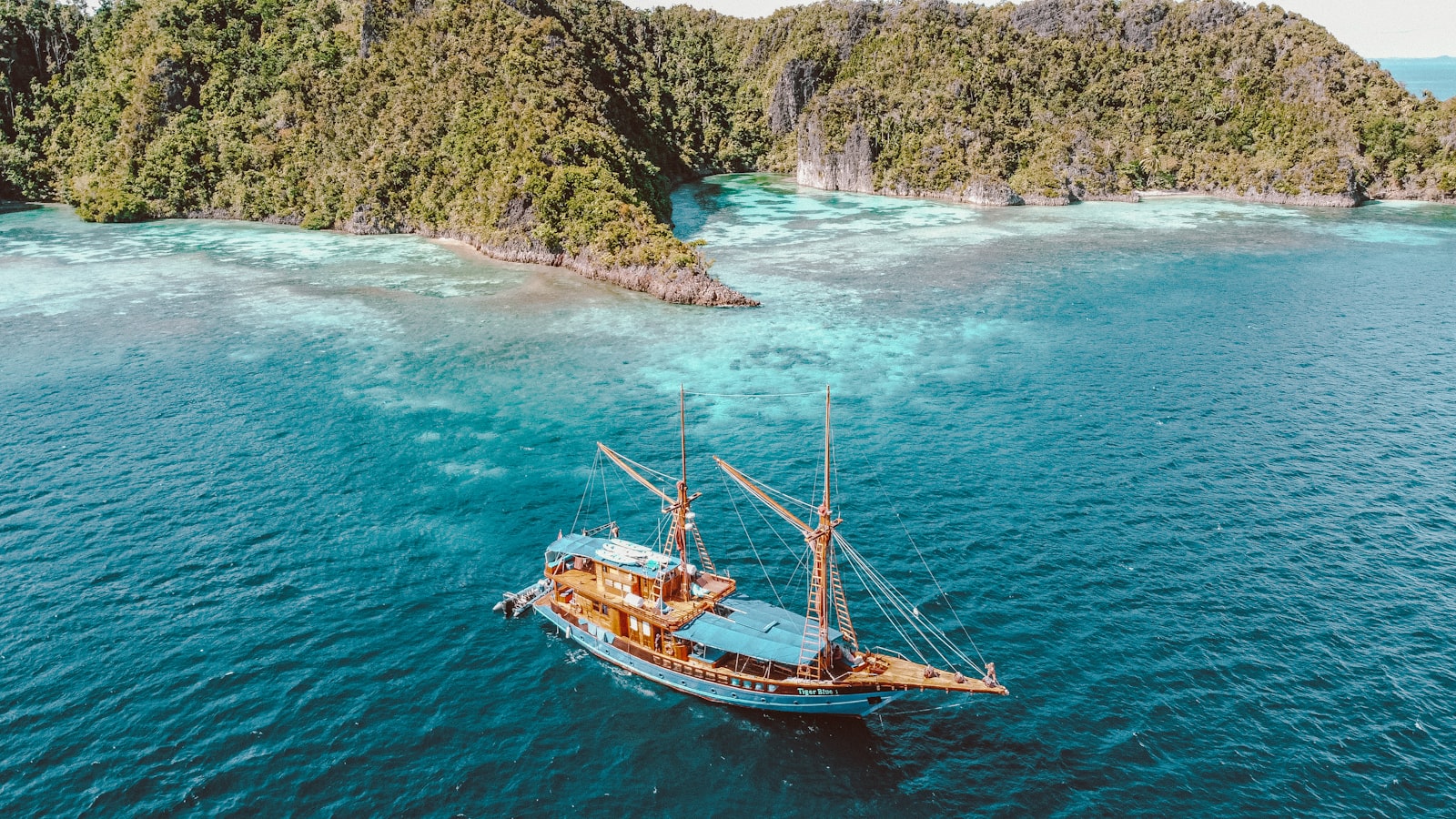
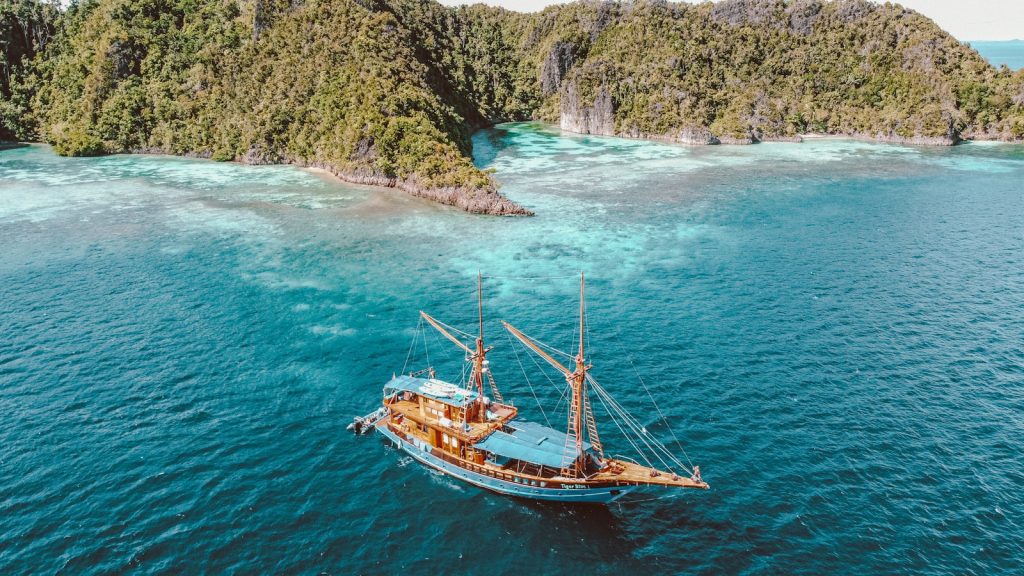
A phinisi wellness sail in Komodo is a multi-day sailing programme aboard a traditional wooden vessel that combines island-hopping, diving or snorkelling, and some form of structured wellness activity — yoga, meditation, sound healing, or curated wellness cuisine — as part of the core itinerary. The vessel is your accommodation, your transport, and your studio simultaneously. You cover ground: Padar Island ridge, Batu Bolong seamount, Pink Beach, Manta Alley, Rinca Island. The schedule is shaped by park quota slots through the SiOra booking system, tidal windows at dive sites, and sea state rather than a fixed daily timetable.
Three operators have documented yoga or wellness liveaboard programming in Komodo with enough specificity to assess: Aliikai Phinisi ran a hosted Wander Women dive-and-yoga departure in 2025 combining multiple yoga styles with daily diving on a structured retreat format. SeaTrek Sailing Adventures markets an “8 Days Life Force Wellness Cruise and Yoga Retreat” with daily yoga and meditation as core elements, not a by-invitation add-on. Samara Liveaboard offers customisable private wellness charters with onboard yoga instructors arranged per booking. All three require direct verification for current dates and inclusions — availability changes, hosted departures are tied to specific teacher calendars, and “wellness liveaboard” claims in Komodo warrant scrutiny before you commit financially. [VERIFY all three directly before booking.]
The Land Resort Model
Land-based wellness in Komodo means staying at one of the verified spa properties in Labuan Bajo or, in one exceptional case, inside the national park itself. The verified operating properties as of 2024–2025 include Ta’aktana, a Luxury Collection Resort and Spa (opened 2024, Marriott; Di’a Spa with hot and cold plunge pools, Flores-cave-inspired architecture, curated regional rituals including lulur scrub and warm oil massage); AYANA Komodo Waecicu Beach (full-service spa, prominent spa and massage marketing, 250m private jetty); Plataran Komodo Resort and Spa (private island positioning, marketed wellness retreats in nature setting, multiple accommodation types including pool residences); Sudamala Resort Komodo (Sudajiva Spa at 563 square metres, three treatment rooms, open daily 09:00–21:00, published multi-day wellness packages); Katamaran Hotel and Resort Komodo (Soul Bliss Spa plus Yoga by the Beach, ranked first in TripAdvisor’s Labuan Bajo yoga hotel list); and Komodo Resort and Diving Club on Sebayur Besar Island inside the national park (Sebayur Spa, the only verified spa physically within KNP boundaries, Balinese massage, Swedish, reflexology, body scrub and facial treatments, combined with a PADI 5-star dive centre) [VERIFY current operations and rates with each property directly].
One important flag: several of these properties market “wellness retreats” but the structured retreat product detail is thin beyond marketing language. Plataran’s wellness positioning is described in broad terms. Melukat ceremony inclusions at Sudamala are a Balinese Hindu purification ritual transplanted to Flores, not a tradition indigenous to the Manggarai people of western Flores. Only Sudamala has published a clear multi-day package structure with itemised inclusions, making it the most useful benchmarks for comparison.
Comparison Table: Six Key Dimensions
| Dimension | Phinisi Liveaboard | Land Resort |
|---|---|---|
| Movement and access | Multiple sites per day; covers the full park geography; Padar, Pink Beach, Manta Alley, Rinca all in one trip | Fixed location; day trips into the park by speedboat; less geographic range, more logistical simplicity |
| Seasickness risk | Real and variable; passages of 1–3 hours in open water; highest risk January–February, manageable April–October | Negligible for most; only relevant if day-trip boats are part of the itinerary |
| Privacy | Shared deck, shared meals, shared cabins (unless private charter); genuinely communal living for 3–7 days | Private room, personal spa appointments, own schedule; resort common areas but no enforced group schedule |
| Cost bracket | Standard phinisi USD 130–230/person/night; wellness-positioned liveaboard USD 350–800+/person/night (inferred); private charter quote-only | Budget land stays USD 20–60/room/night; mid-range USD 80–180; luxury USD 296–490+/night per verified sources |
| Wellness programming depth | Depends heavily on specific operator; at best a daily practice with a qualified teacher; at minimum a mat on deck | Structured spa menus and multi-day packages at some properties (Sudamala); most others offer spa treatments as services, not a programme |
| Connectivity | Intermittent 4G in harbours, drops to zero offshore; digital detox by default not by design | Reliable WiFi at all major resort properties; full connectivity throughout |
Movement and Access: Why the Liveaboard Wins on Geography
Komodo National Park covers 1,817 square kilometres of land and sea across three main islands — Komodo, Rinca, and Padar — plus dozens of smaller islands. The flagship dive sites, the manta aggregation zones, the Padar ridge viewpoint, the Pink Beach, and the dragon habitats are spread across this geography. Reaching them all from a fixed shore base in Labuan Bajo requires repeated speedboat transfers, each of which burns time, money, and the energy you came here to restore.
A liveaboard solves this by being everywhere consecutively. You wake up at anchor in the bay below Padar, climb the ridge at sunrise before the day-trippers arrive, are back on deck by 09:00 for a yoga session in flat water, dive Batu Bolong in the early-afternoon current peak, and move to the next anchorage overnight. The park geography becomes the programme. This format suits physically active travellers who want to experience as much of the national park as possible within a defined number of days.
The resort model trades breadth for depth. Your spa is there every morning. Your yoga class is at the same time each day. You leave for the park on a day trip and return to a room that has been cleaned, a pool that does not move, and a cold drink that did not need ice from a galley cooler. For travellers who want Komodo as the backdrop to a recuperative stay rather than the primary adventure, the land base is simply more comfortable to inhabit for five or seven nights.
There is also a hybrid pattern that many experienced visitors settle on: two or three nights at a resort in Labuan Bajo to acclimatise, orientate, and use the spa, combined with a single overnight or two-night phinisi excursion into the park. This gives you the geographic range of a liveaboard without committing your entire trip to it. The full comparison and planning detail for this approach is in our liveaboard wellness retreat guide.
The Seasickness Question: Honest, Not Alarming
This section is information, not medical advice. Discuss motion-sickness management with your physician before travel.
Seasickness is the single most commonly underestimated variable in a sailing or resort retreat Komodo comparison. Most people who have not spent multiple nights on a small vessel in open water are uncertain about their susceptibility — and that uncertainty is reasonable, because seasickness is not entirely predictable and it is significantly affected by conditions that vary by season.
The relevant facts: Komodo’s southeast monsoon runs roughly June through September, producing reliable winds from the south and southeast. Passages between major sites involve open-water crossings of one to three hours in swell that ranges from gentle (a centimetre-scale chop on a flat June morning in the north zone) to genuinely challenging (a 1–2 metre swell on a south-Komodo crossing during the southeast wind peak). January and February are the roughest months — westerly swells, possible squalls, some operator schedules reduced. April through June and September through October are generally the calmest sailing windows and the best choice for anyone uncertain about their sea tolerance.
The practical implications for a wellness programme at sea are real. A sun salutation sequence on a moving deck requires balance adjustments. A savasana with the vessel rolling fifteen degrees in open water is a different experience from a studio floor. Most experienced onboard yoga teachers schedule floor practice at anchor rather than in passage, and the best operators build the itinerary accordingly — anchoring overnight in sheltered bays, timing morning sessions before the day’s first crossing. This works well in calm conditions. In rougher sea states, the deck practice either moves inside or is postponed.
Mitigation options include proven antihistamine-based medication (dimenhydrinate, meclizine) taken before boarding, scopolamine patches (prescription-required in some countries), ginger-based supplements (evidence is mixed; discuss with your doctor), position on board (mid-ship at the waterline is most stable), and vessel selection (a 30-metre purpose-built phinisi with a deep keel moves substantially less in a one-metre swell than a 16-metre budget boat). Sitting facing the direction of travel on the upper deck in fresh air reduces symptoms for most people, though this advice comes with the obvious caveat that a yoga practice cannot happen simultaneously.
For travellers who know from prior experience that they handle small-boat sea crossings poorly, a land resort is not a fallback — it is the right choice. The Komodo ocean is magnificent from the Labuan Bajo waterfront, from a short speedboat excursion to the closest islands, and from the shore. You do not need to spend six nights aboard a vessel to have a meaningful Komodo experience.
Privacy: The Structural Difference
A shared phinisi berth is communal living. Walls on budget and mid-range vessels are thin — effectively, wooden partitions. The bathroom on many standard liveaboards is shared. Meals happen together. The deck is shared. If the couple in the next cabin are night-owl snorers and early-morning divers, you are aware of both. This is not a flaw — it is the nature of multi-day sailing on a vessel of 20–35 metres carrying eight to twelve people. Many travellers value the social aspect as one of the format’s strengths. But if your wellness intention is solitude, quiet, and control over your own schedule, a shared liveaboard is likely to frustrate that.
A private phinisi charter changes this entirely. When you book the vessel as a group — filling all cabins — the entire programme is yours. Timing, pace, itinerary, meals, and yoga schedule bend to your party’s preferences. Couples and small groups of four to eight find this format genuinely transformative. The catch is the economics: filling eight cabins with guests who share your wellness intention, travel window, and comfort level with each other is a meaningful coordination challenge. Operators such as Samara Liveaboard offer private wellness charter configurations on this basis, but full charter pricing is quote-only and not listed publicly.
Land resorts offer a different kind of privacy — your own room, your own spa appointment time, your own decision about whether to attend the morning yoga class or sleep in. Ta’aktana’s Di’a Spa appointments are individual bookings. Sudamala’s treatment rooms serve one client at a time. The resort common areas are shared, but meaningfully less so than a phinisi deck, and you are not dependent on the same twelve people for your daily company across a week.
Cost: What You Are Actually Paying For
The komodo wellness stay comparison on cost is genuinely complex because the liveaboard and resort formats bundle different things into their pricing.
Liveaboard Cost Breakdown
A standard 3-day / 2-night Komodo phinisi tour — the baseline without wellness programming — runs approximately IDR 4–7 million total per person, equivalent to roughly USD 130–230 per person per night. Park fees of IDR 250,000 per person per day, an IDR 25,000 diver surcharge, and IDR 25,000 harbour fee (approximately IDR 300,000 total per diver per park day) are typically included in this pricing. Confirm explicitly before booking.
A wellness-positioned or yoga liveaboard departure sits substantially higher. Independent range estimates for wellness and luxury phinisi charters with structured programming run approximately USD 350–800+ per person per night, with higher figures for luxury vessels. This range is inferred from comparable Indonesian luxury liveaboard pricing signals and branding positioning, not directly quoted from rate sheets — request a current itemised quote from each operator before comparing [FLAG: inferred, not fixed].
Resort Cost Breakdown
Land-based accommodation in Labuan Bajo ranges from budget guesthouses at USD 20–60 per room per night to mid-range boutique properties at USD 80–180. The luxury tier is anchored by Ta’aktana’s published reference rate of approximately USD 490 per night (cited by Travel + Leisure Asia — verify current rates directly with the property, as this figure may have changed). Komodo Resort and Diving Club on Sebayur Besar Island, the only spa property physically inside the national park, shows a two-night stay range of approximately USD 296–428 in TripAdvisor data [VERIFY directly].
Sudamala Resort’s published multi-day wellness packages offer a useful benchmark for what structured programming adds to a land stay: the “Culture and Mindfulness” package at approximately USD 325 for two nights includes yoga and meditation sessions, a Melukat purification ceremony, river hot-stone therapy, and a spa pool bath. The “Lako Lako Retreat” at approximately USD 375 for two nights adds a traditional weaving tour, a Sudajiva Signature Massage, and a Boreh herbal paste workshop. The “Unwind Wellness Escape” at approximately USD 435 for two nights adds a cooking class, Manggarai dance, and coffee body scrub [VERIFY current Sudamala rates before booking].
An honest note on those inclusions: the Melukat ceremony and Boreh treatment are Balinese in origin, not specifically Manggarai or Flores traditions. The Manggarai dance element is authentically local to western Flores. No Flores-specific named healing tradition has been independently documented in the sources reviewed for this guide. Wellness packages drawing on “local healing rituals” in this region may be blending genuinely local elements with Bali-imported practices. Ask about provenance if cultural authenticity matters to you.
Ready to compare current rates for your dates? Plan your trip with our concierge or message on WhatsApp at +62 811 3823 875 — we can help cross-match your budget against confirmed current pricing from verified operators.
The Bali Comparison That Nobody Wants to Make
Bali’s established wellness market — Ubud particularly — offers mid-range all-inclusive wellness retreats at USD 70–150 per person per night, with multiple daily yoga classes, senior resident teachers, traditional jamu herbal medicine sessions (UNESCO-recognised intangible cultural heritage since at least the eighth century), Balinese massage, sound healing, and structured therapeutic programming built around each retreat’s central theme. At the same USD 200–350 per person per day you would spend on a curated Komodo wellness liveaboard, Bali delivers considerably more wellness programming per dollar by any structural measure.
This does not mean Komodo is wrong. It means the comparison needs to be honest about what drives the Komodo premium: it is the park itself, the remoteness, the dragon encounter, the marine biodiversity. Komodo National Park is a UNESCO World Heritage Site established in 1980, home to an endangered dragon population estimated at 3,270 ± 371 individuals as of 2024, and one of the world’s most intensely biodiverse marine environments. Manta rays aggregate at Manta Point and Manta Alley in numbers reaching 10–30+ per dive in peak season. That is not something a Ubud jungle retreat offers. The question is whether the wildlife and landscape justify the wellness premium, and only you can answer that for your own travel intentions.
Wellness Programming Depth: What Operators Deliver vs What They Market
Liveaboard: The Spectrum from Genuine to Aspirational
The most important variable in any phinisi vs hotel wellness komodo evaluation is whether the wellness programme is real or performative. On a liveaboard, the indicators of a genuine programme are specific and testable: ask who leads the yoga sessions, what their training and certifications are, how many hours of structured practice are scheduled per day, what the contingency plan is when sea conditions prevent deck practice, and whether the food offering is intentionally designed for wellness or simply standard Indonesian boat catering with a “wellness” label applied at the marketing stage.
A qualified onboard instructor who travels with the vessel and adapts the programme to the group’s energy after a demanding dive day is a programme. A mat rolled out on the bow after a crew member asks if anyone fancies yoga is not. Both exist in the Komodo market. The former is worth the premium. The latter is worth the standard tour price.
Sound healing and meditation translate particularly well to the sea environment. A gong bath or singing bowl session on an anchored vessel at dusk — open sky, warm air, no other boats nearby — is qualitatively different from the same session in a studio. This is one area where the ocean-as-healer framing holds genuine experiential weight, not just marketing language. But it requires an operator who has invested in a practitioner who knows the medium, not one who has added “sound healing available on request” to their website footer.
Resort: The Structured Spa vs the Hotel With a Massage Room
The same scrutiny applies on the land side. Plataran Komodo markets “wellness retreats in nature” but the structured retreat programme detail is thin in publicly available sources — what is described matches a resort with spa facilities more closely than a dedicated wellness programme with a therapeutic arc. Ta’aktana’s Di’a Spa is the most recently opened and most ambitiously designed facility in Labuan Bajo, with genuinely differentiated features: the Flores-cave-inspired architecture, hot and cold plunge pools, Niance facial treatments, Hyggee Harmony Hair Spa. But a 24-hour gym and curated spa treatments, however well executed, are not the same as a retreat with daily programming, integration sessions, and a coherent wellness intention across the stay [VERIFY current Di’a Spa menu directly with Ta’aktana].
Sudamala, by contrast, has published the clearest multi-day package structure in the market. Its packages incorporate yoga, cultural activities, bodywork, and cuisine elements into a coherent two-night experience. Whether a two-night package constitutes a retreat — as opposed to a differentiated hotel stay — is a question of personal definition. The programming is real and documented; it is not simply marketing language layered on a standard accommodation offer.
AYANA Komodo Waecicu Beach and Katamaran Hotel have spa facilities and yoga offerings verified in operating sources, but specific treatment menus and yoga programme details were not documented in the sources reviewed for this guide. Katamaran’s “Yoga by the Beach” offering is confirmed in name; the schedule, instructor qualifications, and drop-in pricing require direct confirmation [VERIFY with Katamaran directly].
Digital Connectivity: Detox as Feature or Accident
Most phinisi vessels carry satellite or 4G connectivity in harbour. Three hours offshore, the signal drops and your phone becomes a camera. Operators who market this as a “digital detox feature” of their wellness programme are describing an environmental accident rather than a designed intervention: the ocean disconnects you because physics, not because the operator has taken any deliberate step to support your relationship with technology. That said, the effect is real. Three days without reliable signal does create space that is structurally unavailable in a Labuan Bajo resort room with a fast hotel WiFi connection.
If digital disconnection is a primary wellness goal, a liveaboard genuinely delivers it as a byproduct. If you need to stay reachable — for work, family, or health reasons — a land resort is the practical choice. All major Labuan Bajo resort properties have reliable connectivity.
Who Each Format Suits
Liveaboard Wellness: Best For
- Experienced divers or confident snorkellers who want to integrate daily practice without land-based transitions between sites
- Travellers who want to cover the park’s full geography — Padar, Manta Alley, Batu Bolong, Rinca — within a defined number of days
- Small groups with aligned travel windows, tolerant of communal living, and ideally a large enough party to access a private charter format
- Yoga practitioners comfortable with an adaptive, imperfect practice in a moving, outdoor environment
- Travellers specifically seeking enforced digital disconnection as part of the wellness experience
- People who find the routine of resort life too sedentary and want the wellness dimension built around genuine physical immersion in the environment
Land Resort: Best For
- Travellers with significant motion-sickness susceptibility or who know from prior experience that multi-day small-boat sailing does not work for them
- Anyone prioritising deep-tissue or therapeutic bodywork daily — most liveaboards have no dedicated treatment table, and massage on a moving vessel is limited in scope
- Travellers who need consistent climate control, reliable sleep, and a controlled environment to support a serious daily practice
- Couples seeking privacy without the coordination cost of filling a private charter
- First-time visitors to Komodo who want a stable base from which to take one or two day-trip or overnight phinisi excursions without committing to a week afloat
- Business travellers adding a short wellness window to a trip where connectivity cannot be dropped
The Hybrid Approach Most Experienced Visitors Use
The most common pattern among serious wellness travellers who visit this region is not a binary choice between liveaboard and resort. It is a Bali retreat first — five to seven nights in Ubud for the wellness depth, the programming density, and the value per dollar — followed by a three to four night Komodo add-on that combines a night or two ashore in Labuan Bajo with one overnight phinisi excursion into the park. Labuan Bajo’s Komodo International Airport (IATA: LBJ) is approximately one hour by air from Bali/Denpasar, served by multiple direct daily flights on Indonesia AirAsia, Wings Air, Lion Air, Batik Air, and Citilink.
This pattern solves the value problem (Bali delivers the wellness depth), the geography problem (the phinisi covers the park highlights), and the comfort problem (two or three nights in Labuan Bajo bookend the sailing). It does require more logistics and two distinct bookings, but for travellers with ten or more days and a serious wellness intention, it is consistently the most satisfying structure.
For full cost breakdowns by tier for both formats, see our retreat cost guide. For detail on the liveaboard format specifically — vessel tiers, operator comparison, group vs private charter, and what yoga at sea actually looks and feels like — see our liveaboard wellness retreat guide. For post-dive recovery programming, breathwork, and the diver-specific wellness angle, our dive wellness retreat guide covers that in depth.
Frequently Asked Questions
Is a phinisi liveaboard or a resort stay better for wellness in Komodo?
It depends on your primary intention. If you want to combine daily yoga or meditation with genuine immersion in the park — multiple dive or snorkel sites, island treks, manta encounters — and you have solid sea legs, a wellness liveaboard is the more complete experience. If structured spa programming, reliable bodywork access, and a stable environment for consistent daily practice matter more to you, a land resort gives you infrastructure a floating vessel cannot match. Many experienced travellers do both within one trip: a resort night or two in Labuan Bajo, then one overnight phinisi excursion into the park.
Is wellness on a phinisi real or just marketing?
Both exist in the Komodo market, and they are genuinely difficult to distinguish from a website. A real wellness liveaboard has a named, qualified instructor who travels with the vessel, a daily schedule that includes structured practice time rather than an optional mat on deck, and a food programme with deliberate nutritional intention. Ask operators specifically: who leads the sessions, what are their qualifications, how many hours of programming are scheduled per day, and what happens to the programme when sea conditions prevent deck practice. Vague answers are useful signals. Three operators have documented structured wellness programming in Komodo as of 2024–2025 — Aliikai, SeaTrek, and Samara — though all require direct verification for current availability.
How does seasickness affect a wellness liveaboard experience?
Significantly, in rough conditions. April through June and September through October are the calmest windows and the best choice for anyone uncertain about their sea tolerance. January and February carry the highest seasickness risk — westerly swells, possible squalls, some operator schedules reduced — and are not recommended for a wellness liveaboard unless you are an experienced sailor who has confirmed you manage those conditions well. Mitigation includes proven antihistamine-based medication discussed with your doctor before travel, choosing a larger vessel with a deeper keel, and booking an operator who times yoga practice at anchor rather than during open-water passages.
What does a Komodo land resort wellness package actually include?
It varies considerably by property. Sudamala Resort Komodo has published the clearest multi-day package structure: two-night options from approximately USD 325–435 include yoga or meditation sessions, a spa treatment, a cultural activity (Melukat ceremony, cooking class, or Manggarai dance depending on the package), and accommodation with meals. Note that the Melukat and Boreh elements are Balinese traditions, not Flores-indigenous practices. Ta’aktana’s Di’a Spa and AYANA’s spa facilities offer individual treatment bookings at the luxury tier, but structured multi-day retreat programming with a coherent arc is less documented. Katamaran’s Yoga by the Beach is confirmed in name; verify current schedule and drop-in pricing directly with the property. All prices and inclusions require direct verification before booking.
Can I do both a liveaboard and a resort stay in one Komodo trip?
Yes, and for trips of seven or more days this is often the most satisfying approach. A common pattern is two or three nights at a Labuan Bajo resort property — using the spa, acclimatising, exploring the town’s harbour area — combined with a two or three night phinisi excursion into the national park. You get the resort’s spa infrastructure and the liveaboard’s geographic range without committing your entire trip to either. The hybrid also lets you front-load spa recovery on arrival and use the phinisi days as the active, immersive middle of the trip. Reach out via our enquiry form or WhatsApp at +62 811 3823 875 and we can help structure an itinerary that works for your specific dates, group size, and wellness priorities. No one can pay to change what we publish; if you proceed with a partner operator, they may pay us a referral fee at no extra cost to you.