How to read this: Komodo Wellness Retreat is an independent curation guide for wellness travel in the Komodo & Flores region — we compare retreat styles (yoga, meditation, detox, dive-wellness, liveaboard, spa) and then route your enquiry to a vetted partner who handles the booking. We are not a resort, operator, studio or booking platform, and any property or place names are neutral examples only, not claims of affiliation or endorsement. Wellness content here is general information, not medical, health or fitness advice — consult a qualified professional before any detox, fasting, diving or new practice. Park permits, fees, schedules and the ~1,000/day Komodo National Park visitor cap change — confirm current details before you travel. Prices are by quote and vary by retreat, season and group; figures here are indicative ranges only.
To avoid peak season crowds at Komodo, plan your retreat for the shoulder windows of April–June or September–November rather than July–August, when the park sees its highest daily visitor numbers, priciest charter rates, and most congested anchorages. That single timing shift is the most reliable lever a wellness traveller has, and the rest of this guide covers the tactics that reinforce it: how the SiOra time-slot system works, why a private charter matters more here than almost anywhere else in Indonesia, and which anchorages tend to stay quieter even when the headline spots are rammed.
Why July and August Are the Toughest Months for a Calm Retreat
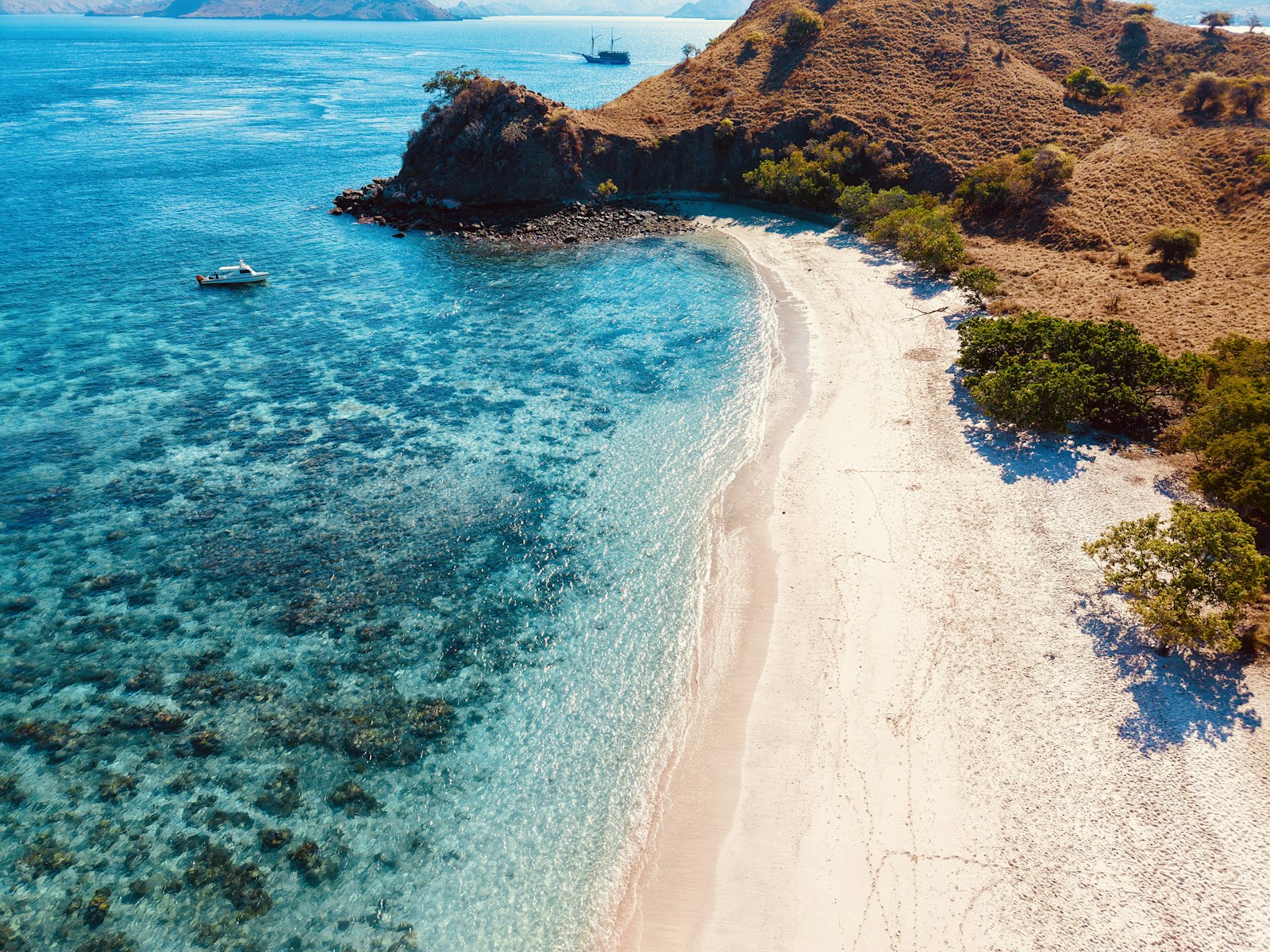
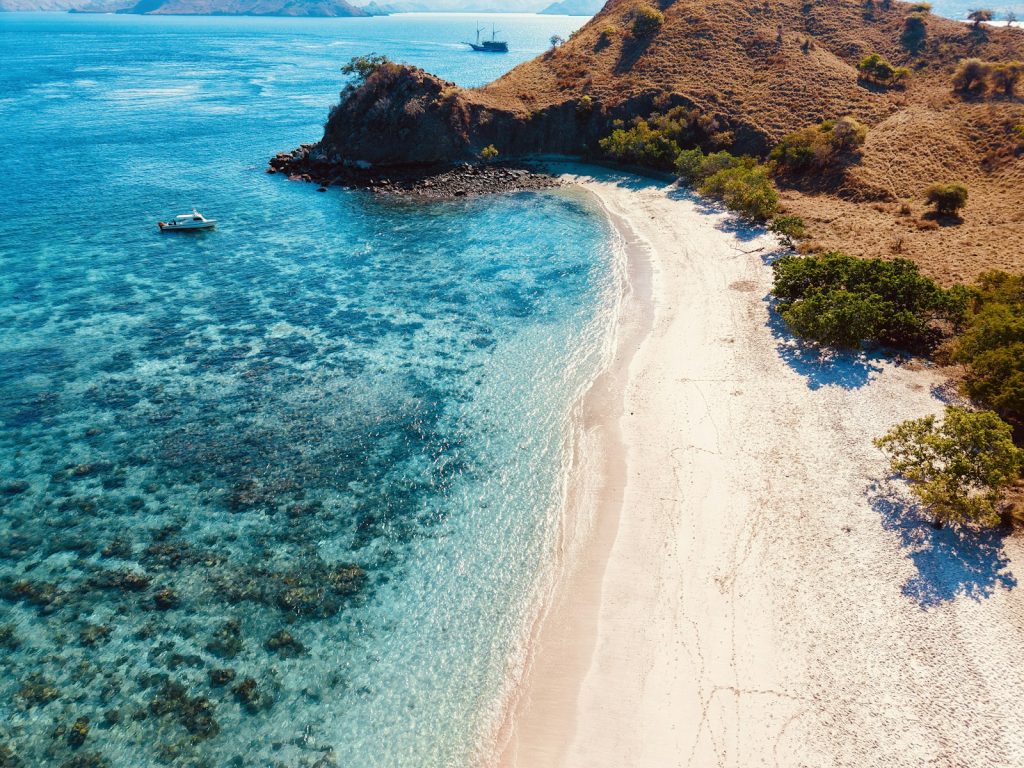
July and August are Komodo National Park’s peak tourist season by most measures: maximum sunshine, the driest conditions of the year, and underwater visibility at or near its annual high — typically up to 40 metres in the north. Those qualities draw the largest numbers. The southeast monsoon is blowing hard at this point, which means the south coasts of Komodo and Rinca are rough and less accessible, funnelling more boats toward the same northern and central anchorages. Padar Island, Pink Beach, Batu Bolong — the circuit that every itinerary seems to include — can feel crowded on a busy July morning in a way that cuts against any notion of quiet.
Operationally, peak season also means tighter availability and higher prices across every category: day-trip speedboats, shared phinisi departures, resort rooms, and private charter phinisi. Operators with strong reputations book out months ahead. The SiOra booking system — mandatory since 2026 for all park entries — requires advance digital reservation tied to your passport number, and operators recommend securing slots 2–4 months ahead for the July–August window. If quieter komodo wellness timing is a priority for you, this lead time alone is a practical argument for choosing a different month.
The Shoulder Season Case: April–June and September–November
The two shoulder windows bracket the peak on either side, and each has a slightly different character.
April to June: Green, Calm and Increasingly Popular
April through June is frequently cited by operators and multi-source travel resources as one of Komodo’s most pleasant periods. The wet season has wound down; landscapes are still green rather than the scorched bronze of late dry season; seas are generally calm. Water temperatures are comfortable — around 28–29°C in April, dropping slightly toward 27°C by late June as the southeast monsoon builds. Visibility is good, typically in the 15–30 metre range depending on sector and tidal phase.
Shoulder season komodo crowds are noticeably lower in April and May in particular. June starts to see numbers tick up as school holidays approach in various European markets. If April and May are realistic for your schedule, they represent perhaps the strongest argument for this window. The booking lead time relaxes to roughly 4–8 weeks for park entry permits — considerably more manageable than peak.
September to November: Excellent Conditions, Fewer Boats
September is interesting: it retains most of peak season’s clear-sky conditions and high visibility but sees a clear drop in boat numbers once European and Australian summer holidays end. Water temperature at its coolest annual point in August (around 26.5°C) begins rising again through September and October, settling into a comfortable 27–28.5°C range. The southeastern swell gradually eases, reopening more anchorages.
October and November bring another shift: water temperatures climb back toward 29°C, manta rays at Manta Point and Manta Alley begin appearing more reliably ahead of their December–February peak, and the overall atmosphere on the water is measurably calmer. November sits on the transition into wet season so there is some variability, but many weeks in November are still perfectly settled. For a less crowded komodo retreat, September and October are arguably the strongest months in the whole calendar once you factor in conditions plus crowd levels together.
| Window | Typical Sea State | Water Temp (avg) | Crowd Level | SiOra Lead Time | Best For |
|---|---|---|---|---|---|
| Apr–May | Calm to slight | 28–29°C | Low–moderate | 4–6 weeks | Green landscapes, uncrowded treks |
| June | Calm, building | 27–28°C | Moderate | 6–8 weeks | Still calm, mantas less likely |
| Jul–Aug (Peak) | Rough on south coasts | 26.5–28°C | High | 2–4 months | Best visibility; busiest, priciest |
| Sep–Oct | Calming to calm | 27–28.5°C | Low–moderate | 4–6 weeks | Clarity + quiet; mantas building |
| November | Variable; mostly ok | 29°C rising | Low | 3–4 weeks | Mantas returning; quietest crowds |
| Dec–Mar (Wet) | Rough; some closures | 29–29.5°C | Low | 1–2 weeks | Manta diving; not for wellness sailing |
Note: sea state and crowd levels are general patterns, not guarantees. Conditions vary by sector, tidal phase, and year. Verify current forecasts with your operator before confirming dates.
Understanding the SiOra System and How Time-Slots Affect Your Day
Since 2026, all park entries require advance booking through SiOra (Sistem Informasi Online Reservasi Wisata Alam), a mandatory digital platform that replaced walk-up harbour tickets. The system operates a daily visitor cap — reported across multiple 2026 operator sources as 1,000 visitors per day across all park zones — divided into three time-slots of roughly 333 people each: early morning (06:00–11:00), midday (11:00–15:00), and afternoon (15:00–18:00).
Two important caveats: First, this cap and the three-slot structure were introduced as a pilot measure from February–April 2026 and are described by at least one operator as trial, not yet final. The policy details may have evolved since then, and you should verify current rules with your operator or directly through official Indonesian park channels before booking. Second, your permit is non-transferable and tied to your specific passport number and calendar date, which is worth understanding if itineraries change at sea.
From a crowd-avoidance standpoint, the time-slot system creates a real and exploitable pattern. The early 06:00–11:00 slot, particularly for signature spots like the Padar Island trek, tends to reward early risers with the lightest on-site crowd of the day. Most group tour speedboats and shared phinisi operate on a mid-morning schedule, meaning they pile into popular spots between roughly 08:30 and 11:30 — straddling the slot boundary in a way that concentrates people. If your private charter or retreat operator can coordinate an earlier departure and earlier SiOra slot for Padar specifically, the difference in atmosphere is significant. Afternoon slots (15:00–18:00) work well for sunset vantage points and some dive sites but not for the Padar sunrise — that window only makes sense in the early slot.
Similarly, within the midday and afternoon windows, some anchorages clear out faster than others. Batu Bolong and the Pink Beach boat parks are earliest to fill and slowest to empty. A flexible itinerary that sequences your priority experiences first thing, then moves to open-water snorkelling or quiet bays for the middle hours, uses the system rather than fighting it.
Private Charter vs Group Tour: The Difference Is Larger Than You Think
On a shared group speedboat or a budget shared phinisi, your itinerary is fixed — departures, anchoring spots, and time at each site are determined by the operator and influenced by whichever other boats show up at the same time. Peak season means more boats at the same spots. There is almost no mechanism to shift anchor when Padar’s lower saddle fills up, or to skip Pink Beach when three other phinisi are already parked there.
A private charter changes the calculus entirely. With control over your own departure time, your captain can sequence your day around the SiOra slot system rather than the default group-tour schedule. You can anchor at less-trafficked bays on Rinca’s western coast, or spend extra time at Crystal Rock and Castle Rock in the north where snorkelling crowds are typically thinner than at the southern circuit. The ability to adapt in real time — to turn back toward a quiet bay when a busier one is crowded — is genuinely valuable in peak months, and it is the reason that experienced Komodo travellers increasingly treat the private charter premium as a non-negotiable rather than a luxury upgrade.
Wellness retreat operators that run private phinisi — including some that offer yoga and mindfulness programming on board [VERIFY with individual operators] — can build their day structure around lower-traffic anchorages and earlier time-slots in a way that a group departure simply cannot. If shoulder-season timing alone is not enough for the level of quiet you are looking for, adding private charter is the second most effective lever.
Ready to explore private charter options for your travel dates? Our enquiry form or WhatsApp at +62 811 3823 875 connects you with operators who understand this scheduling in detail.
Quieter Anchorages Worth Knowing
Padar Island is the most photographed landscape in Komodo National Park. It is also, by definition, one of the least quiet. Even in shoulder season, a clear-sky morning with good wind forecasts will draw boats. The ridge hike to the three-bay viewpoint is worth doing, and the early SiOra slot helps considerably, but going in with the expectation of solitude is setting yourself up for disappointment. Our full best-time guide covers Padar conditions by season in more detail.
Beyond the headline circuit, there are areas that consistently see fewer boats:
- Siaba Besar and Siaba Kecil: Turtle-rich shallow sites in the central zone. Soft corals, calm waters, and far fewer boats than Batu Bolong or Tatawa. Good for a meditative snorkel without the current anxiety of the signature dive sites.
- The Kanawa Island area: Northeast of Labuan Bajo and technically outside the main park circuit, Kanawa and its surrounding reefs tend to see day-trip traffic but far less than Komodo-island-adjacent sites. The shallow reef systems here suit snorkellers and free-divers well.
- Western Rinca coastline: The eastern side of Rinca near Loh Buaya is the standard dragon trekking landing; the western coast is far less visited and offers some anchoring options that private charter operators know well. Ask your operator specifically about less-trafficked Rinca anchorages.
- South Komodo (off-season caveats): Manta Alley and the southern sites are best from October through March for manta encounters. In July–August, south Komodo is rough and less accessible due to the southeast monsoon. If your itinerary runs September–November, the south opens up significantly, and boats that would have been crowding the north in peak months are now spread more evenly — or absent entirely.
For a wellness-oriented itinerary, the north-central circuit still makes sense as the primary zone in shoulder season — but a private charter that can divert to these quieter spots for morning yoga deck time or an afternoon snorkel makes the difference between a genuinely calm experience and a crowded one that happens to have a yoga mat on deck.
A Candid Note on What Shoulder Season Cannot Promise
Even shoulder season can be busy at the signature spots on clear-weather weekend days, particularly during Indonesian public holidays and school breaks. The national calendar matters as much as the seasonal one. The April–June window, for example, overlaps with Indonesian school holidays in late June, which increases domestic visitor numbers at the end of that window.
Crowd levels at any specific spot on any specific day are also affected by how many boats have happened to book the same SiOra slot for the same site. Since the slot system is still relatively new and its enforcement details are evolving, the practical experience on the water may not yet be as smoothly distributed as the system’s design intends. Go in expecting fewer boats than peak season, with an itinerary flexible enough to shift to a quieter anchorage if a particular site is busier than expected. That flexibility is the actual planning tool, more than any specific month or slot.
The information in this guide is based on conditions and operator guidance current as of mid-2026. Park regulations, fee structures, and the SiOra system details are subject to change. Always verify current requirements with your operator and with official Indonesian national park channels before your trip.
Practical Crowd-Avoidance Checklist
- Time your visit for April–June or September–November
- The two shoulder windows offer a meaningful step down in boat traffic versus July–August, with conditions that remain highly suitable for wellness travel. Our best-month guide breaks each month down in detail.
- Book SiOra permits early, prioritise the 06:00–11:00 slot for Padar
- Even in shoulder season, the early slot for Padar gets thinner crowds at the viewpoint. Shoulder season permits typically need 4–8 weeks of advance booking; still plan ahead rather than leaving it to the last week.
- Choose private charter over group tours
- Private phinisi let your captain sequence the day around lower-traffic anchorages and respond in real time when a site is busier than expected. The premium is real, but so is the difference in experience.
- Ask your operator specifically about quieter anchorages
- Siaba Besar/Kecil, Kanawa area, and western Rinca are starting points. A good captain will know several more. Make it a stated preference before departure, not an afterthought mid-trip.
- Avoid Indonesian public holiday dates
- Shoulder season crowd levels are still subject to national holiday spikes. Check the Indonesian public holiday calendar for your target dates and steer around the multi-day breaks.
- Build flexibility into the itinerary
- The single most powerful tool is an itinerary that can adapt. If your first-choice anchorage has more boats than expected, having the time and the vessel to move somewhere calmer is worth more than any specific date or slot.
On Pricing: What Shoulder Season Actually Changes
Seasonal price differences in Komodo are real but not always dramatic on the accommodation side — resort properties tend to publish rates that hold reasonably steady year-round, with peak-season premiums on the most sought-after dates rather than across the whole July–August block. The bigger pricing movement happens in the charter market, where peak-season demand genuinely compresses availability at the better-regarded operators and drives rates up accordingly.
In shoulder season, charter availability opens up, and some operators are more willing to negotiate on multi-day private bookings. Standard phinisi tours run from roughly IDR 4–7 million total for a 3D2N shared departure; wellness-oriented or luxury private charters sit in a substantially different bracket. We do not publish individual operator price lists, partly because they change, and partly because the fit between your retreat priorities and the vessel’s actual program matters more than a headline rate. The retreat cost guide covers the full pricing landscape in honest ranges.
Park entry fees — IDR 250,000 per person per day for foreign nationals, plus IDR 25,000 per diver per day and IDR 25,000 harbour fee — are fixed regardless of season. The previously proposed IDR 3.75 million annual membership fee was officially scrapped; the daily fee model remains in place.
How This Affects Your Wellness Retreat Specifically
The crowd question matters differently depending on what type of retreat you are planning. A land-based spa stay at a property in or near Labuan Bajo — at Ta’aktana, Sudamala, AYANA Komodo, Plataran, or Katamaran [VERIFY current availability with each property] — is less directly affected by park-day boat traffic. Your wellness programming takes place at the resort, and you might take one or two day trips into the park as part of the itinerary. For that model, shoulder season primarily means a calmer airport, more flight availability from Bali (roughly 1–1.25 hours), and less competition for resort rooms.
For a liveaboard wellness retreat — yoga at sea, meditation on the sundeck, snorkelling as the morning session’s active component — crowd avoidance is baked into every part of the program. Your anchorage each night is chosen by the captain, and in shoulder season with a private vessel, you genuinely can spend a night at a quiet bay where no other boats arrive until morning. That experience is qualitatively different from peak season, and it is the core argument for the timing guidance in this piece.
If you are combining elements — a few resort nights in Labuan Bajo followed by a private sailing circuit — the shoulder-season logic applies most strongly to the days on the water. Plan your sailing days for midweek if possible; weekends see higher domestic visitor numbers from nearby islands and Flores mainland.
Want help putting this together? Reach out via our enquiry form, or send a message on WhatsApp at +62 811 3823 875 or to [email protected] with your approximate dates and retreat style. We can point you toward operators whose real itineraries match the quieter-anchorage approach described here. No one can pay us to change what we recommend; if you proceed with an operator through our referral, they may pay us a fee at no extra cost to you.
Frequently Asked Questions
What is the least crowded time to visit Komodo National Park?
Based on multi-source operator guidance and seasonal patterns, April–May and September–October consistently see fewer boats than July–August. Of those windows, April and May tend to have the lightest traffic, with September and October close behind and offering excellent marine conditions including building manta ray activity. Even in these months, the most popular spots like Padar Island can be busy on clear-weather days; the quietest experience combines shoulder-month timing with a private charter and an early SiOra slot.
How does the SiOra time-slot system help with crowd management?
SiOra (Sistem Informasi Online Reservasi Wisata Alam) divides daily park visitors into three sessions: 06:00–11:00, 11:00–15:00, and 15:00–18:00, with a daily cap reported at 1,000 visitors across all zones as of a 2026 pilot measure. In practice, booking the earliest slot for trekking destinations like Padar means arriving before the mid-morning group-tour rush. The system is described as a pilot as of early 2026 and may have been updated since — verify current slot structures and caps with your operator or official park sources before booking.
Is shoulder season in Komodo still good for snorkelling and diving?
Yes, generally very good. April–June brings calm seas and visibility in the 15–30 metre range in the north and central zones. September–October maintains strong visibility and adds the advantage of building manta ray activity as the season shifts toward their December–February peak. The south Komodo sites like Manta Alley and Manta Point are best from October onward. Water temperatures through these windows range from around 27°C in June to 28.5–29°C in October, comfortable for most travellers without a wetsuit for short sessions.
Does a private charter really make a difference for avoiding crowds at Komodo?
Meaningfully yes. A shared group departure has a fixed itinerary and fixed timing — your captain cannot move to a less crowded anchorage without disrupting the group. A private charter allows real-time adaptation: if Batu Bolong has four boats anchored, your captain can hold at sea and time the approach after the group-tour boats leave, or divert to Siaba Besar or another site that is currently clear. This flexibility is most valuable at peak-season spots and during peak hours, but it delivers a noticeably calmer experience across all seasons.
Can I avoid the crowds entirely at Padar Island even in shoulder season?
Probably not entirely, and it is worth being honest about that. Padar’s three-bay viewpoint is Komodo’s most photographed scene, and even in shoulder season a good-weather morning draws boats. The early SiOra slot (06:00–11:00) and an early start from your vessel help considerably — reaching the ridge before 08:00 gives you a noticeably lighter crowd than arriving at 09:30. But if solitude at the viewpoint itself is a priority, managing expectations matters as much as timing tactics. Our Padar sunrise guide covers conditions and approach strategies in more depth.