
How to read this: Komodo Wellness Retreat is an independent curation guide for wellness travel in the Komodo & Flores region — we compare retreat styles (yoga, meditation, detox, dive-wellness, liveaboard, spa) and then route your enquiry to a vetted partner who handles the booking. We are not a resort, operator, studio or booking platform, and any property or place names are neutral examples only, not claims of affiliation or endorsement. Wellness content here is general information, not medical, health or fitness advice — consult a qualified professional before any detox, fasting, diving or new practice. Park permits, fees, schedules and the ~1,000/day Komodo National Park visitor cap change — confirm current details before you travel. Prices are by quote and vary by retreat, season and group; figures here are indicative ranges only.
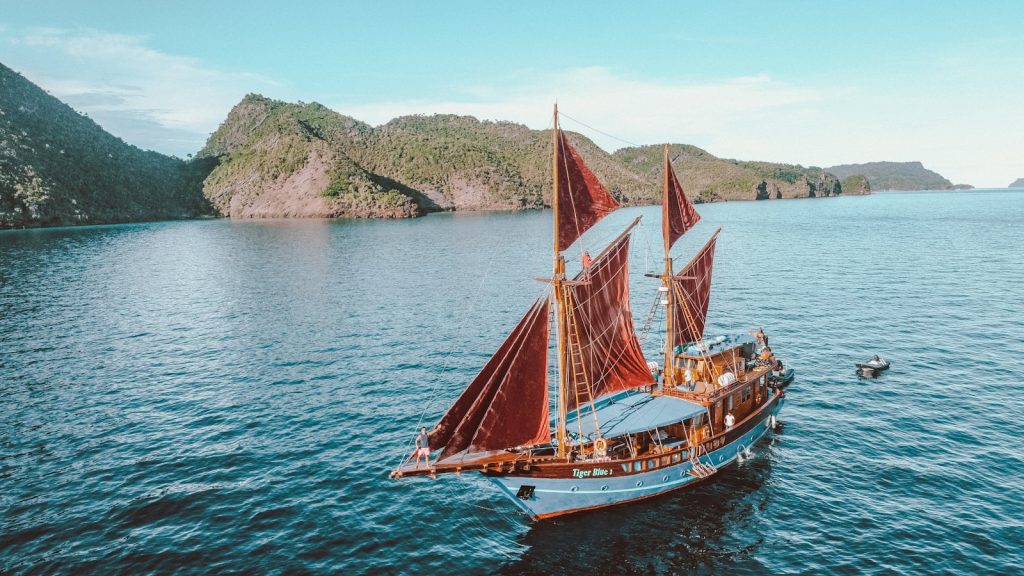
A Komodo liveaboard yoga retreat is a sailing programme aboard a traditional phinisi vessel or modern yacht that moves through Komodo National Park’s waters while delivering structured wellness sessions—yoga, meditation, sound healing, or wellness-focused dining—as part of the core itinerary, not as an afterthought. It is fundamentally different from a land-based resort spa: your accommodation floats, your studio is a timber deck above open ocean, and the schedule is shaped by tides, wind direction, and park-quota slots rather than a fixed daily timetable. That distinction matters because it changes what a wellness programme can realistically deliver at sea, and what it cannot.
This guide is written for travellers who want an honest picture before booking. Verification is not optional here: several yoga and wellness liveaboard departures out of Labuan Bajo are confirmed only as one-off hosted trips rather than standing products with year-round availability. Some operators’ yoga programmes are well-documented in their marketing but have not been independently confirmed for specific current dates. Read each [VERIFY] flag in this article as a reminder to contact the operator directly before making financial commitments.
What Makes a Phinisi Wellness Cruise Different From a Standard Komodo Tour
A standard 3-day / 2-night Komodo phinisi tour runs roughly IDR 4–7 million total per person (approximately USD 130–230 per person per night at current exchange rates). The package typically covers cabin berth, all meals, national park entry fees of IDR 250,000 per person per day plus a IDR 25,000 diver surcharge and IDR 25,000 harbour fee, a guide, and dive or snorkel access to the signature sites. Yoga is not included. If a mat appears on deck one morning, it is an informal gesture by the crew, not a programme.
A wellness liveaboard komodo product differs in four structural ways: first, at least one qualified practitioner—a yoga teacher, meditation guide, or sound healer—travels with the vessel for the duration. Second, the daily schedule is designed to accommodate practice time, which typically means earlier departures to reach sites before the SiOra time-slot windows fill, and structured rest periods rather than back-to-back dive entries. Third, the food offering is intentionally curated: cleaner protein, anti-inflammatory options, lighter evening meals. Fourth, the price is higher—sometimes substantially so.
How much higher? Independently sourced price ranges for yoga-positioned or luxury wellness phinisi charters suggest USD 350–800+ per person per night, though this figure is inferred from comparable Indonesian luxury liveaboard pricing and branding signals rather than directly quoted from operator rate sheets [FLAG: inferred, not fixed—request a current itemised quote from each operator]. The gap between a standard tour and a wellness charter is real, and it widens further for private charters.
The Three Verified Wellness Liveaboard Options (as of 2024–2025)
Three operators have documented yoga or wellness liveaboard programming in Komodo with enough detail to assess. All three require direct verification for current dates and inclusions.
- Aliikai Liveaboard — Wander Women Komodo: Dive + Yoga [VERIFY]
- A week-long hosted departure (a May 2025 date is documented) combining multiple yoga styles with daily diving. Yoga is opt-in and structured—not simply a mat on deck. Importantly, this is a hosted retreat, meaning it runs on specific departure dates with a specific visiting teacher leading the programme; not all Aliikai itineraries include yoga, and the yoga programming is not a standard feature across every sailing. Travellers interested in this format must confirm whether a hosted yoga departure is currently scheduled for their preferred dates. [Contact Aliikai directly to verify 2025–2026 hosted retreat calendar.]
- SeaTrek Sailing Adventures — “8 Days Life Force Wellness Cruise and Yoga Retreat in Komodo Island” [VERIFY]
- This product markets daily yoga sessions and meditation instruction as core elements alongside snorkelling and park access, which positions it as a wellness cruise rather than a dive trip with a yoga add-on. Park fees are described as included. The framing suggests a more integrated phinisi wellness cruise komodo concept than a one-off hosted departure. However, specific 2025–2026 departure dates were not confirmed in sources reviewed for this guide. [Verify current schedule and inclusions directly with SeaTrek before booking.]
- Samara Liveaboard — Private Wellness Charters [VERIFY]
- Samara has confirmed that wellness and yoga charters are available on request, with onboard yoga instructors and meditation leaders arrangeable on a customisable itinerary. This is a private charter model rather than scheduled group departures, which suits travellers who want flexibility on timing and programme design but requires a full charter commitment rather than per-berth booking. [Contact Samara directly for current rates and availability; full charter pricing is quote-only.]
Two further operators have yoga or wellness programming documented in older sources—Wunderpus Liveaboard (yoga-and-diving trips, last confirmed example dated 2020) and Bulan Purnama phinisi (yoga and Pilates mentioned in reviews)—but neither has been confirmed for active programming in 2024–2025. They are not included as examples to contact without first verifying current operations independently. [UNCONFIRMED]
Ready to match your travel window with confirmed availability? Use our enquiry form or message on WhatsApp at +62 811 3823 875 and we will help you verify which departures are genuinely running for your dates.
Group Versus Private Charter: What Changes and What It Costs
The choice between a shared group departure and a private phinisi charter is the single biggest decision in planning a sailing retreat komodo island experience. The table below maps the practical differences.
| Factor | Group Shared Departure | Private Charter |
|---|---|---|
| Cost basis | Per-berth pricing; standard tour USD 130–230 pp/night; wellness-positioned departures USD 350–800+ pp/night [inferred] | Full vessel rate; varies by vessel size and programme; typically USD 1,500–5,000+/day for a mid-size phinisi with wellness staff [inferred from comparable fleet pricing — always request a direct quote] |
| Yoga schedule | Fixed by the group programme; you attend or skip but cannot retime sessions to suit personal preference | Entirely flexible; morning, sunset, or mid-passage timing can be agreed with the instructor in advance |
| Who you practise with | Mixed group; shared experience; social accountability can support commitment but group dynamics can also affect the retreat quality | Your group only (friends, family, or a solo traveller willing to pay private charter rates) |
| Itinerary flexibility | Fixed route and dive/snorkel sites set by the operator | Sites, pacing, and rest-day frequency negotiable within park quota and sea-state limits |
| Dive integration | Structured around group dive programme; non-divers follow the same schedule | Can be weighted toward diving, snorkelling, or pure wellness based on party preference |
| Availability | Tied to hosted departure dates; limited windows | Year-round in principle, subject to operator vessel availability and SiOra park quota booking |
For solo travellers or couples, a private charter is financially unviable unless you fill eight to twelve berths. The practical path to a private-charter wellness experience is either booking with a group of like-minded friends or joining a hosted group retreat led by an outside instructor. The Aliikai Wander Women model is an example of the latter: an external retreat organiser books the vessel and recruits individual participants, spreading the cost across the group while delivering a curated experience that feels private.
Cabin Comfort Aboard a Phinisi: What to Expect Honestly
Phinisi vessels range from converted cargo boats with six basic berths and shared bathrooms to purpose-built luxury yachts with nine air-conditioned en-suite cabins, a jacuzzi, and a chef trained in wellness cuisine. Both extremes exist in the Komodo liveaboard market, and the gap in day-to-day comfort is enormous. A yoga liveaboard komodo indonesia experience is significantly shaped by which tier you book.
Budget and Mid-Range Phinisi
In the IDR 4–7 million per-person 3D2N bracket, expect cabin bunks rather than double beds, shared deck bathrooms, no air conditioning in cabins (fan only, natural ventilation), and meals prepared in a galley kitchen of modest size. Sleeping in humid tropical heat below deck is manageable from April through October when nights are cooler (lows of 21–22C in June–August), but can be uncomfortable in the November–March wet season when nighttime temperatures and humidity rise together. A yoga mat rolled out on the bow is a genuine gesture; it is also a 1.5 by 0.6 metre rectangle of teak surrounded by ropes, dive tanks, and the anchor winch. Do not expect a studio.
Wellness-Positioned Phinisi and Luxury Vessels
Vessels that genuinely market themselves as wellness or yoga liveaboards—and charge the premium that implies—typically offer private en-suite cabins with air conditioning, a defined deck practice space large enough for small-group classes (typically 4–8 participants), improved galley with the capacity for dietary customisation, and on occasion amenities such as an outdoor shower, sun lounge seating, or small spa treatment area. AYANA’s Lako Di’a phinisi offers 9 air-conditioned suites as a reference point for a high-end vessel configuration [VERIFY current availability and rates with AYANA directly]. At this tier, the vessel itself contributes meaningfully to the wellness experience rather than merely tolerating it.
Sleep and Privacy
Even on premium phinisi, privacy is relative. Walls are thin. Engine noise during early-morning departures is a reality on all vessels. The sound of the sea is beautiful from a deck chair at sunset; it is less restful at 05:30 when anchor chain is being hauled and the engine starts. Light sleepers should consider ear protection as standard packing. Berth size on most mid-range vessels is a single bunk approximately 180 x 70 cm; confirm double-bed availability explicitly if you are travelling as a couple and it matters to you.
Sea State and Seasickness: The Honest Conversation
This section is information, not medical advice. Discuss any motion-sickness management approach with your physician before travel.
Komodo’s sailing conditions are not uniformly gentle, and this is one of the most significant practical factors for a wellness liveaboard experience. The southeast monsoon from June through September produces reliable wind from the south and southeast—good for visibility, strong enough to create chop on exposed crossings, particularly south of Komodo Island. January and February are the roughest months: northwest swells combine with tropical squalls, some operators reduce their schedules, and the crossing from Labuan Bajo out to the open park waters can involve two to three hours of pitching in moderate to heavy swell.
The practical implications for yoga practice at sea are real. A sun salutation sequence requires balance. A savasana with the vessel rolling 15 degrees in either direction is a different experience from a studio floor. Most experienced sea-yoga practitioners adapt quickly—using straps, adjusting poses, embracing the element of instability as part of the practice. But travellers who are highly susceptible to motion sickness should not assume that a wellness liveaboard will be a serene floating studio in all conditions.
Practical Mitigation
- Season choice: April through June and September through October offer the best balance of calm conditions and reasonable visibility. July–August has more boats and the southeast wind is at its strongest, which increases chop on south-facing crossings. January–February is the highest-risk window for rough seas.
- Vessel size: larger phinisi (20+ metres, deeper keel) roll less than small speedboats and short-hulled boats. A 30-metre purpose-built yacht moves substantially less in a 1-metre swell than a 16-metre budget phinisi.
- Position on board: mid-ship at the waterline is the most stable position; bow and stern amplify motion. Sleep mid-ship if seasickness is a concern.
- Medication: proven options include antihistamine-based tablets (e.g. dimenhydrinate, meclizine) taken before boarding, and scopolamine patches requiring advance prescription in some countries. Discuss options with your physician before travel; some medications cause drowsiness that may interact with meditation or dive activities.
- Timing of practice: most experienced liveaboard yoga teachers schedule morning practice after the vessel has anchored at a dive or snorkel site rather than during passage, specifically to avoid mat-time in rolling open water.
What “Wellness at Sea” Actually Includes Versus Marketing Language
Liveaboard marketing has developed a fairly predictable vocabulary for wellness positioning. Understanding what is genuinely distinctive and what is ambient framing helps calibrate expectations.
What Is Genuinely Meaningful
A qualified onboard instructor: this is the single most important differentiator between a real wellness liveaboard and a standard tour with a yoga mat. A teacher who travels with the vessel, who knows the participants, who adjusts the programme based on how the group is feeling after a demanding dive day—that is a programme. A drop-in class at 07:00 led by a crew member who completed a weekend yoga course is not the same thing. Ask the operator directly: who leads the yoga sessions, what is their training, how many hours of practice per day are scheduled, and what happens if the teacher is unavailable?
Genuine dietary intention: a wellness cruise that continues to serve deep-fried snacks and sweet condensed-milk coffee as the primary morning fuel is not a wellness cruise. Real wellness dining on a phinisi means fresh protein at every meal, real fruit rather than packaged desserts, and at minimum the capacity to accommodate vegetarian or plant-based guests without the alternative being white rice and instant noodles. Some operators can do this well; ask for a sample meal plan before booking.
Sound healing and meditation: these are increasingly offered as part of a wellness liveaboard package and translate genuinely well to the sea environment. A gong bath or singing bowl session on an anchored vessel at sunset—open sky, warm air, no other boats nearby—is a qualitatively different experience from the same session in a studio. This is one area where the “ocean as healer” framing is not marketing language but a real environmental advantage.
What Is Often Marketing Language
“Digital detox”: most phinisi have satellite or 4G connectivity, and operators do not typically restrict phone use. The detox happens by default when you are three hours offshore and the signal drops. Calling it a programme feature is accurate only in the sense that the environment enforces it without the operator doing anything specific.
“Mindful exploration” of dive and snorkel sites: this phrase appears in almost every wellness liveaboard marketing deck. Seeing a manta ray is a profound experience. Whether it constitutes a formal mindfulness practice depends entirely on the instruction provided before and after the water entry, not on the manta itself. Without a guided debrief or integration practice, it is a snorkel trip. With one, it can be something more.
“Transformational” language: retreat marketing frequently promises transformation in five to eight days. Treat this with the same pragmatism you apply to any wellness claim. A well-run week at sea can create real space for reflection, reset sleep patterns, reduce baseline stress, and give you a set of daily practices to carry home. Whether that constitutes transformation is a personal question that no operator can answer in advance.
Park Access and Planning Your Liveaboard Dates
The operational context for any wellness liveaboard komodo has changed since the park introduced a daily visitor cap, currently implemented as a trial: a ceiling of 1,000 visitors per day across all zones, managed through the SiOra (Sistem Informasi Online Reservasi Wisata Alam) advance booking platform. Entry is tied to specific passport numbers and calendar dates; permits are not transferable. Three time slots operate daily—06:00–11:00, 11:00–15:00, and 15:00–18:00—with approximately 333 visitors per window.
For a liveaboard operator, this means that every dive and snorkel stop inside the park requires pre-booked permits for each guest on specific dates. The operational complexity is real and well-established operators have built it into their booking workflows. The implication for you as a traveller: booking a Komodo liveaboard at short notice in peak season (July–August) is increasingly difficult, not just because vessels fill up but because SiOra slots fill independently. Operators recommend booking two to four months ahead in peak season, four to eight weeks in the shoulder months of April–June and September–October.
Park entry fee for foreign nationals is IDR 250,000 per person per day, with an additional IDR 25,000 diver surcharge and IDR 25,000 harbour fee, totalling approximately IDR 300,000 per diver per day. These fees are typically included in liveaboard package pricing but confirm this explicitly; some operators price them separately.
The cap policy is described in official communications as a pilot, “not yet final.” Treat current figures as current best information rather than settled permanent policy. Verify with your operator before departure.
Best Season for a Sailing Retreat in Komodo
Season selection for a phinisi wellness cruise komodo involves balancing sea state, water temperature, crowd levels, and the specific wellness activities you prioritise. For a full month-by-month breakdown, see our best time to visit guide. The condensed version for wellness liveaboard planning:
- April–June: the most recommended window for combining calm sailing, manageable crowds, and good visibility. Seas are settling from the wet season, landscapes retain some green, water temperatures in the north and central zones run 28–29°C. Morning yoga on an anchored vessel in flat water, followed by a drift snorkel on Tatawa Besar, is as good as this format gets. This window is also before the school-holiday crowd peak that compresses July–August.
- September–October: excellent diving and snorkelling conditions, strong visibility in central sites, noticeably fewer vessels than peak season. Water is cooling toward the south Komodo range (23–24°C in some zones) but north and central sites remain comfortable. A second strong window for a sailing retreat.
- July–August: best dry-season visibility and most consistent sun—but the most boats, the most competition for SiOra slots, and the highest prices. The southeast monsoon is strongest; crossings between islands can be choppy. Still viable, particularly for experienced sailors and divers who prioritise underwater conditions over a serene sailing experience.
- November–April: manta aggregations at Manta Point and Manta Alley peak here (10–30+ mantas per dive reported November–April). Sea conditions deteriorate progressively from November through February; January–February are the roughest months and carry the highest seasickness risk. Water is warmer (up to 29.5°C), which is pleasant, but the sailing experience is less predictable. Some operators reduce schedules. This window suits manta-focused retreats with experienced sailors who accept variable conditions.
Cost Ranges: What to Budget Honestly
No single operator’s rate sheet is reproduced here, because rates change, and because publishing a specific figure that is then out of date does more harm than a clearly labelled range. What follows is the independent editorial range picture as of mid-2026 research, with source flags.
- Standard phinisi tour (no yoga or wellness programme)
- IDR 4–7 million total per person for a 3-day / 2-night itinerary, approximately USD 130–230 per person per night. Meals, park fees, and guide included; no wellness practitioner, no curated programme. This is the baseline from which wellness premium is calculated. Sources: DiveBooker, Minimalist Journeys, ZuBlu Diving (all 2026).
- Yoga / wellness group departure (shared berth)
- Approximately USD 350–800+ per person per night for wellness-positioned shared liveaboard itineraries. [FLAG: inferred from comparable Indonesian luxury liveaboard branding and pricing signals, not directly quoted from operator rate sheets. Request a current quote from each operator before comparing.]
- Private charter with wellness programme
- Full vessel day rates for a mid-size phinisi with wellness staff are quote-only; independent comparable pricing for premium Indonesian charter vessels ranges from USD 1,500 to 5,000+ per vessel per day depending on vessel grade, programme staffing, and itinerary complexity. [FLAG: inferred from comparable fleet pricing; always request a direct itemised quote.]
- Land-based wellness add-on (for comparison)
- For reference: structured wellness packages at Sudamala Resort Komodo (the most programme-complete land option verified in sources) run approximately USD 325–435 per person for two nights including yoga, Melukat ceremony, spa treatments, and cultural activities [VERIFY current rates with Sudamala directly].
The cost premium for a wellness liveaboard over a standard phinisi tour is substantial, and it is worth stress-testing whether the premium buys meaningfully more wellness programming or primarily pays for a nicer vessel with a yoga mat included. The answer varies by operator. Ask specifically: how many hours of yoga or meditation are scheduled per day, who leads them, and what happens on rough-sea days when the deck programme is not possible?
Want to compare current operator rates for your specific dates? Reach out via our enquiry form or WhatsApp at +62 811 3823 875. No one can pay to change what we publish; if you use our free guidance and proceed with a partner operator, they may pay us a referral fee at no extra cost to you.
Who This Format Suits and Who It Does Not
A yoga liveaboard komodo indonesia experience is genuinely excellent for a specific traveller profile. It is not the right choice for everyone, and being clear about that saves real money and disappointment.
Well-suited travellers: experienced divers or confident snorkellers who want to integrate daily practice without spending time on land; small groups of friends with aligned schedules and the budget for a private charter; yoga practitioners who understand that a seaborne practice is different from a studio and find that appealing rather than compromising; travellers who want to cover substantial geographic ground (multiple island groups, the pink beach, Padar ridge, Manta Alley) within a single trip without re-packing.
Less well-suited travellers: those with significant motion sickness who have not previously managed it well on small boats; solo travellers on a tight budget who cannot fill a private charter group; anyone who needs a controlled, quiet, climate-stable environment to maintain a serious daily practice; travellers who want deep-tissue spa access every afternoon (most liveaboards have no treatment table; massage at sea means a mat on deck, which works for some treatments and not others).
The best alternative for the latter group is a land-based resort stay in Labuan Bajo combined with day-trip or overnight phinisi excursions into the park. This gives you a fixed spa, a reliable yoga class schedule at venues like Katamaran Hotel’s Yoga by the Beach, and the option to take one or two nights on a standard phinisi without committing to a full week at sea. Our dive wellness retreat guide covers that hybrid approach in detail, and our packing guide addresses what to bring for either format.
Frequently Asked Questions
Is a komodo liveaboard yoga retreat suitable for beginners in both yoga and diving?
In practice, the yoga component is usually more accessible to beginners than the diving component. Most wellness liveaboard instructors adapt sequences for mixed ability levels, and a restorative or Hatha-focused programme at sea does not require advanced practice. The diving side is more constrained: Komodo’s signature sites require at minimum Advanced Open Water certification due to strong currents and depth, though experienced operators can position less experienced divers at sheltered central sites. If you are an absolute beginner to both disciplines, a land-based wellness programme combined with guided snorkelling excursions may be a more appropriate starting point than a multi-day liveaboard. Discuss your specific experience level with the operator before booking.
How do I know if a wellness liveaboard departure is a real standing product or a one-off hosted trip?
Ask the operator directly: “Is this departure a regular scheduled product, or is it a hosted retreat run by an outside teacher?” Hosted retreats run by external instructors who book a vessel for specific dates are a legitimate and often excellent format, but they exist only when a teacher organises one. If the teacher cancels or the minimum group size is not reached, the departure does not run. Standing products with in-house wellness staff can be scheduled on demand within the operator’s calendar. The distinction matters for booking security and for understanding what continuity of programme you can rely on.
What is the realistic yoga practice space like on a phinisi at sea?
On a budget or mid-range vessel, the practice space is typically the bow or stern deck: natural wood, approximately 3–5 metres wide, shared with other equipment and crew activity. On a purpose-built wellness phinisi, a defined practice area may accommodate a small group class of four to eight people with adequate spacing. When the vessel is anchored in calm water, this is entirely workable. During passage in moderate swell, most instructors move floor-based practice inside or suspend it until anchoring. Expect to adapt your practice to the conditions rather than expecting the vessel to replicate a studio.
How does the daily park quota affect a liveaboard yoga and wellness itinerary?
Directly and practically. The SiOra system requires permits tied to specific passport numbers and time slots for every park entry. Your operator must pre-book all guest permits before departure. If your wellness itinerary involves entering the park across multiple days—which a 4- or 7-day cruise necessarily does—each day’s entry must be booked in advance. This means itinerary flexibility is more limited than it appears: a spontaneous extra morning at Batu Bolong is not possible if the quota slot was not pre-booked. Choose an operator with strong logistics experience in the SiOra system, and confirm that your full itinerary’s park access is booked as part of your reservation, not arranged on arrival.
What should I do if a liveaboard operator I am considering lists yoga or wellness features but cannot confirm a programme for my dates?
This is common and worth taking seriously as a signal. Ask for specifics: the name and qualifications of the yoga or wellness practitioner who will travel with the vessel, a sample daily schedule, and whether the wellness features are included in the base price or billed separately. If the operator cannot answer these questions clearly for your specific dates, the wellness element is likely aspirational marketing rather than a confirmed product. You then have two options: book a standard phinisi tour and accept that as the experience, or wait until a genuine hosted wellness departure is confirmed for a date that suits you. Our concierge team can help navigate which operators currently have confirmed wellness programming; reach us via our enquiry form or WhatsApp at +62 811 3823 875.