How to read this: Komodo Wellness Retreat is an independent curation guide for wellness travel in the Komodo & Flores region — we compare retreat styles (yoga, meditation, detox, dive-wellness, liveaboard, spa) and then route your enquiry to a vetted partner who handles the booking. We are not a resort, operator, studio or booking platform, and any property or place names are neutral examples only, not claims of affiliation or endorsement. Wellness content here is general information, not medical, health or fitness advice — consult a qualified professional before any detox, fasting, diving or new practice. Park permits, fees, schedules and the ~1,000/day Komodo National Park visitor cap change — confirm current details before you travel. Prices are by quote and vary by retreat, season and group; figures here are indicative ranges only.
A 7-day Komodo wellness retreat itinerary is a structured week-long programme that combines a land-based resort spa stay in Labuan Bajo with a multi-night phinisi liveaboard segment through Komodo National Park, cultural immersion in the Flores interior, and daily movement or mindfulness practice throughout. Unlike shorter two- or three-night packages, a week-long Komodo retreat plan creates enough time to genuinely slow down — to move past the initial disorientation of remote travel, settle into practice, and leave with more than Instagram footage of pink beaches. That slower arc is the point. This guide is designed to help you build it honestly.
One critical caveat before the days: no single operator currently offers a confirmed, bookable, 7-day integrated Komodo wellness retreat as a standing product. What follows is an independently assembled itinerary drawing on verified land-based properties, documented liveaboard wellness programmes, and real cultural attractions — all of which must be verified with the relevant providers before you commit financially. Every [VERIFY] flag is there for a reason. Consider this a planning architecture, not a package to purchase off a shelf.
For timing guidance before you pick your dates, our best time to visit Komodo for wellness travel page covers sea state, crowd levels, and rain patterns month by month. For detailed liveaboard options, see the Komodo liveaboard wellness retreat guide.
How This Itinerary Is Structured
Seven days divides naturally into three phases for a komodo immersive wellness week: an arrival and resort phase to decompress from travel (Days 1–2), a core liveaboard sailing segment through the park (Days 3–5), and a cultural and reflective close back on land (Days 6–7). The shape mirrors how the body actually adapts to a shift in environment. Two days at a resort spa before stepping onto a boat means you sleep in a proper bed, adjust to the heat, and eat well before the rocking of a phinisi is added to the equation. Coming back to land for the final two days gives you space to integrate — and to get a last proper massage before your flight.
The arc is deliberate. Retreats that push activity from arrival day often leave participants more depleted than rested. This one is built around the opposite logic.
Day 1: Arrive Labuan Bajo — Decompress, Don’t Programme
Fly into Labuan Bajo (IATA: LBJ, Komodo International Airport) from Bali (approximately 1 hour 15 minutes; Indonesia AirAsia, Wings Air, Lion Air, Batik Air, and Citilink all operate this route) or from Jakarta (approximately 2 hours 30 minutes to 3 hours). Direct international arrivals at LBJ are limited — most international travellers enter via Bali or Jakarta and connect domestically, where the Visa on Arrival (VOA, IDR 500,000, valid 30 days and extendable to 60 days) is available. If you are travelling from a country with visa exemption rights, verify current eligibility with official Indonesian immigration sources before booking — rules change without broad notice. From October 2025, the All Indonesia Arrival Card (a mandatory digital pre-arrival form combining immigration, customs and health declarations) must be completed within 72 hours before arrival; it is free but cannot be skipped. [FLAG: verify current visa and arrival card requirements at the official Indonesian immigration website immediately before travel — this is information, not advice.]
On arrival, check in, eat something real, and go to sleep early. That’s the programme. If your property has an evening restorative yoga class on the schedule, take it. If not, skip the sunset bar. Day 1 is recovery from transit, and treating it as such sets the tone for everything that follows.
Suggested accommodation tier for the land segments (Days 1–2 and 6–7): the five verified wellness-capable properties in Labuan Bajo range from mid-range spa access to full luxury. For an immersive week that costs what it should, the Sudamala Resort Komodo [VERIFY] offers structured packages from approximately USD 325 for two nights inclusive of yoga, spa treatments, and a Melukat purification ceremony component — the most programme-complete land option found in current sources. Ta’aktana, a Luxury Collection Resort & Spa [VERIFY], positions from approximately USD 490 per night with the Di’a Spa as its wellness anchor (a two-storey facility with hot and cold plunge pools, lulur scrub, warm oil massage, and regional ritual treatments). AYANA Komodo Waecicu Beach [VERIFY] and Plataran Komodo Resort & Spa [VERIFY] are documented alternatives at comparable luxury positioning, both with verified 2024–2025 operations, though specific wellness programme details require direct confirmation. Katamaran Hotel & Resort’s Soul Bliss Spa and Yoga by the Beach programme [VERIFY] represents the most accessible mid-range entry point. Prices for all properties must be verified directly; the figures above are independent ranges drawn from public sources and may not reflect current rates.
Day 2: Resort Spa Day — Morning Yoga, Afternoon Treatments
This is the full land wellness day. The morning structure that consistently produces the best results: 60–75 minutes of yoga or meditation practice before 08:30, followed by breakfast, followed by a light exploration of the harbour town or simply a day by the pool. Afternoon: one extended spa treatment (90 minutes works better than 60 for genuine recovery). Evening: a lighter meal than you think you need, and a reflective hour on the terrace.
If your property’s in-house yoga schedule does not align with your timing, two local yoga options exist independently of resort programmes. Bajo Yoga (bajoyoga.weebly.com) [VERIFY] has operated as Labuan Bajo’s first community yoga service since 2017, offering sessions for locals, expats, and tourists. Niang Yoga Bajo (@niang_yogabajo on Instagram) [VERIFY] is a locally based RYT 200-certified instructor offering private and group classes. Neither has the infrastructure of a resort programme, but both are authentic — and the combination of a local teacher and a resort afternoon spa creates a genuinely layered day that no single operator currently bundles for you.
For spa context: the Sudajiva Spa at Sudamala [VERIFY] runs 563 square metres across three treatment rooms, open daily 09:00–21:00, and offers traditional Balinese massage, Swedish, aromatherapy, reflexology, body scrub, and facials — all the standard modalities, well-delivered in a beachfront setting. Ta’aktana’s Di’a Spa [VERIFY] adds higher-end positioning with its cave-inspired architecture and regional ritual treatments. For a full context on traditional Flores and Indonesian healing approaches — and an honest account of what is Flores-specific versus what has been transplanted from Bali’s wellness industry — see our guide to spa and traditional healing in Flores.
Days 3–5: The Liveaboard Segment — A 7 Day Flores Wellness Sailing Arc
Boarding a phinisi on the morning of Day 3 is the structural pivot of the week. The three nights at sea (returning to Labuan Bajo on Day 5 evening or Day 6 morning, depending on your itinerary) carry the 7 day flores wellness sailing character of the trip: yoga and meditation on deck, drift snorkelling at Tatawa Besar or Siaba Besar, the slow approach to Pink Beach at dawn before other boats arrive, and nights at anchor far enough from the harbour that the sky is properly dark.
Operator options for this segment with documented yoga or wellness programming:
- Aliikai Liveaboard — Wander Women Komodo: Dive + Yoga [VERIFY]
- A week-long hosted departure format (a May 2025 edition is documented) combining multiple yoga styles with opt-in diving. The format suits travellers who want both disciplines without either being an afterthought. Not a standing product with year-round departures — runs when a teacher organises a hosted retreat. Confirm current hosted departure dates directly with Aliikai before planning around this.
- SeaTrek Sailing Adventures — “8 Days Life Force Wellness Cruise and Yoga Retreat” [VERIFY]
- Marketed with daily yoga and meditation as core elements, park fees included. An 8-day format; could be adapted to a 3-night extract if SeaTrek offer partial itineraries. Specific 2025–2026 departure dates not confirmed in sources reviewed. Verify current schedule and inclusions directly with SeaTrek.
- Samara Liveaboard — Private Wellness Charter [VERIFY]
- Confirmed wellness and yoga charters on a private basis, with onboard instructors and meditation leaders arrangeable. Private charter model — most practical for groups of 8–12 sharing a vessel. Rates are quote-only. Contact Samara for current vessel availability and rates for your preferred dates.
If none of these formats align with your window, a standard phinisi tour (IDR 4–7 million per person for 3 days / 2 nights, approximately USD 130–230 per person per night) can serve as the sailing segment of a self-assembled wellness week. The yoga programme comes from you rather than the vessel — many experienced practitioners bring their own mat, establish a personal morning routine on deck before the group dives, and treat the phinisi as the vehicle rather than the wellness product. This approach requires self-discipline but costs substantially less than a dedicated wellness charter.
What the Three Nights at Sea Should Cover
A practical liveaboard itinerary for Days 3–5 of this week, drawing on verified named sites (all subject to SiOra permit availability and sea conditions):
- Day 3 afternoon into evening: Depart Labuan Bajo harbour post-check-out. Sail to Rinca Island for a late-afternoon komodo dragon trek with ranger escort — approximately IDR 200,000 ranger fee per group of up to five [FLAG: verify current fee on site]. The dragon encounter is not a wellness activity in any conventional sense, but encountering a wild apex predator in its actual habitat at close range produces a specific quality of alert, present-moment awareness that is difficult to manufacture in a meditation session. Anchor off Rinca for the night.
- Day 4: Early morning yoga on deck before the SiOra 06:00 time window opens. Snorkel or dive at Tatawa Besar (colourful drift, turtles, soft corals — good visibility in the dry season, accessible to confident snorkellers). Afternoon at Pink Beach — gentler current, shallower water, the surreal red-tinged sand. Second yoga or meditation session at anchor before sunset.
- Day 5 morning: Batu Bolong or Crystal Rock for divers (note: strong currents, Advanced Open Water minimum recommended for Batu Bolong; confirm with your operator and dive guide). Non-divers: guided snorkel at a sheltered central site, or a second meditation and breathwork session on deck. Return sail to Labuan Bajo, arriving late afternoon.
Park entry fees apply every day inside Komodo National Park: IDR 250,000 per foreign national per day, plus IDR 25,000 diver surcharge per diver per day, plus IDR 25,000 harbour fee per day — approximately IDR 300,000 total per diver per park day. These are typically included in liveaboard package pricing but confirm this explicitly with your operator. The SiOra quota system (1,000 visitors per day across all zones, implemented as a pilot trial since early 2026 — described by operators as “not yet final”) means permits must be pre-booked in advance by passport number and calendar date; peak season bookings (July–August) require two to four months’ lead time. [FLAG: park fee and quota policy based on multi-source 2026 reporting, no official TNKK/KLHK primary document directly cited — verify current policy with your operator before travel.]
For a fuller discussion of vessel types, seasickness management, and what “wellness at sea” actually includes versus what is marketing language, our liveaboard wellness retreat guide covers it in practical depth. On what to pack for a week that moves between a resort and a phinisi and an interior cultural day, see our packing guide.
Day 6: Cultural Immersion — The Flores Interior and Honest Framing
Back on land after the liveaboard segment, Day 6 is the cultural anchor of the week. Flores is a predominantly Catholic island with deep Manggarai cultural traditions — weaving (tenun ikat), ritual community structures (the traditional circular compound called mbaru niang), and herbal-plant knowledge that has been documented across NTT as part of Indonesia’s ethnobotanical heritage, though no specific named healing system from Flores/NTT has been independently verified in sources reviewed for this guide. Do not expect any operator to provide an “authentic Flores healing ceremony” without doing your own sourcing and verification work — much of what is marketed under that framing in Labuan Bajo draws on Balinese traditions rather than Manggarai ones.
What is verifiably available: a day trip toward Wae Rebo village in the Manggarai highlands is one of the most meaningful cultural experiences in eastern Indonesia. The village is approximately 3.5 to 4 hours by road from Labuan Bajo (the road to the Denge trailhead), followed by a two-hour trekking ascent through forest to the traditional mbaru niang communal houses. Wae Rebo’s cone-shaped communal houses are a protected cultural landmark; entry to the village involves a registration fee and a small ceremony with the village elder, which is genuine, not staged. The physical trek (approximately 8 km round trip, moderate-to-strenuous) is itself a form of embodied practice — sustained aerobic effort through old-growth forest at altitude, with a community encounter at the end. Note that an overnight stay is possible and often recommended to see the village before day-visitors arrive; this reshuffles the Day 5–6 sequence. [FLAG: current trekking fees, road conditions and community access rules for Wae Rebo must be verified with a local guide or tour operator close to travel — conditions change seasonally.]
For travellers who prefer a shorter cultural day or who find the Wae Rebo trek physically too demanding: the Manggarai weaving villages closer to Labuan Bajo (Cunca Wulang, Todo) offer a lower-intensity alternative. Sudamala Resort’s documented “Lako Lako Retreat” package [VERIFY — from approximately USD 375 for two nights at time of research] includes a weaving tour alongside a Boreh herbal paste workshop and Melukat ceremony elements — a curated approach that saves logistics planning but must be verified for current availability and content directly with Sudamala.
Afternoon of Day 6: return to your Labuan Bajo property. One more spa treatment — or simply an early dinner and genuine rest. At this point in the week, the body has swum, trekked, sailed, and stretched. It does not need more stimulation. It needs a good meal and eight hours.
Day 7: Reflective Close — Morning Practice and Departure
The final morning is the one travellers most often surrender to airport logistics. Resist that. If your flight departs in the afternoon (LBJ has departures to Bali from approximately 08:40, and several mid-morning and early afternoon options), a 06:00–07:00 morning practice before breakfast is achievable. Even a 30-minute seated meditation on a terrace facing the water is a better use of the morning than three hours of scrolling in the departure lounge.
Use the morning to write — a few notes on what shifted during the week, what you want to carry into the next month, and what you want to do differently. Retreats that include this kind of integration practice consistently report more durable benefit than those that end abruptly with a transfer. There is no operator who will prompt you to do this. It requires self-direction.
For departures, the standard domestic connections from LBJ to Bali (DPS) and Jakarta (CGK) are well-served by multiple carriers including Batik Air, Lion Air, Citilink, and Indonesia AirAsia. Flight schedules fluctuate; verify the latest timetable close to your travel date. [FLAG: airline schedules at LBJ change — always confirm directly with carrier or booking platform.]
What This Week Costs: A Realistic Range
No package total is given here, because no confirmed operator offers this as a single booking, and fabricating a number would mislead. What follows is an independent cost-bracket breakdown of each component, as a planning tool.
| Component | Budget-Conscious | Mid-Range | Luxury |
|---|---|---|---|
| Land accommodation (4 nights: Days 1–2, 6–7) | USD 80–180/night (mid-range Labuan Bajo) | USD 180–350/night (Sudamala tier [VERIFY]) | USD 490+/night (Ta’aktana, AYANA tier [VERIFY]) |
| Land spa treatments (2–3 sessions over 4 land days) | USD 30–60 per session | USD 60–120 per session | USD 120–200+ per session |
| Yoga classes (local studio or resort drop-in) | USD 10–20 per class | USD 20–40 per class (resort in-house) | Included in package |
| Liveaboard segment (3 nights, Days 3–5) | IDR 4–7M total (~USD 130–230 pp/night, standard tour, no yoga) | USD 350–500 pp/night (wellness-positioned group charter, inferred) [FLAG] | USD 600–800+ pp/night (luxury wellness phinisi, inferred) [FLAG] |
| Komodo National Park entry fees (3 park days diving) | IDR ~900,000 total (~USD 55) — consistent across tiers [VERIFY current rate] | ||
| Wae Rebo cultural day (transport + entry + guide) | USD 50–150 per person depending on group size and guide quality [VERIFY on ground] | ||
| Flights to/from LBJ (Bali return) | USD 60–120 return | USD 120–250 return | USD 250+ return (flex/business) |
The most significant variable is the liveaboard segment. At standard tour pricing (IDR 4–7 million for 3D2N), the self-assembled wellness week is achievable for a mid-range total in the USD 1,500–2,500 per person range for seven days, excluding flights. At a dedicated wellness phinisi rate of USD 350–800+ per person per night, the liveaboard segment alone moves the total toward USD 2,500–5,000+ per person before flights and land costs. [FLAG: liveaboard wellness pricing is inferred from comparable Indonesian luxury liveaboard branding and pricing signals, not directly quoted from operator rate sheets. Always request a current itemised quote.]
For a full independent breakdown of what each cost component includes and how to read operator pricing honestly, our Komodo wellness retreat cost guide goes into the detail.
Ready to start mapping providers for your specific travel window? Use our enquiry form or reach us on WhatsApp at +62 811 3823 875. No one can pay to change what we publish; if you use our free help and proceed with a partner operator, they may pay us a referral fee at no extra cost to you.
Practical Notes: Health, Fitness and Visa
These are information points, not medical or legal advice. Consult your physician and relevant official sources for personal decisions.
- Vaccinations to discuss with your travel medicine clinic (6–8 weeks before departure): Hepatitis A and B, Typhoid are strongly recommended for Indonesia. Malaria risk is present in parts of Flores — discuss prophylaxis with your doctor. Dengue is common across Indonesia; mosquito precautions are essential, particularly in the evenings.
- Medical facilities: RSUD Komodo (the district public hospital in Labuan Bajo) handles basic emergencies. Serious trauma, cardiac events, or complex conditions require evacuation to Bali or Jakarta. Comprehensive travel insurance including medical evacuation cover is strongly recommended — verify coverage limits before travel. Divers should confirm the location of the nearest recompression chamber with their operator and ensure their dive insurance covers evacuation for decompression illness.
- Altitude: Labuan Bajo is coastal and at sea level. The road to Wae Rebo passes through hilly terrain but stays well below the acute mountain sickness threshold for healthy travellers. Motion sickness on winding mountain roads is a separate, genuine risk.
- Seasickness: discussed in detail in our liveaboard guide. April–October generally offers calmer conditions than November–March; January–February carry the highest seasickness risk.
- Visa: most Western tourists use the Visa on Arrival (VOA) at IDR 500,000, valid 30 days and extendable once to 60 days. Extensions from May 2025 must be processed in person at an Indonesian immigration office. e-VOA may not be usable for direct entry at LBJ — entering via Bali or Jakarta is the standard approach. [FLAG: verify all visa information at the official Indonesian immigration website before booking — rules change without broad public notice.]
Frequently Asked Questions
Can I actually book a 7-day Komodo wellness retreat as a single package?
As of mid-2026 research, no single operator offers a confirmed, standing 7-day integrated wellness retreat in Komodo as a bookable product with year-round departures. What exists are resort-based packages (typically 2–3 nights), hosted liveaboard yoga retreats on specific dates, and standard phinisi tours that can be paired with land stays. A genuine week-long immersive retreat must currently be self-assembled from these components, ideally with the help of a local planning contact who can verify availability across providers. Our concierge team does this regularly — reach us via our enquiry form or WhatsApp at +62 811 3823 875.
What is the best time of year for a week-long Komodo retreat plan?
April through June is the most consistent window: seas are calming from the wet season, landscapes retain green, crowd levels are below the July–August peak, and water temperatures in the north and central park zones run 28–29°C. September through October is the second recommended window — excellent visibility, fewer boats than peak, and still reliably dry. July–August has the best underwater visibility and sunniest conditions but also the most competition for SiOra park-quota slots and the highest prices across all accommodation tiers. November through March brings rougher seas and higher seasickness risk; January–February in particular see some operators reducing their schedules. For the manta ray experience specifically (which can anchor a wellness snorkel or dive day), November through April is the documented peak window at Manta Point and Manta Alley.
Do I need to be a diver to do a Komodo wellness liveaboard segment?
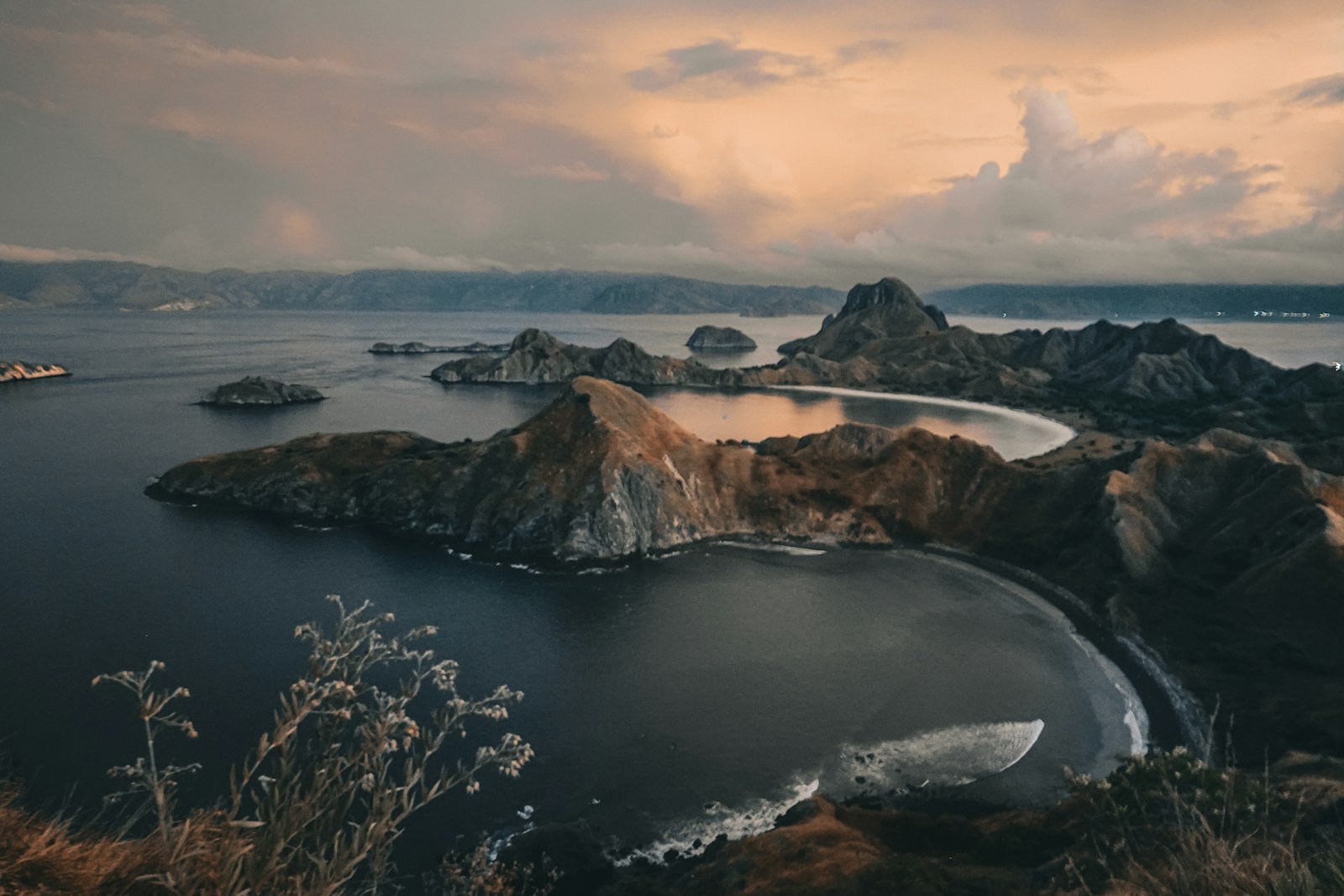
No. Confident snorkellers can access many of the most compelling sites in the park — Tatawa Besar, Pink Beach, Siaba Besar, and the shallower edges of the central zone all offer rewarding snorkel experiences without scuba. The dragon trekking on Rinca and Komodo Islands, the Padar ridge walk (one of the most photographed sunrise viewpoints in Indonesia), and the cultural segments of the itinerary are all non-diving activities. Where dive sites require Advanced Open Water certification due to current strength — Batu Bolong and Castle Rock are the most frequently cited examples — non-divers snorkel at adjacent sheltered sites under guide supervision. Discuss your exact experience level with your operator when booking so they can position you appropriately.
Is Wae Rebo village a realistic day trip from Labuan Bajo, or does it require an overnight stay?
Both formats exist. The day-trip version requires an early departure (typically 04:00–05:00 from Labuan Bajo) to reach the Denge trailhead, complete the approximately two-hour ascent, spend a meaningful amount of time in the village, and descend before dark. It is achievable but physically demanding and time-compressed. An overnight stay at the village allows you to experience it after day visitors have left and before the next morning’s arrivals — a qualitatively different encounter with the community. If the itinerary allows it, the overnight version is better for a wellness week with genuine depth as its goal. Discuss logistics, fees, and current access conditions with a licensed local guide well in advance; road and trail conditions vary seasonally. [VERIFY]
What happens if my liveaboard yoga retreat is cancelled or does not have a confirmed teacher?
This is a real operational risk specific to the Komodo wellness market, where most yoga liveaboard products are hosted retreats organised by external teachers on a departure-by-departure basis rather than standing programmes with in-house staff. If a teacher cancels and minimum group size was the condition for the departure running, the sailing may not proceed in its wellness form. Ask every operator directly before booking: is the wellness programme delivered by in-house staff on every departure, or is it contingent on a visiting teacher organising a hosted retreat? The answer changes your booking risk profile significantly. For a standard phinisi sailing that proceeds regardless, the yoga component may simply be absent — which is why understanding this distinction matters more than any other single piece of research before booking.